Top 10 HR Chatbots for Enhanced Support and Efficiency in 2025
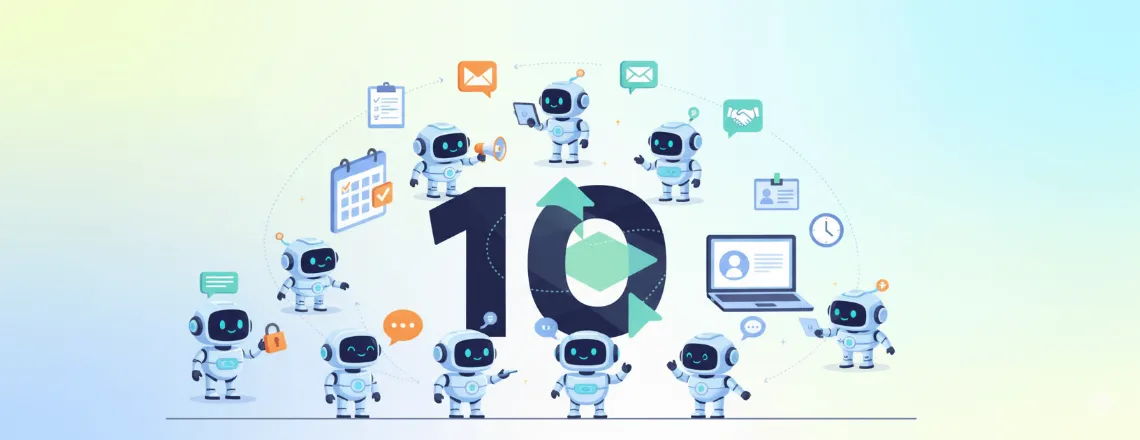
In 2025, HR teams are facing bigger challenges than ever before: attracting top talent in competitive markets, managing hybrid and global workforces, and delivering a consistent employee experience while still keeping up with endless administrative tasks. Recruiters may need to review hundreds of resumes for a single role, managers field repetitive questions about payroll or leave, and HR leaders struggle to find time for strategic initiatives because they are caught up in routine problem-solving.
📑 Table of Contents
- Top 10 HR Chatbots for Enhanced Support and Efficiency in 2025
- Key Highlights
- What are HR Chatbots?
- How Chatbots Help HR Operations
- Key Features to Consider in an HR Chatbot
- Popular Use Cases of HR Chatbots
- Top 10 HR chatbots in 2025
- Comparison table of HR chatbots
- Why Chatbot is the Best Choice?
- Conclusion
- Frequently Asked Questions (FAQs) on HR Chatbots
These challenges are not only draining for HR teams but also frustrating for employees. For example, a new hire may wait days for answers about benefits enrollment, or a candidate may lose interest after weeks of silence during recruitment. Small inefficiencies add up, and over time, they impact engagement, retention, and even company reputation.HR chatbots automate routine tasks, enabling HR to focus on culture, growth, and strategy.
In this article, we’ll explore what HR chatbots are, how they work, the benefits they deliver, the features to look for, and the top 10 HR chatbot platforms shaping the future of work in 2025.
Key Highlights
| Automates recruitment, onboarding, support, and compliance. Provides instant answers, improving employee satisfaction. Analytics enable smarter, data-driven HR decisions. Integrates seamlessly and scales with business growth. Top platforms efficiently serve diverse HR needs. |
What are HR Chatbots?
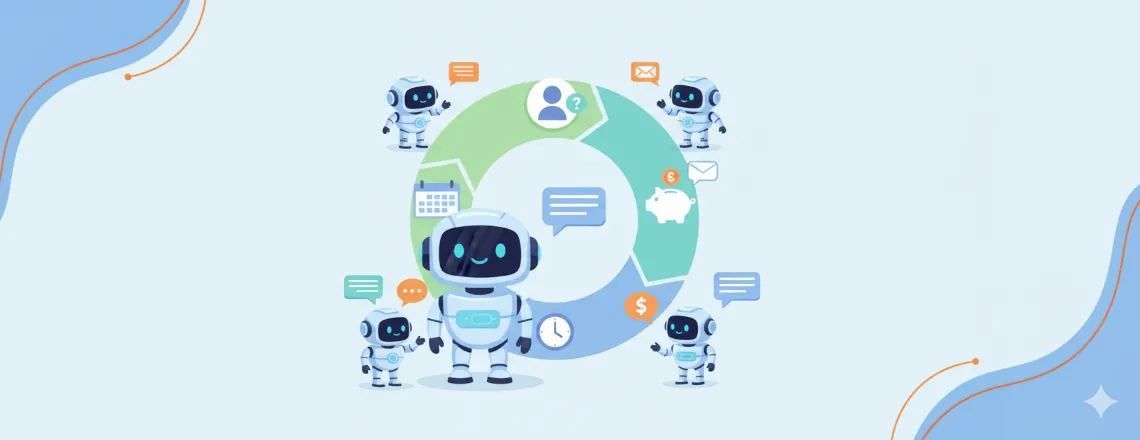
At their core, HR chatbots are AI-powered virtual assistants designed to automate HR processes and interact with candidates or employees in a conversational manner. Unlike static HR portals or complex HRIS (Human Resource Information Systems) interfaces, chatbots allow users to ask questions in plain language and receive instant, accurate responses.
Evolution of HR Chatbots
A decade ago, chatbots were basic FAQ tools that could only answer scripted questions. They were clunky, limited, and often frustrating to use. Fast forward to today, modern HR chatbots use advanced NLP to understand context, intent, and even sentiment. This means they can hold natural conversations, adapt to different tones, and personalize responses based on user history.
For example, instead of replying with generic information, a chatbot can now say:
- “You have 10 vacation days left this year. Would you like me to submit a leave request for you?”
- “Your payroll will be processed on the 28th. You can view your pay slip in the HR portal.”
This shift from reactive information-sharing to proactive assistance is what makes HR chatbots so powerful.
Capabilities of HR Chatbots
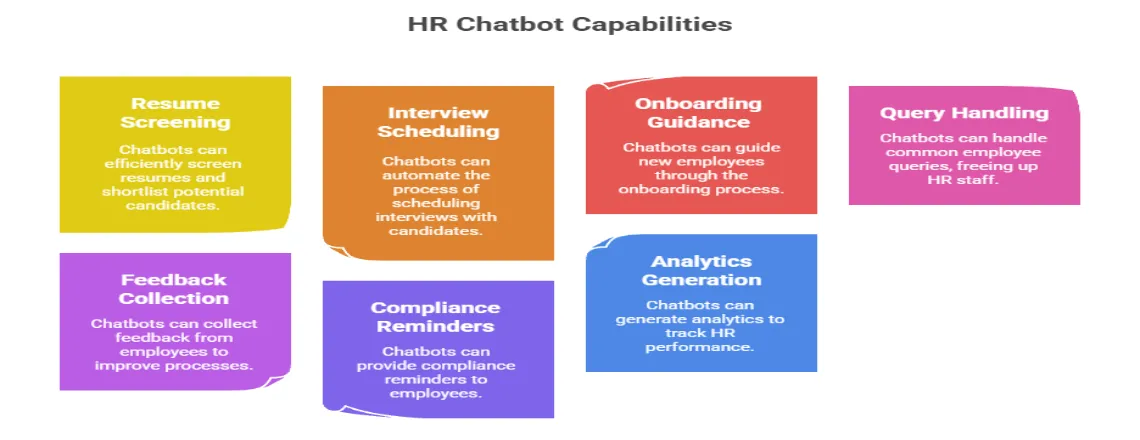
Modern HR chatbots can:
- Screen resumes and shortlist candidates – Chatbots quickly scan resumes, match skills to job requirements, and shortlist top candidates.
- Schedule interviews – They check calendars, suggest time slots, and confirm interviews automatically.
- Guide onboarding – Chatbots walk new hires through forms, policies, and training step by step.
- Handle employee queries – They provide instant answers about payroll, benefits, and company policies.
- Collect feedback – Chatbots run surveys and use sentiment analysis to track employee satisfaction.
- Provide compliance reminders – They send alerts for training sessions, policy updates, and certifications.
- Generate analytics – Chatbots deliver data insights to help HR make smarter workforce decisions.
Integration with Platforms
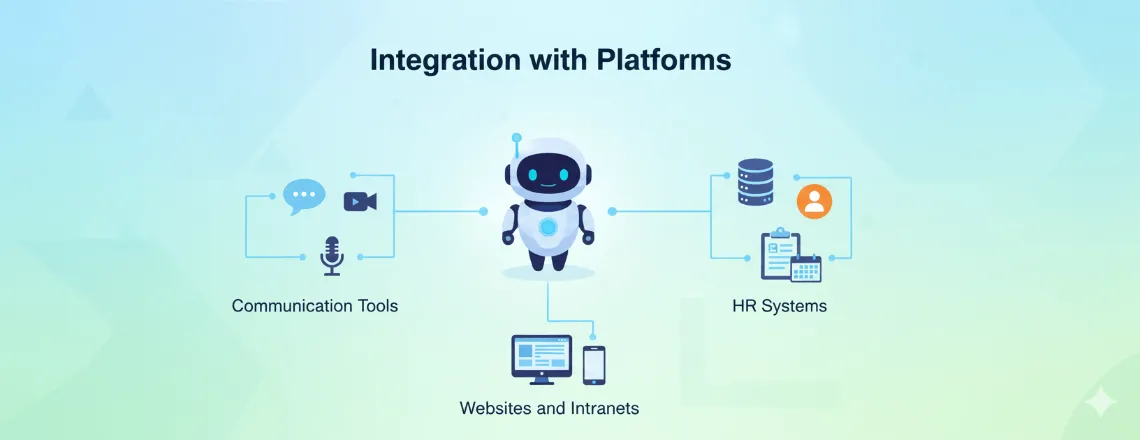
HR chatbots are designed to fit with ease into existing workflows. They can be embedded in:
- Communication tools: Slack, Microsoft Teams, Google Chat.
- HR systems: Workday, SAP SuccessFactors, Oracle HCM.
- Websites and intranets: Company career pages, employee portals.
How Chatbots Help HR Operations
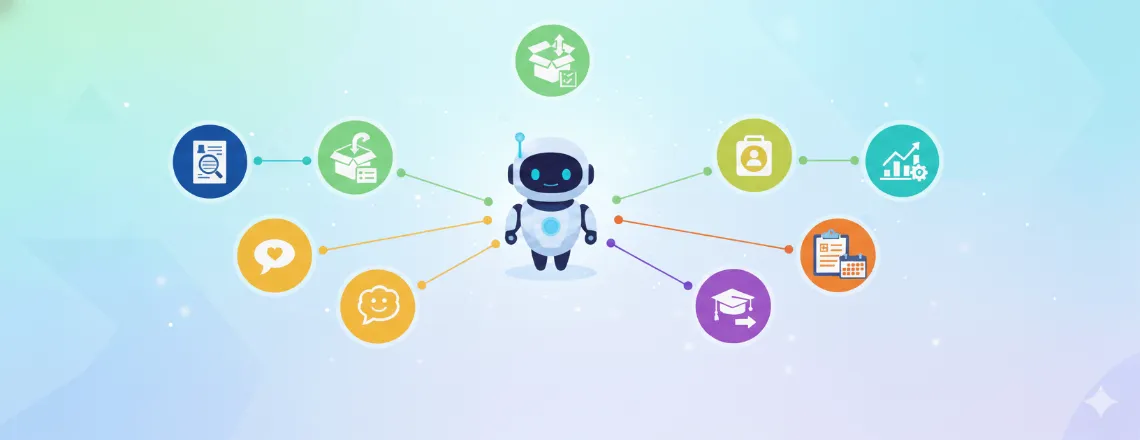
The real impact of HR chatbots can be seen in how they simplify complex HR operations. Let’s explore each area in detail.
Recruitment
Recruitment is often one of the most resource-heavy tasks for HR. A single job posting can attract hundreds of applications, and screening them manually takes hours. Chatbots can:
- Parse resumes and filter candidates based on skills, experience, or keywords.
- Schedule interviews by checking availability with both recruiters and candidates.
- Answer common candidate questions about the company, role, or application status.
Onboarding
Onboarding sets the tone for an employee’s entire journey. A poorly structured process can lead to disengagement or even early resignations. Chatbots streamline onboarding by:
- Guiding new hires through document submissions.
- Explaining policies and procedures.
- Providing training schedules and resources.
- Sending reminders for pending tasks.
Imagine a new hire asking, “What’s the Wi-Fi password?” or “How do I enroll in healthcare benefits?” and receiving an immediate, friendly answer. That’s the power of onboarding chatbots.
Employee Support
Employees often have repetitive questions about payroll dates, leave balances, or benefits. Traditionally, these would require emailing HR and waiting for a response. Chatbots can handle such queries instantly. For example:
- “When will my salary be credited?”
- “How many sick days do I have left?”
- “What is the process for applying for parental leave?”
This reduces HR workload and improves employee satisfaction.
Feedback and Sentiment Monitoring
Engaged employees are more productive, but gauging engagement can be difficult. Chatbots can conduct regular pulse surveys or sentiment analysis by asking short, conversational questions like:
- “How are you feeling about your workload this week?”
- “Do you feel supported by your manager?”
The responses help HR identify issues early and take corrective action.
Training and Development
Chatbots can personalize learning by recommending courses or reminding employees about training deadlines. For example:
- “You haven’t completed your cybersecurity training. Would you like me to schedule it for you this week?”
Compliance and Policy Updates
Regulations change frequently, especially in industries like healthcare or finance. Chatbots can send proactive updates to employees, ensuring compliance while minimizing the workload on HR teams.
Offboarding
Even employee exits can be streamlined with chatbots. They can:
- Conduct exit interviews.
- Collect company assets.
- Provide information about final settlements.
Analytics and Insights
By collecting data from interactions, chatbots provide valuable insights:
- Which policies do employees struggle with the most?
- What benefits are most queried?
- Trends in employee satisfaction over time.
These insights empower HR leaders to make data-driven decisions.
Key Features to Consider in an HR Chatbot
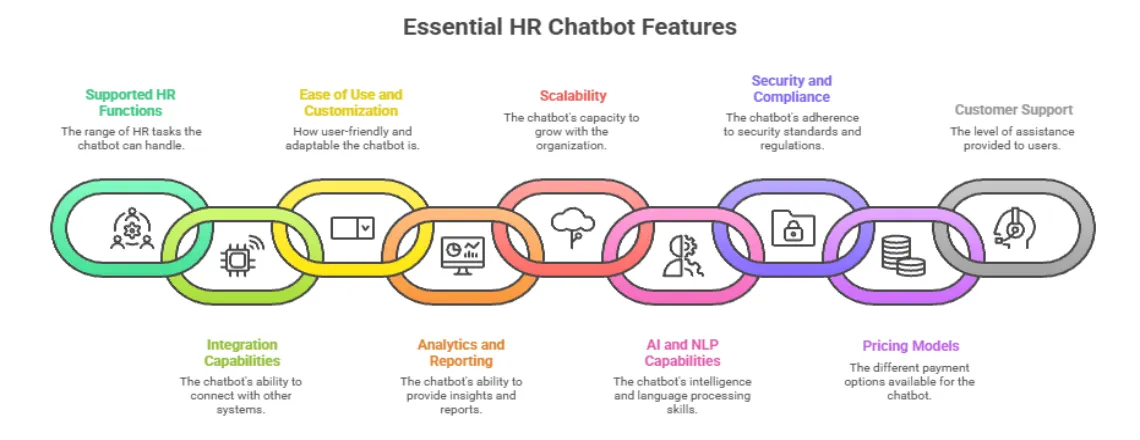
When evaluating HR chatbot platforms, businesses should look beyond surface-level features. Here are the must-have capabilities.
Supported HR Functions
Does the chatbot support the entire HR lifecycle? Recruitment, onboarding, engagement, performance management, and self-service? A limited-function chatbot may save time initially but fail to deliver long-term value.
Integration Capabilities
The best chatbots integrate with HRIS, ATS, LMS, and payroll systems. Without integrations, chatbots risk becoming siloed tools rather than connected assistants.
Ease of Use and Customization
Non-technical HR teams should be able to configure the chatbot easily. Drag-and-drop interfaces, pre-built templates, and branding customization are critical.
Analytics and Reporting
A good chatbot doesn’t just respond, it learns. Analytics dashboards that highlight engagement, query types, and bottlenecks help HR improve continuously.
Scalability
As companies grow, so should their chatbot. Features like multi-language support and global compliance make scalability possible.
AI and NLP Capabilities
The ability to understand natural language and detect sentiment ensures conversations feel human-like.
Security and Compliance
Since HR deals with sensitive employee data, compliance with GDPR, HIPAA, and CCPA is non-negotiable. Encryption and access controls are also crucial.
Pricing Models
Companies should choose a pricing model that matches their needs—subscription, pay-per-use, or freemium trials.
Customer Support
Reliable customer support ensures the chatbot evolves with the company’s needs. Training and regular updates make adoption smoother.
Popular Use Cases of HR Chatbots
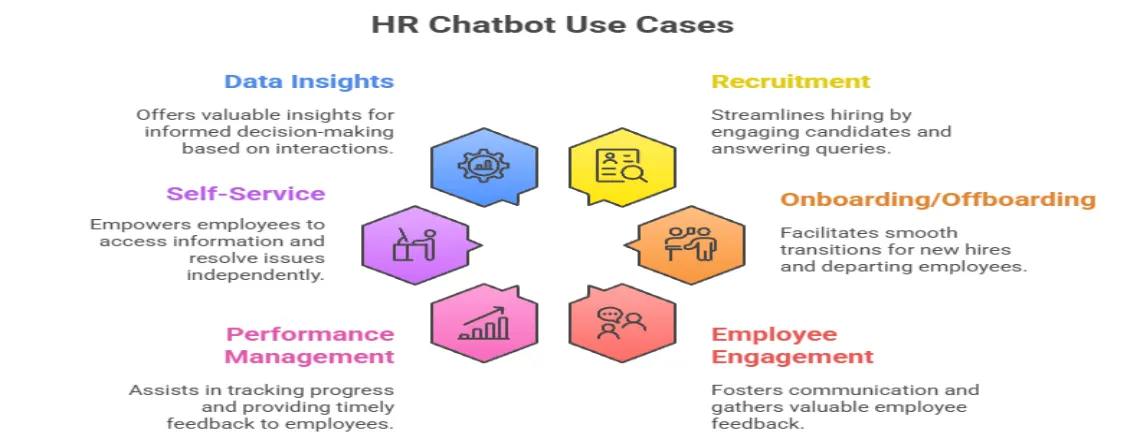
Let’s look at how HR chatbots are applied in real-world scenarios.
Recruitment
A retail company hiring seasonal workers uses chatbots to handle thousands of applications. Candidates get instant updates, while recruiters focus only on top prospects.
Onboarding & Offboarding
A technology startup uses a chatbot to guide new hires through IT setup, benefits enrollment, and company culture introductions. During exits, the chatbot automates surveys and return checklists.
Employee Engagement
A multinational uses chatbots for monthly pulse surveys. Managers get real-time dashboards showing morale trends by team or region.
Performance Management
Chatbots send reminders for performance reviews, collect 360-degree feedback, and track progress toward goals.
Self-Service
Employees no longer email HR for pay slips or leave requests; they simply ask the chatbot. This cuts response times from days to seconds.
Data Insights
By analyzing thousands of interactions, HR can identify patterns like recurring payroll confusion or policy gaps. This leads to proactive improvements.
Top 10 HR chatbots in 2025
1. Chatboq
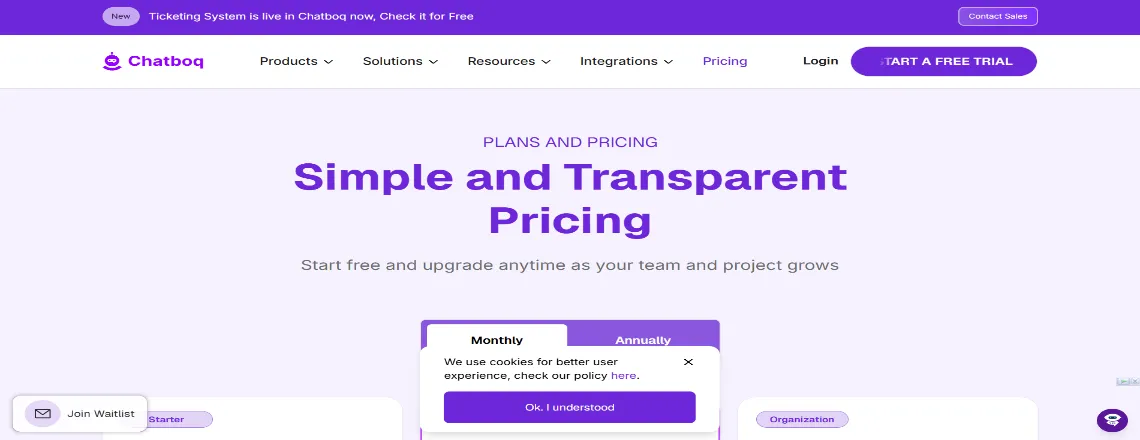
Chatboq is an all-in-one HR chatbot platform with a drag-and-drop builder that makes it easy to create workflows without coding. It integrates with tools like Slack, Workday, and Salesforce, offering scalable, multilingual, and secure solutions for businesses of all sizes.
Features
- Drag-and-drop builder / visual flow design for creating chatbots.
- Multilingual support.
- Strong integrations (Slack, site widgets, LiveChat, etc.).
Pros
- Easy to build without coding.
- Scale more chats as you grow.
- Transparent pricing tiers and many integrations.
Cons
- Cost can rise steeply once chat volumes grow.
- Some advanced features are restricted to higher-cost / custom plans.
- HR-specific features may require additional customization/integrations.
Pricing (2025)
- Starter: ~$52/month
- Team: ~$142/month
- Business: ~$424/month
- Enterprise: custom pricing
2. Leena AI
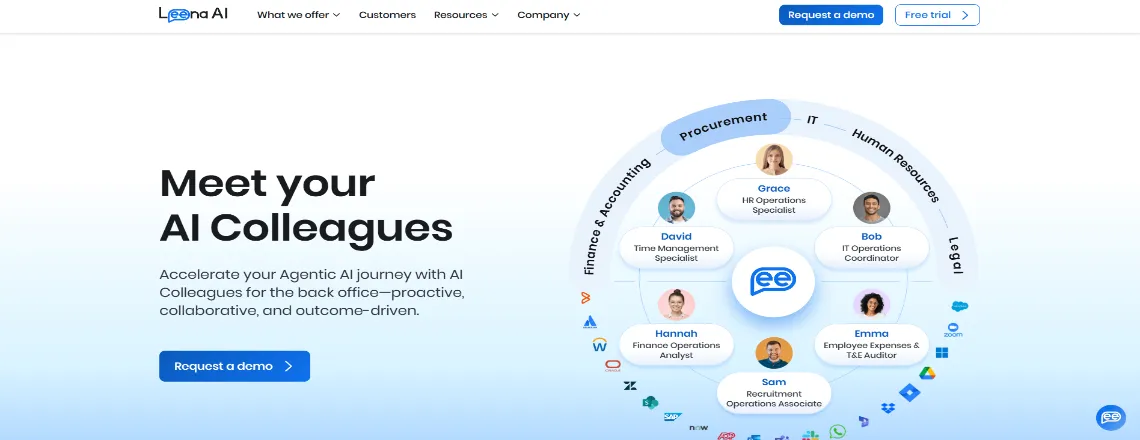
Leena AI is an enterprise-focused HR chatbot and knowledge management platform. It helps employees get answers via self-service, automates ticket handling, and provides dynamic AI-powered responses.
Features
- Employee service delivery / HR helpdesk/self-service automation.
- Unified knowledge base/enterprise search.
- Generative AI / retrieval-augmented responses.
Pros
- Great for large organizations to reduce ticket load.
- Good adoption and integrations.
- Flexible deployment and payment options for enterprises.
Cons
- High pricing, usually custom quotes.
- Overkill for small companies.
- Setup and integration can take significant time.
Pricing (2025)
- Custom / quote-based, enterprise contracts ~$60,000/year.
3. Mya Systems
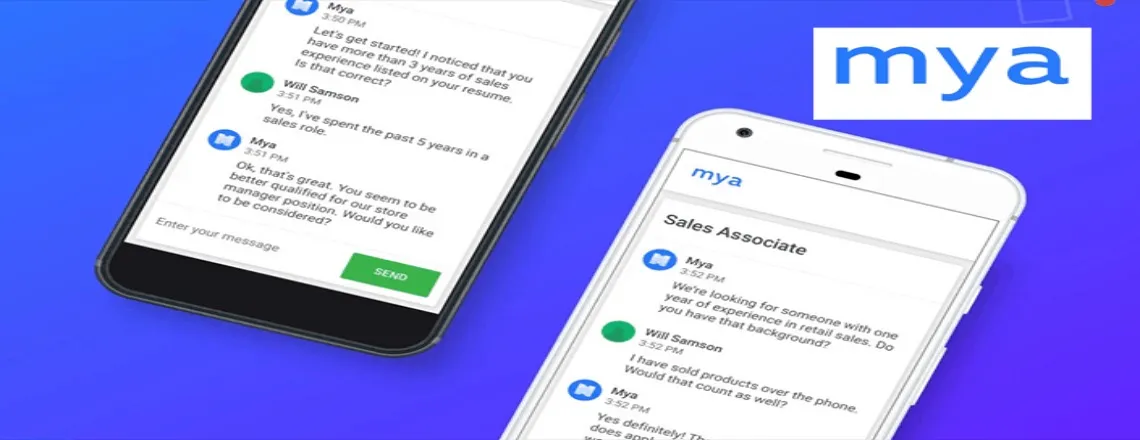
Mya Systems automates high-volume recruiting using AI for screening, scheduling, and candidate engagement across multiple channels.
Features
- Resume screening and candidate qualification.
- Interview scheduling and reminders.
- Multi-channel candidate engagement.
Pros
- Saves HR time and improves candidate experience.
- Excellent for high-volume recruiting.
Cons
- Integration with ATS can be complex.
- Risk of AI bias or misunderstanding unusual queries.
- Setup and customization can take time.
Pricing (2025)
- Not publicly disclosed; usually enterprise quotes.
4. Paradox (Olivia)
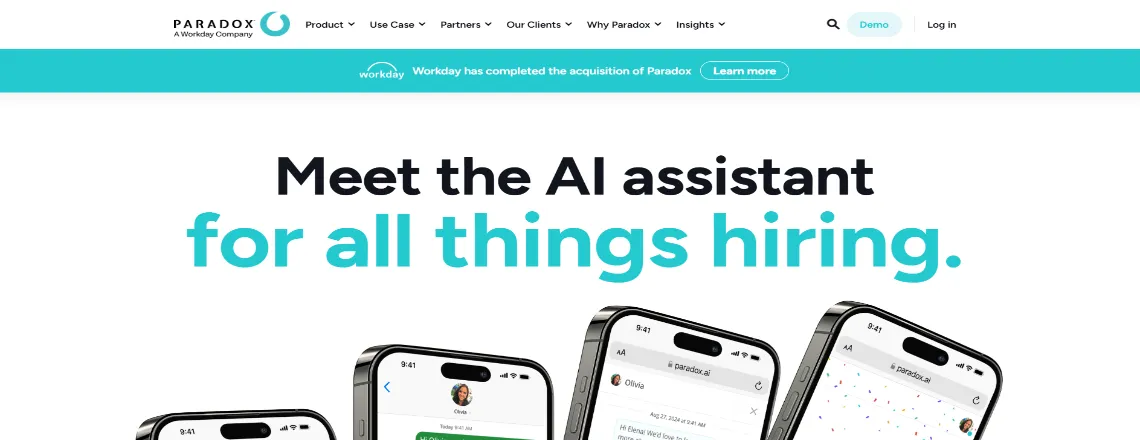
Paradox (Olivia) is a conversational recruiting assistant that automates hiring tasks and engages candidates across multiple channels.
Features
- Resume screening, interview scheduling, onboarding, and virtual events.
- SMS, WhatsApp, chat engagement 24/7.
- ATS / HR system integrations.
- Analytics and reporting for recruiters.
Pros
- Saves time in high-volume recruitment.
- Improves candidate experience.
- Scalable across locations and channels.
Cons
- High cost for low-volume hiring.
- Integration can be complex.
- Automated responses may feel impersonal.
Pricing (2025)
- Custom pricing starts around $1,000/month.
- Annual contracts: $25,000–$100,000+, add-ons extra.
5. HiBob
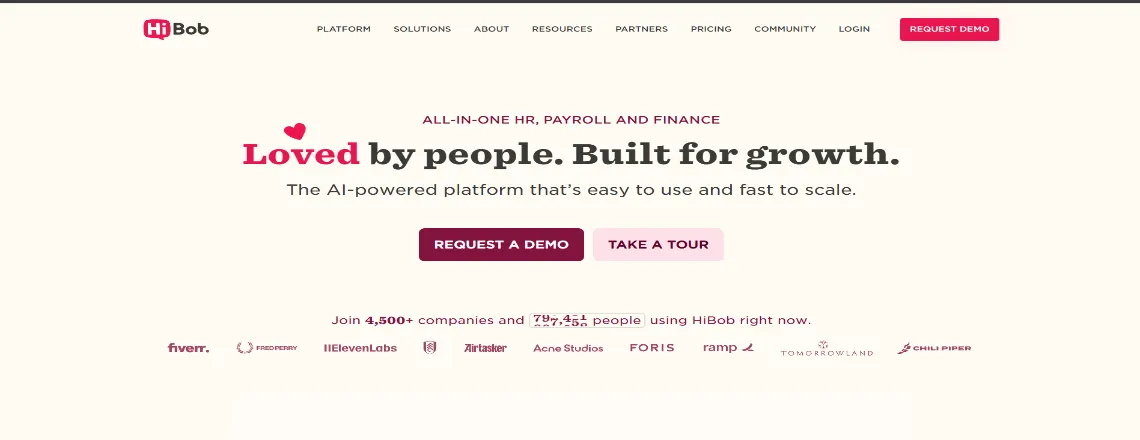
HiBob is a modern HRIS platform for mid-sized companies, offering HR management, engagement, and performance tools.
Features
- Core HR functions: onboarding, employee files, performance, compensation, and time-off.
- Analytics, feedback surveys, performance reviews.
- Customizable workflows, approvals, and localized settings.
Pros
- People-centric and easy to use.
- Strong engagement and performance tools.
- Flexible and visually friendly UI.
Cons
- Payroll/recruiting modules may require third-party tools.
- Costs increase with users and complexity.
- Some advanced features need extra configuration.
Pricing (2025)
- ~$16–25 per employee/month.
- Implementation fee: ~10–20% of annual software cost.
- Enterprise pricing is custom.
6. Espressive (Barista / BaristaGPT)
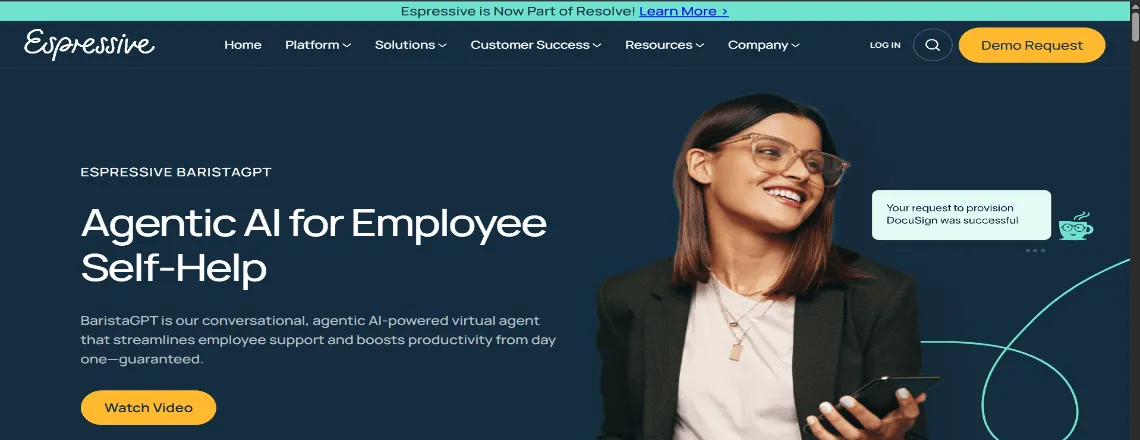
Espressive provides AI virtual agents for self-service across HR, IT, and other departments, supporting multiple languages and enterprise-scale deployments.
Features
- Employee queries, onboarding, benefits, and off-boarding automation.
- Multi-language (130+) support, multi-department coverage.
- Integrations with HR/IT systems and ticketing tools.
- Conversational AI + workflow automation.
Pros
- Reduces routine queries and HR workload.
- Strong enterprise/global support.
- Centralizes HR interactions across the employee lifecycle.
Cons
- Setup and integration can be resource-intensive.
- Cost likely premium, not fully transparent.
- Less suitable for sensitive HR cases needing human touch.
Pricing (2025)
- Custom / quote-based
- Basic listings show ~$1 per user/month.
7. Gupy
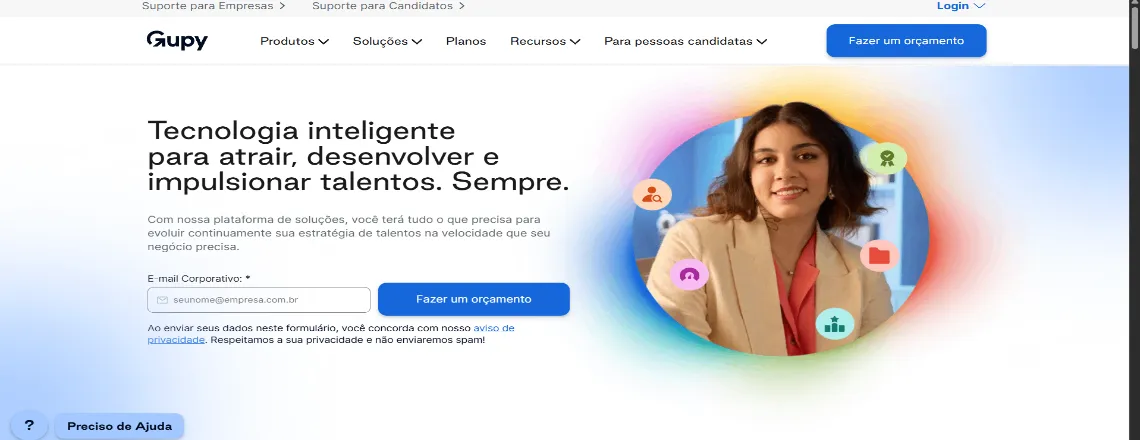
Gupy is a Latin America-focused HR-tech platform for AI-assisted recruitment and talent acquisition.
Features
- AI/NLP candidate screening and communication.
- ATS & HRIS integration for recruitment workflows.
- Ethical, inclusive recruitment focus.
- Scalable for LATAM markets.
Pros
- Reduces manual effort in high-volume hiring.
- Improves candidate experience.
- Strong local market support in LATAM.
Cons
- Pricing not publicly available.
- Integration outside LATAM may be challenging.
- Edge-case candidate scenarios may need human oversight.
Pricing (2025)
- Enterprise depends on features.
8. SmartBot360
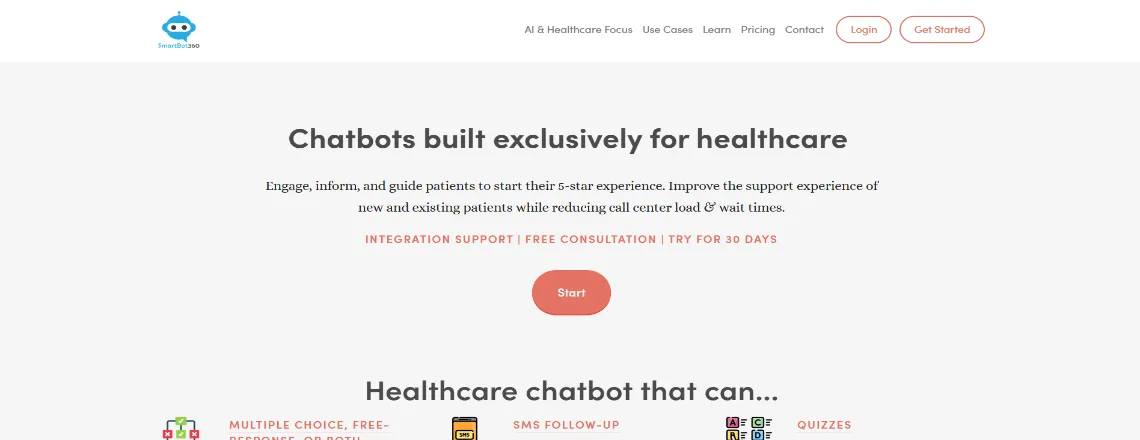
SmartBot360 is a multi-channel AI chatbot platform, strong in healthcare and adaptable for HR/enterprise use.
Features
- NLU & multi-channel deployment (Web, SMS, WhatsApp, Messenger).
- Workflow templates and CRM / API integration.
- Security, analytics, and live chat handover.
Pros
- Strong for regulated environments.
- Flexible deployment and multi-channel support.
- Good real-time analytics/dashboard.
Cons
- Mostly healthcare-focused, HR requires customization.
- Pricing is not fully transparent for the enterprise.
- Some HR talent screening features may need augmentation.
Pricing (2025)
- Free 30-day trial,
- Enterprise pricing on request.
9. TaroWorks
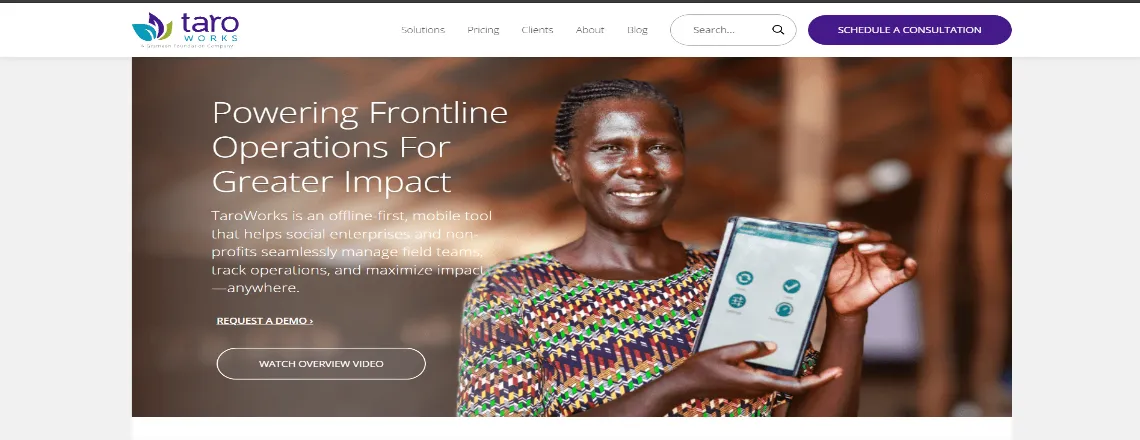
TaroWorks is an offline-first mobile CRM for field teams, focusing on data collection, monitoring, and Salesforce integration.
Features
- Offline mobile data collection with GPS/photos.
- Survey/workflow tasks; mobile form customization.
- Salesforce integration with dashboards and reports.
- Performance, order, and inventory management.
Pros
- Works offline for remote teams.
- Deep Salesforce integration.
- Strong data capture and analysis for field operations.
Cons
- Requires Salesforce licenses.
- Setup and customization can be complex.
- Not built for HR chatbot use-cases.
Pricing (2025)
- Startup (~20 users): $5,496/year
- Small (~40 users): $6,600/year
- Medium (~70 users): $9,900/year
- Large (~100 users): $13,200/year
- Enterprise (>150 users): custom / quote-based
10. Talla (Bloomfire AI)
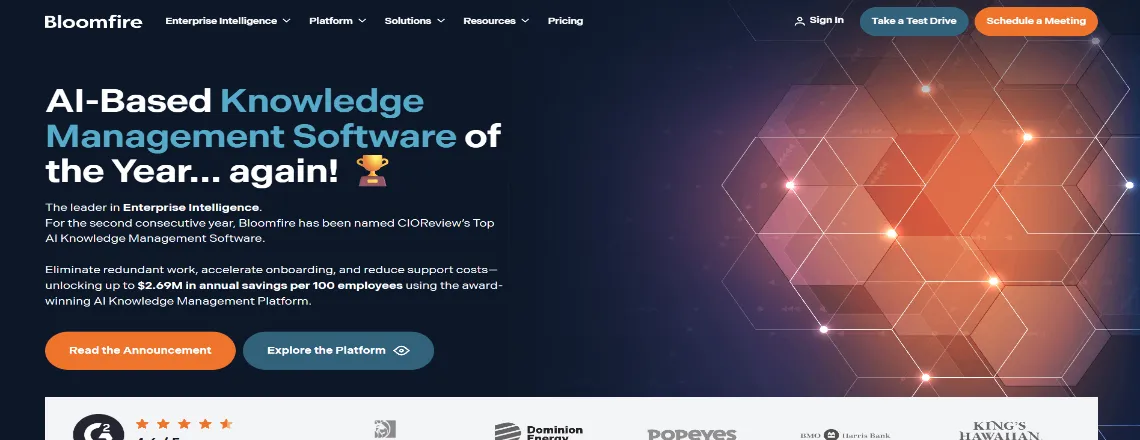
Talla (now integrated with Bloomfire AI) is an AI-powered knowledge management and support automation platform focused on delivering instant, accurate answers for internal HR and IT queries.
Features
- Generative AI for instant, contextual answers to HR/IT queries.
- Seamless integration with Slack, Confluence,
- Automated knowledge base population and policy version control.
- Ticket deflection reporting and employee sentiment analysis.
Pros
- Significantly reduces HR/IT ticket volume through effective self-service.
- Maintains consistent, up-to-date policy information across all integrated channels.
- Works natively within popular workplace tools (Slack/Teams).
Cons
- Effectiveness is highly dependent on the quality and structure of existing knowledge.
- Requires continuous maintenance and administration to keep policy data current.
- Initial setup involves complex mapping and migration of various data sources.
Pricing (2025)
- Startup (~20 users): $6,100/year
- Small (~40 users): $9,500/year
- Medium (~70 users): $14,500/year
- Large (~100 users): $19,000/year
- Enterprise (>150 users): custom / quote-based
Comparison table of HR chatbots
| Platform | Best Use Case | Key Features | Integrations | Ideal Company Size |
| ChatBot | All-in-one HR support | Drag-and-drop builder, multilingual, analytics | Slack, Workday, Salesforce | SMBs to Enterprises |
| Mya Systems | Recruitment automation | Resume screening, interview scheduling | Workday, Lever, Greenhouse | Mid-to-Large Enterprises |
| Leena AI | Comprehensive HR automation | Helpdesk, handbook, employee query handling | SAP, Oracle, Workday | Large Enterprises |
| Talla (Bloomfire AI) | HR + IT knowledge management | HR/IT support, policy knowledge base | Slack, Confluence, SharePoint | Tech-driven companies |
| HiBob | Engagement & performance management | Analytics, personalization, performance tracking | HRIS and collaboration tools | Mid-sized Businesses |
| Paradox (Olivia) | High-volume hiring | Candidate experience, ATS integrations | iCIMS, Taleo, Greenhouse | Retail, Hospitality, High-volume hiring |
| TaroWorks | Employee engagement & surveys | Feedback collection, Salesforce-native | Salesforce | Field-based organizations |
| Espressive (Barista) | Employee self-service (HR + IT) | Automated queries, AI-driven self-help | ServiceNow, Slack | Enterprises |
| Gupy | Recruitment in LATAM markets | Candidate screening, NLP-based communication | ATS and HRIS tools | Mid-sized Enterprises |
| SmartBot360 | Flexible, customizable HR automation | Multi-function chatbot, easy setup | Slack, Teams, Google Workspace | SMBs |
Why Chatbot is the Best Choice?
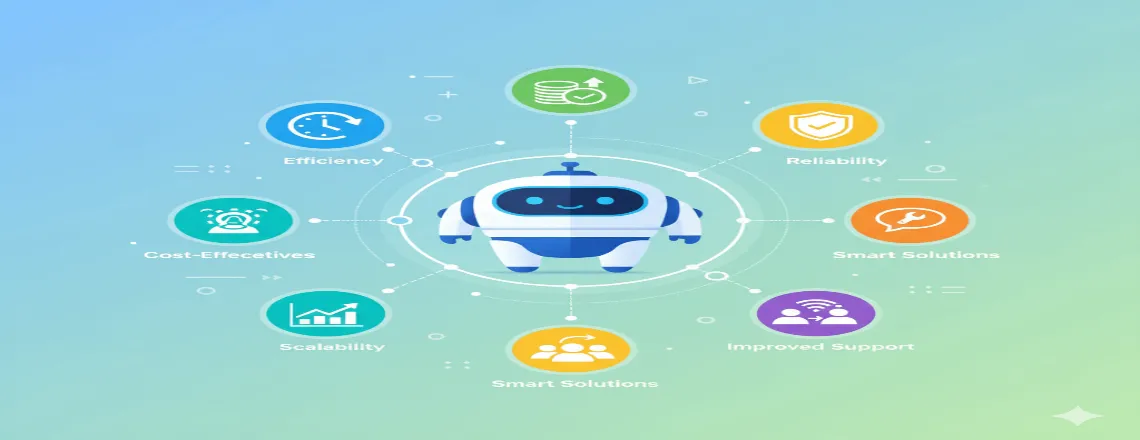
While many platforms excel in specific areas, Chatboq stands out as the most versatile and future-ready solution.
- All-in-One Platform: It covers recruitment, onboarding, employee support, and engagement.
- Ease of Setup: The drag-and-drop builder allows HR teams to design workflows without coding.
- Broad Integrations: Works with major HR systems and communication platforms.
- Analytics: Provides actionable insights into employee behavior and process bottlenecks.
- Scalability: Handles global, multilingual support seamlessly.
Whether you’re a startup needing quick deployment or a global enterprise requiring advanced analytics, ChatBot adapts to your needs.
Conclusion
HR chatbots are transforming the way companies manage people. They handle repetitive tasks, improve employee satisfaction, reduce costs, and allow HR teams to focus on strategic initiatives. With 24/7 availability and scalable solutions, chatbots bring inclusivity and efficiency to every workplace.
From recruitment to engagement, performance to self-service, HR chatbots are shaping the future of HR. Businesses that embrace them in 2025 will not only save time and resources but also create workplaces where employees feel supported and empowered.
The future of HR is digital and full of potential. And with the right chatbot, it’s within reach for any organization.
Frequently Asked Questions (FAQs) on HR Chatbots
An HR chatbot is an AI-powered virtual assistant designed to automate HR processes and conversationally interact with employees or candidates. It can answer questions, provide guidance, and handle routine tasks instantly.
Originally, HR chatbots were basic FAQ tools that answered scripted questions. Modern HR chatbots use natural language processing (NLP) and AI to understand context, intent, and sentiment, enabling human-like, personalized conversations.
They can screen resumes, schedule interviews, guide onboarding, handle employee queries, collect feedback, send compliance reminders, and generate HR analytics for better decision-making.
HR chatbots automate candidate screening, filter resumes, schedule interviews, and answer candidate questions in real-time, reducing manual effort and improving candidate experience.
Yes. Chatbots guide new hires through document submissions, explain policies, provide training schedules, and send reminders for pending tasks, making onboarding smoother and faster.
They can integrate with communication tools like Slack, Microsoft Teams, and Google Chat, HR systems such as Workday, SAP SuccessFactors, Oracle HCM, and company websites or employee portals.
Employees can instantly get answers to questions about payroll, leave balances, benefits, and policies without contacting HR, reducing response times from days to seconds.
Yes. Chatbots can conduct pulse surveys, collect sentiment data, and provide insights on employee satisfaction, helping HR take proactive measures to improve engagement.
Key considerations include supported HR functions, integration capabilities, ease of use, customization options, analytics, scalability, AI/NLP capabilities, security, pricing, and customer support.
ChatBot is highly versatile, offering recruitment, onboarding, employee support, broad integrations, analytics, and scalable multilingual support, making it ideal for businesses of all sizes.

Daniel Wong
Technical Content Writer
My name is Daniel Wong, a Technical Content Writer from Singapore with a strong interest in AI-powered tools and digital automation. At ChatBoq AI, I focus on creating practical and easy-to-follow content that helps businesses and individuals understand how chatbots work and how to use them effectively.
I enjoy breaking down complex topics like natural language processing (NLP) and conversational AI into simple guides that anyone can follow. Each article is based on careful research, real-world examples, and testing to ensure accuracy and reliability.
Through ChatBoq AI, my goal is to provide readers with trustworthy insights, step-by-step tutorials, and the latest trends in chatbot technology.
✍️
Expert in AI & Chatbot Technology

Leave A Comment