

Top AI Sales Trends Shaping 2025
AI is more than just a buzzword in sales; it really is changing how businesses are finding and engaging. New trends for automated lead generation are impacting how sales teams operate, and ultimately how they win.
📑 Table of Contents
- Top AI Sales Trends Shaping 2025
- KEY HIGHLIGHTS
- The Future of AI in Sales
- 1. Hyper-Personalization with Generative AI
- 2. Predictive Insights for Smarter Sales Strategies
- 3. AI-Powered Sales Training and Onboarding
- 4. Intelligent CRM Integration and Automation
- 5. AI Chatbots for Lead Engagement and Support
- 6. Advanced Forecasting with AI Models
- 7. Rise of Autonomous AI Agents in Sales
- Ethics, Governance & Risk Management in AI-Powered Sales
- Conclusion
- Frequently Asked Questions (FAQs)

Besides, the sales process is becoming smarter, faster, and more data-influenced thanks to AI. As we get closer to 2025, organizations are deploying artificial intelligence to not only push deals through but, more importantly, to understand their customers. The top AI trends in sales 2025 are showing how automation and personalization are now part of the toolkit for all sales strategies.
KEY HIGHLIGHTS
| AI is transforming sales by automating tasks and enabling smarter, data-driven decisions. Generative AI is powering hyper-personalized outreach and content creation. Predictive analytics helps sales teams identify high-converting leads and refine strategies. AI-driven tools are revolutionizing sales training with real-time coaching and adaptive learning. Autonomous AI agents and chatbots are enhancing lead engagement and customer support around the clock. |
The Future of AI in Sales

AI is rapidly becoming the driving force in modern sales. It is helping teams work smarter, automating tasks, analyzing data, and personalizing every customer interaction. Intelligent tools like AI chatbots are now handling routine queries instantly, giving sales representatives more time to focus on high-value conversations.
Instead of investing all that time in manual research and admin work, sales representatives can focus on the bottom line, connecting with customers and closing deals. AI-powered tools are boosting productivity and reimagining the way teams plan and execute their go-to-market strategies.
Moving forward, AI will continue to reshape sales by streamlining workflows, guiding better decisions, and helping businesses grow faster in a highly competitive market.
How Generative & Agentic AI Are Redefining Sales Workflows
Agentic AI refers to autonomous systems that go beyond traditional automation; they don’t just follow rules or generate content; they act, make decisions, and complete multi-step tasks with minimal human guidance.
In contrast, simpler AI/automation typically assists humans (for example, generating an email or scoring a lead) but doesn’t take full action. For sales teams, agentic AI can handle tasks such as identifying high-intent leads, launching outreach campaigns, scheduling follow-ups, updating CRM records, and even dynamically adapting pitch strategies, all while human sales reps focus on closing and relationship-building. According to industry forecasts, by 2028, around 15% of business decisions will be made autonomously by agentic AI.
The rise of AI in sales is creating three major shifts:
- Productivity Enhancement: Automate repetitive tasks to free up more time for teams to spend with customers.
- Growth Acceleration: Assisting sales teams in finding better opportunities and improving win rates.
- Fundamental Transformation: That is, making AI the core of how modern sales strategies are built and executed.
1. Hyper-Personalization with Generative AI

Generative AI will fundamentally change how businesses personalize sales and marketing. It lets brands connect to each customer at a deeper, more relevant level. It’s no longer about sending the same message to all customers; instead, AI can help craft each email, offer, and recommendation based on every person’s behavior..
AI-Driven Outreach and Messaging
AI-powered outreach tools help sales teams craft personalized messages that actually ring. Analyzing customer data for patterns, AI can suggest what to say, when to say it, and through which channel.
It studies signals like job changes, company updates, or product launches to create context-aware messages that feel human and timely. This level of personalization leads to more replies, higher open rates, and stronger engagement, helping sales teams build meaningful relationships faster.
Real-Time Content Recommendations
AI doesn’t just personalize messages; it also recommends the right content at the right time. With the power of browsing history, purchase behavior, and real-time data, content, or offer suggestions when a customer is most likely to take action.
Some businesses even use generative AI to create everything from product descriptions to marketing messages and case studies in customized content, automatically aligned with the interests or needs of a customer.
Targeting through Behavioral Segmentation
Behavioral segmentation uses AI to understand how people shop and what drives their decisions. It identifies loyal customers, predicts when someone is likely to buy again, and determines whether they’re more influenced by price, brand, or convenience.
AI takes it to the next level with dynamic segmentation-constantly updating customer groups based on real-time activity. Every campaign will always be relevant in timing. AI for behavioral insights helps sales teams deliver on what modern buyers expect-personalized offers, relevant product suggestions, and timely follow-ups. The results are clear: better engagement, higher conversion rates, and stronger, longer-term customer loyalty.
2. Predictive Insights for Smarter Sales Strategies

AI-powered predictive analytics is changing how sales teams plan and perform. Instead of relying on guesswork or manual analysis, businesses now use AI to turn data into clear insights, helping them target the right leads, make faster decisions, and close more deals.
Identifying High-Converting Leads
Traditional lead scoring relied on basic actions like email opens or website visits. AI has taken this much further. Modern AI models analyze patterns from past customer data to identify which prospects are most likely to buy.
These systems consider everything from company size and industry to behavior and engagement history, and give each lead a score that shows its true potential. This helps sales teams focus their efforts on the leads that matter most, improving conversion rates and reducing time wasted on cold prospects.
Customizing Sales Tactics Using Data
AI doesn’t stop at identifying good leads; it also helps personalize how to approach them. By studying customer behavior, purchase patterns, and pricing preferences, AI tools suggest strategies for each prospect.
This data-driven guidance helps sales reps understand what motivates different customer groups and how to pitch the right solutions at the right time. Whether it’s adjusting pricing, highlighting certain features, or suggesting new offers, AI ensures every interaction feels relevant and well-informed.
Adapting Strategies Based on Buyer Behavior
One of AI’s biggest strengths is its ability to adapt in real time. It constantly tracks changes like company updates, new product launches, or market shifts, helping sales teams adjust their approach instantly.
This makes sales more proactive than ever before. Instead of reacting after opportunities are missed, teams can predict buyer needs and act early. As more companies move toward data-driven decision-making, those using predictive AI are already seeing stronger performance, faster response times, and higher win rates.
3. AI-Powered Sales Training and Onboarding

AI is changing the way companies train and develop their sales teams by moving away from long, static programs to faster, more interactive learning that’s personalized through AI-powered tools.
Simulated Role-Play with Generative AI
Generative AI enables realistic role-play simulation, where reps can practice real-world sales conversations, handle objections, and test different approaches in a safe environment. Simulations instantly adapt to responses, helping salespeople gain confidence and improve faster compared to traditional training.
Adaptive Learning Paths
AI constructs personalized learning paths based on each rep’s strengths and weaknesses. It constantly updates the content to match the progress so that each team member gets precisely the support they need to perform better and ramp up faster.
Real-Time Coaching and Feedback
AI-powered coaching tools provide immediate feedback on aspects like tone and clarity in communication. Data of performances can be shown to managers on dashboards for easier guidance of teams. The consistency in this form of feedback, provided through data, improves productivity and makes training continuous rather than sporadic.
4. Intelligent CRM Integration and Automation

Modern CRM systems are no longer mere data storage facilities; they have become smart sales assistants through the use of AI to automate, analyze, and optimize daily operations.
Automated entry and updating of information
Information entry and record updating are now automated with AI, capturing meeting notes, emails, and next steps directly without any manual effort. This saves several hours a week and keeps CRM data clean, complete, and error-free.
AI-Powered Task Management
AI systems also arrange everyday workflows through task prioritization, schedule management, and suggestions on the best next steps. With this, there is less confusion, and sales reps stay focused on high-impact activities.
Improved Forecasting Through CRM Insights
AI-powered CRM systems analyze sales, market signals, and customer interactions to make accurate forecasts. These insights can enable teams to plan better and respond quickly to market changes with reliable, up-to-date data.
Sales Intelligence Platforms for Real-Time Insights
Sales intelligence platforms combine CRM, AI, and data analytics to give teams instant insights into buyer behavior, deal progress, and next best actions. Small teams use these tools to work faster with limited resources, while large teams rely on them to keep data consistent, improve forecasting, and align reps with the same real-time guidance.
5. AI Chatbots for Lead Engagement and Support

AI chatbots have become a key sales tool, helping teams to engage leads, answer questions, and qualify prospects instantly, anytime, and anywhere.
24/7 Lead Qualification and Nurturing
Chatbots interact with prospects in real time, asking the right questions, understanding needs, and budget. They automatically qualify leads and forward the best ones to sales representatives, so no opportunity goes unnoticed. VELUX implemented an AI chatbot and achieved a 38% conversion rate from conversations to qualified leads, and the bot answered 72% of all user inquiries.
Instant Responses Across Channels
AI chatbots ensure quick, consistent responses on websites, social media, and messaging. Instant communication keeps customers engaged, improving satisfaction across touchpoints. According to a report by Glassix, one SaaS startup using their AI chatbot for lead qualification saw a 28% increase in lead conversion rate.
Insights from Chatbot Conversations
Chatbots also gather valuable insights from customer chats about what buyers care about, objections they raise, and which products attract the most interest. Such insights help further refine marketing and sales strategies for better conversions.
Voice AI Assistants for Sales Engagement
Voice AI assistants use conversational voice bots to engage and qualify leads around the clock, offering fast, human-like interactions that boost early sales conversations. When combined with chat, businesses often see higher omnichannel engagement, sometimes up to a 30% lift. For best results, teams should connect voice and chat to the same knowledge base, ensure smooth handoffs to human reps, and keep both systems trained for consistent, seamless customer experiences.
6. Advanced Forecasting with AI Models

AI is taking sales forecasting way beyond spreadsheets; it provides real-time, accurate predictions that help businesses plan smarter and mitigate risks.
Using Historical Data for Predictions
Machine learning models analyze years of past sales data to detect patterns and forecast future results. These insights are far more precise than traditional methods, since AI continuously adjusts the predictions.
Incorporating Market Trends and Signals
AI doesn’t just look inside a company; it also tracks external signals like market trends, customer sentiment, and online activity. That gives the sales teams more perspective and thus enables them to catch changes in demand early enough to act fast.
Early Detection of Pipeline Risks
AI can identify potential deal risks by analyzing communications, missed follow-ups, or declining engagement. Early recognition of red flags can enable teams to take action quickly to salvage deals and maintain accuracy in forecasting.
7. Rise of Autonomous AI Agents in Sales

One of the biggest AI sales trends for 2025 is the rise of autonomous AI agents: digital teammates that can act, decide, and execute on sales tasks with little to no human help.
Proactive Lead Generation and Outreach
These AI agents automatically find new leads, research accounts, and send personalized messages. They take much of the early-stage work to enable sales teams to focus on high-value prospects who are ready to buy.
Multi-Step Task Execution
AI agents handle entire workflows, from contact identification to follow-up emails and meeting scheduling. They learn from each task and become more accurate with each iteration.
Cross-Platform Coordination and Updates
AI agents also unify data from multiple platforms, like CRMs, emails, social media, and analytics tools, into a complete view of every customer. That helps businesses to maintain consistent communication and smooth collaboration across all channels.
Ethics, Governance & Risk Management in AI-Powered Sales
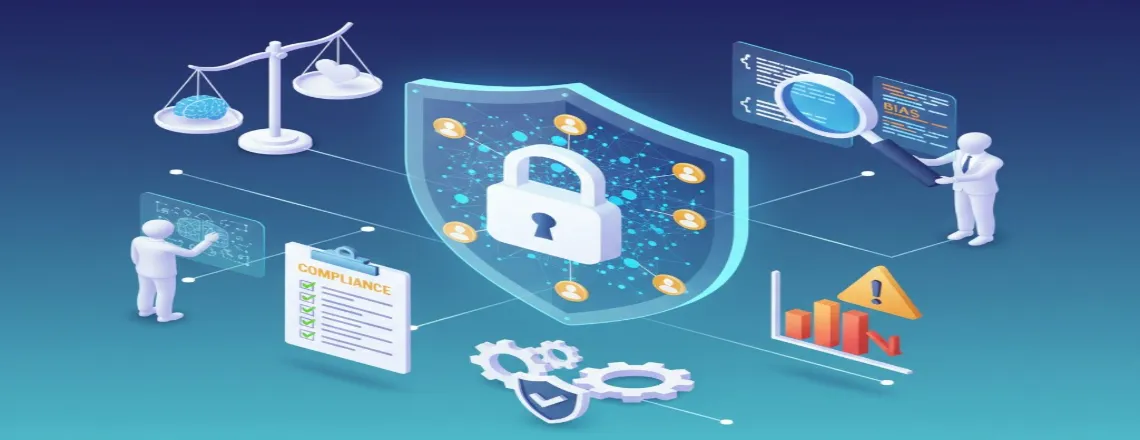
As AI becomes a core part of sales, leaders must ensure it’s used responsibly and transparently. AI-powered tools can bring huge advantages, but they also come with risks like bias in AI models, data privacy issues, vendor lock-in, and uncertain ROI if not managed well. These challenges can impact customer trust, compliance, and long-term business performance.
To mitigate these risks, sales leaders should build a strong AI governance framework that outlines how data is collected, used, and monitored. Regular data audits help identify errors, gaps, and bias in models before they affect customer interactions or decisions. Keeping human oversight in every critical step from lead scoring to automated messaging ensures that AI recommendations remain fair, accurate, and aligned with company values.
By combining ethical practices with structured governance, businesses can confidently use AI to enhance sales without compromising transparency, customer trust, or compliance.
Conclusion
AI is changing the sales space, converting data into strategy and automation into opportunity. From lead generation to personalization, it is powering teams to sell more quickly and effectively. As we look toward 2025, the use of AI is not simply a competitive advantage but a sales standard.
Frequently Asked Questions (FAQs)
AI reduces manual work, allowing sales teams to focus more on relationship-building and closing deals instead of administrative tasks.
AI strategies rely on real-time data and predictive insights, helping teams target the right leads and make faster, more accurate decisions.
Generative AI tailors emails, offers, and recommendations to each customer’s behavior, creating deeper and more meaningful connections.
AI automatically identifies, qualifies, and nurtures leads, ensuring no potential customer is overlooked and improving conversion rates.
Predictive analytics helps sales teams forecast demand, identify buying patterns, and prioritize leads with the highest chance of conversion.
AI personalizes learning paths, simulates real-world sales conversations, and provides instant feedback for faster skill development.
Salesforce, HubSpot, Zoho, and Pipedrive offer the strongest AI integrations, with smooth automation, scoring, and API support.
Use generative AI for natural, personalized conversations; choose rule-based bots for fixed flows, predictable responses, and simple tasks.
Voice AI can handle outreach, qualification, and follow-ups, but complex negotiations and relationship-building still need humans.
Provide clear disclosure, get consent, store minimal data, and ensure AI decisions are explainable, secure, and unbiased.

Daniel Wong
Technical Content Writer
My name is Daniel Wong, a Technical Content Writer from Singapore with a strong interest in AI-powered tools and digital automation. At ChatBoq AI, I focus on creating practical and easy-to-follow content that helps businesses and individuals understand how chatbots work and how to use them effectively.
I enjoy breaking down complex topics like natural language processing (NLP) and conversational AI into simple guides that anyone can follow. Each article is based on careful research, real-world examples, and testing to ensure accuracy and reliability.
Through ChatBoq AI, my goal is to provide readers with trustworthy insights, step-by-step tutorials, and the latest trends in chatbot technology.
✍️
Expert in AI & Chatbot Technology

Leave A Comment