
The Future of Conversational AI: What Businesses Need to Know
While walking into a market and waiting for a salesperson, talk to a friendly computer system that understands what you need. Imagine visiting a website where a chatbot instantly answers your questions like a real human. This is not science; it is Conversational AI, and it’s already here to change the way businesses talk to people.
📑 Table of Contents
- The Future of Conversational AI: What Businesses Need to Know
- Key Highlights
- What is Conversational AI?
- Why is conversational AI important for business?
- Real-Life Examples of Conversational AI in Business
- The Future of Conversational AI
- Measuring the Impact of Conversational AI
- Conclusion
- Frequently Asked Questions (FAQs)
Conversational AI is a type of artificial intelligence that helps people talk to machines in a natural way. It does this through chatbots, virtual machines, and voice tools that can understand what you say and respond helpfully. You have probably seen it with Siri, Alexa, or Google Assistant. These tools already make daily life easy, but in the future, this technology will become smarter, and all sizes of businesses will use it to serve customers.
Key Highlights
| Conversational AI enables natural human-computer communication. AI improves customer service speed and efficiency. Personalized interactions enhance satisfaction and loyalty. Businesses save costs while automating routine tasks. Future AI will be smarter, emotionally aware. |
What is Conversational AI?
Conversational AI, or artificial intelligence, is a computer program that can be designed to understand human language and reply in a way that feels like you are talking with a real person. Unlike Regular chatbots that can only answer simple questions, conversational AI is more advanced. It can remember what you said in past conversations, understand both voice and text, and give responses that are meaningful and helpful.
We are already seeing conversational AI used in our daily lives. Virtual machines like Siri, Alexa, or Google Assistant are the best examples. You can ask them to play your favorite song, set an alarm, or check the weather, and they understand your words instantly. Another use is on shopping websites where chatbots help customers find products, answer questions about shipping, and even help to find items they like. Some companies use AI chatbots to handle many customer questions, saving time for the business while keeping customers happy.
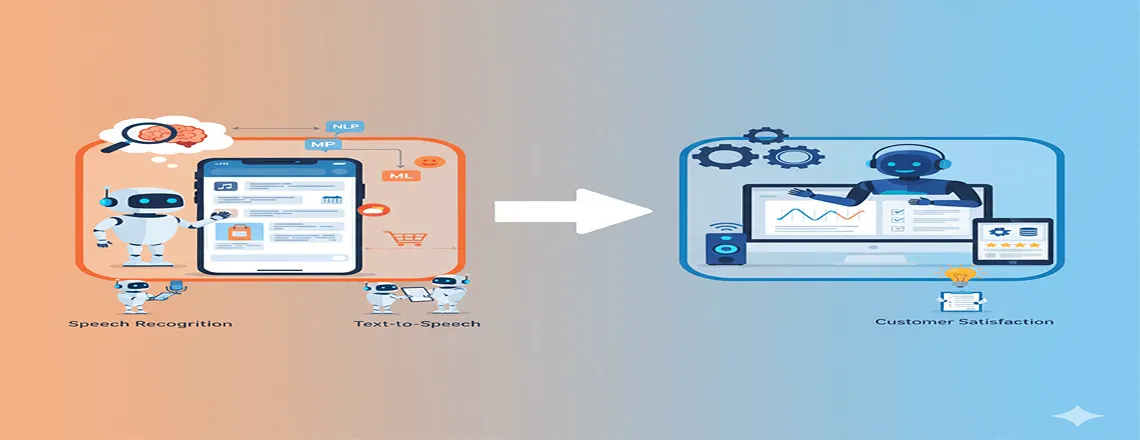
The technology behind conversational AI is quite impressive. It uses Natural Language Processing to understand what people are saying, Machine Learning to improve by learning from past conversations, and speech recognition to catch spoken words. AI uses text-to-speech technology so it can reply in a voice that sounds natural and human-like. Come together, the AI can listen to us, processing information and respond in a way that feels helpful and almost like talking to another person.
Why is conversational AI important for business?
Customers want quick answers. No one likes waiting for customer support. Businesses are also always looking to save money, improve service, and make customers happy and conversational. AI helps in all these areas.
Important of conversational AI

Better customer service
Conversational AI provides fast and consistent customer service. Customers today expect quick answers, and waiting for a human representative can be frustrating. AI chatbots and virtual assistants can respond 24 hours a day, seven days a week. Conversational AI can handle multiple customer questions at the same time. Unlike humans, who can attend to only one customer at a time, AI can talk to hundreds or even thousands of customers simultaneously. This makes it a powerful tool for businesses, especially during busy periods like holidays or special sales events.
Save time and money
Hiring a large customer support team is expensive, and training new employees takes time. Conversational AI can take over repetitive and routine tasks, such as answering frequently asked questions, booking appointments, or guiding customers through simple processes. By automating these tasks, businesses can reduce costs while maintaining high-quality service. For example, a bank can use AI to answer simple questions about account balances or recent transactions. This allows human employees to focus on complex financial advice, personalized services, or resolving unique customer problems.
Eliminate the language barrier
The main importance of this AI application is that it solves language barriers. Today, most AI virtual assistants and bots support multiple language translations. These applications can detect context and efficiently generate translations of most languages.
Create opportunities for growth and innovation
Conversational AI brings opportunities for growing and innovation across industries. AI chatbots and virtual assistant businesses can take customer engagement to new heights. These intelligent assistants personalize interactions, ensuring that products and services meet individual customer needs. It transforms customer support, sales, and marketing, boosting productivity and revenue.
Personalization and Customer Experience
Conversational AI has the ability to personalize interactions. Personalization means that the AI remembers what customers like, what they have bought before, and what they might need in the future.
Personalization is important because it makes customers feel valued and understood. When people feel that a company understands their needs and preferences, they are more likely to remain loyal, make repeat purchases, and recommend the business to others. This, in turn, helps the business grow steadily and sustainably.
Real-Life Examples of Conversational AI in Business

Conversational AI isn’t just a theory; many businesses already use it.
- E-commerce: Online stores use AI chatbots to guide customers, suggest products, answer questions, and even assist with payment processes. For instance, a customer shopping for shoes might receive AI recommendations for matching socks.
- Banking and Finance: Banks and financial institutions use AI to provide quick answers about account balances, loan applications, and transaction history. AI can also help detect fraud by analyzing unusual activity patterns.
- Healthcare: Hospitals and clinics use AI to schedule appointments, remind patients about medications, and answer general medical questions. Some AI systems can even provide mental health support by offering basic counseling advice.
- Travel: AI chatbots assist travelers in booking flights, finding hotels, providing local recommendations, and answering travel-related questions.
- Education: Conversational AI helps students with homework, tutoring, and personalized learning paths. AI can adapt lessons to the student’s level, making learning more engaging and effective.
These examples show how conversational AI is making business easier and faster.
The Future of Conversational AI
The future of conversational AI is exciting, as technology continues to advance rapidly. AI will become smarter, more human-like, and emotionally aware, providing even better service to businesses and customers.
Understanding Emotions
In the future, conversational AI will not only understand words but also detect emotions and tone of voice. For instance, if a customer is frustrated or angry, AI can respond politely and empathetically, offering solutions to calm the situation. Conversely, if a customer is excited or happy, AI can match that energy in its responses.
Smarter Conversations
Current AI sometimes gives robotic or limited answers. In the coming years, AI will be able to: Remember past interactions with a customer, understand context better, including complex questions, and carry out long and meaningful conversations.
This will make AI feel like a trusted assistant rather than a simple automated tool. Customers will be able to rely on AI for both simple queries and more detailed guidance.
Integration with Other Technologies
Conversational AI will increasingly work with other technologies like: Internet of Things, Augmented Reality and Virtual Reality , Big Data Analytics.
By integrating with these technologies, AI will become a central part of daily life and business operations.
Business Growth and Competitive Advantage
Companies that adopt conversational AI early will gain a competitive edge. AI can help them: Provide faster and more accurate customer service, reduce operational costs, make smarter business decisions, and increase customer loyalty and satisfaction.
It will be essential for business growth. Companies that embrace it will be better prepared to meet customer expectations and stay ahead of competitors.
Tips for Businesses to Successfully Adopt Conversational AI
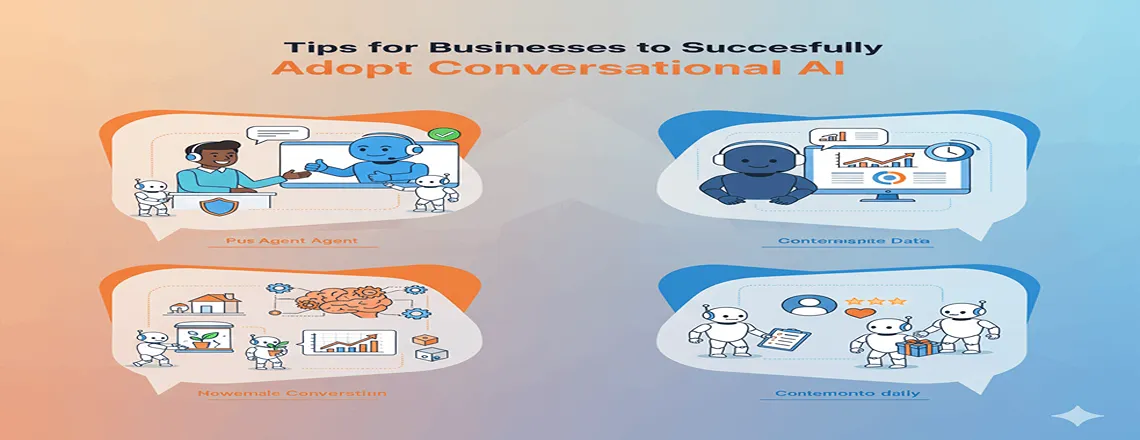
Businesses can adopt conversational AI more effectively by following a few best practices:
- Start small: Begin with AI handling simple tasks, like answering FAQs or processing basic orders.
- Regularly train AI: Keep updating AI with new products, services, and customer preferences.
- Use AI to assist humans: Employees should focus on complex tasks while AI handles routine work.
- Monitor AI performance: Regularly check conversations for errors or misunderstandings and improve the system continuously.
- Focus on customer experience: Always design AI interactions to make customers feel valued, understood, and satisfied.
Measuring the Impact of Conversational AI

Tracking the performance of AI tools is crucial to assessing their effectiveness and making data-driven decisions for enhancement.
Here are key metrics to measure the impact of conversational AI.
Customer satisfaction rates
Use customer satisfaction ratings to track the percentage level at which conversational AI tools meet customer interaction standards.
Conduct surveys, employ feedback, or implement sentiment analysis to gain insights into users’ satisfaction levels. Focus on improving these satisfaction rates by addressing pain points identified through feedback.
Resolution times
Measure the average response time of the tool to assess how quickly it resolves user inquiries. A shorter resolution time indicates a more efficient and effective customer experience.
Sales conversion rates
Evaluate the frequency with which the tool generates leads and track how many leads are successfully converted into sales.
Analyze how effectively the tool guides users through the sales funnel and its role in driving conversions. Refine the AI tool’s management and interaction strategies to boost its ability to convert leads into customers, thereby increasing conversion rates.
Conclusion
Conversational AI is an idea for the future. It is already here and changing the way businesses operate today. It can talk with customers, answer questions, give personalized suggestions, and analyze conversations to provide useful insights for the company.
Looking ahead, this technology will only get smarter, more natural, and even emotionally aware. Businesses that start using chatboq now will save money, improve customer satisfaction, and stay ahead of their competitors.
Frequently Asked Questions (FAQs)
Conversational AI is a form of artificial intelligence that enables computers to interact with humans using natural language through chatbots, voice assistants, or messaging tools.
Unlike traditional chatbots, conversational AI understands context, remembers past interactions, and provides more natural, human-like responses.
Conversational AI helps businesses improve customer service, save operational costs, automate routine tasks, and enhance customer satisfaction with faster, smarter communication.
Conversational AI is powered by Natural Language Processing (NLP), Machine Learning (ML), speech recognition, and text-to-speech technologies for accurate understanding and responses.
Industries such as e-commerce, banking, healthcare, travel, and education widely use conversational AI to automate queries, support, and personalization.
It provides 24/7 instant responses, personalizes communication based on user history, and eliminates long wait times for smoother, more engaging experiences.
Benefits include better customer engagement, reduced support costs, improved efficiency, multilingual support, and data-driven insights for business growth.
Future conversational AI systems will become more human-like, emotionally intelligent, and integrate with technologies like IoT, AR/VR, and big data analytics.
Start small with simple use cases, regularly train the AI, use it to support human staff, track performance, and focus on improving customer satisfaction.

Daniel Wong
Technical Content Writer
My name is Daniel Wong, a Technical Content Writer from Singapore with a strong interest in AI-powered tools and digital automation. At ChatBoq AI, I focus on creating practical and easy-to-follow content that helps businesses and individuals understand how chatbots work and how to use them effectively.
I enjoy breaking down complex topics like natural language processing (NLP) and conversational AI into simple guides that anyone can follow. Each article is based on careful research, real-world examples, and testing to ensure accuracy and reliability.
Through ChatBoq AI, my goal is to provide readers with trustworthy insights, step-by-step tutorials, and the latest trends in chatbot technology.
✍️
Expert in AI & Chatbot Technology

Leave A Comment