
Chatbots in Social Media: Boost Engagement and Customer Support

Social Media chatbots are basically powered by AI and conversational AI technology that automatically responds to customer messages. It responds through various platforms like Facebook, Instagram, Twitter, TikTok, and LinkedIn. These chatbots increase engagement by 25% while revolutionizing customer support by handling 80% of queries without any human interference.
📑 Table of Contents
- Chatbots in Social Media: Boost Engagement and Customer Support
- Key Highlights
- Why Social Media Chatbots Matter
- Key Benefits Of Social Media Chatbots
- Platform Specific Applications
- Best Practices For Implementation
- Overcoming Common Challenges
- Chatbot Case Studies: Proven Business Results
- How to Choose the Best Chatbot Platform for Social Media
- Measuring ROI And Success Metrics
- Implementation Action Steps
- Conclusion
- Frequently Asked Questions (FAQs)
Companies using AI chatbots for social media see 25% higher conversation rates, reduced cost, and faster response time. The implementation of chatbots in social media produces instant, 24/7 customer support while boosting the customer satisfaction score. In today’s fast-paced digital economy, chatbots offer 24/7 omnichannel support, ensuring customers feel acknowledged at every stage of the customer journey.
Key Highlights
| Boost engagement by 25% using AI chatbots Automate 80% of customer queries instantly Reduce support costs by up to 60% Deliver 24/7 omnichannel customer assistance globally Transform marketing through real-time social interactions |
Why Social Media Chatbots Matter
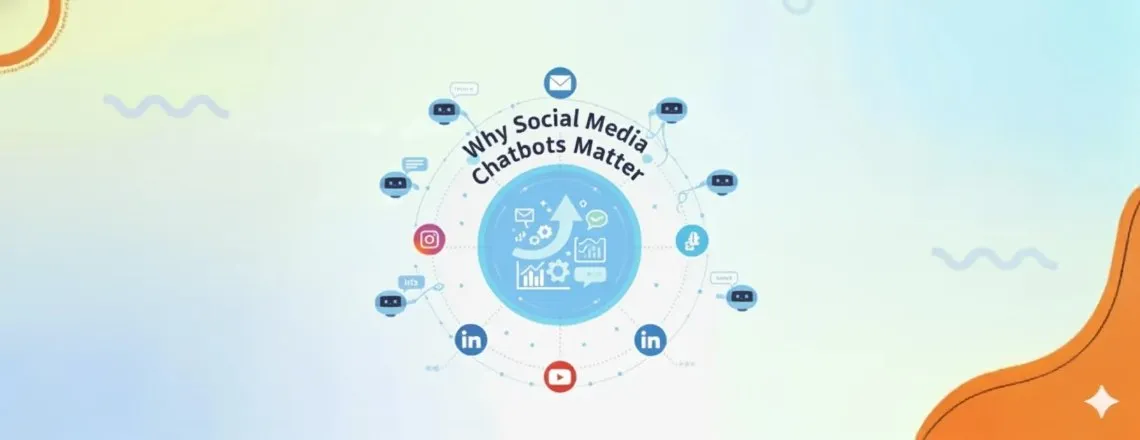
Customer expectations have shifted, with 67% of millennials preferring to interact with brands through chatbots, while 53% abandon inquiries after a longer wait time. Social media chatbots technology provides real-time support across platforms. AI chatbot social media solutions offer an identical quality response 24/7, unlike human agents with varying availability.
Conversational marketing drives results while businesses using real-time conversation strategies report 80% higher engagement rates. Platform algorithms reward meaningful interactions and chatbots creating engaging conversations, see organic reach expand while benefiting both customer service and marketing efforts.
Key Benefits Of Social Media Chatbots
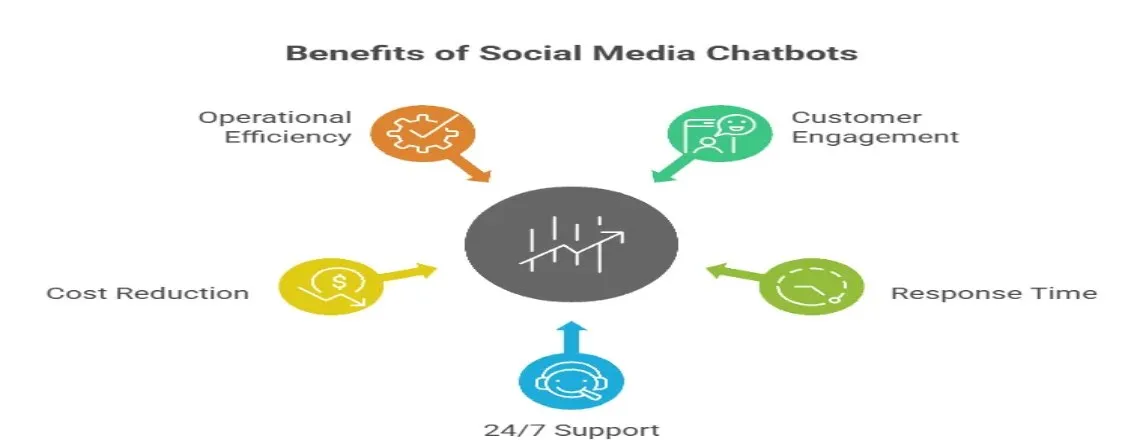
Enhanced Customer Engagement And Response Time
Social Media chatbots shine at maintaining conversation strengths naturally. Rather than wait for follow-up questions, the resolution lies in letting smart chatbots anticipate the next set of queries, leading them into a more progressive dialogue.
The best implementations feel like a helpful discussion. They ask clarifying questions, remember previous interactions, and adapt communication styles to match each platform’s culture. Chatbot conversations on LinkedIn feel professional, while Instagram interactions are casual and visual.
Platform-specific Features Amplify Power :
- Instagram chatbots acknowledge story mentions and shopping tags
- Facebook Messenger bots integrate e-commerce for effortless purchasing
- Twitter bots turn public complaints into private problem-solving sessions
The best social media chatbots implementations create conversational loops and interactions naturally leading to deeper engagement. Customers experiencing thoughtful conversations are 3x more likely to complete purchases and recommend brands.
24/7 Automated Customer Support
Global businesses require regular support across time zones. Social media chatbots provide excellent quality service and assistance around the clock while maintaining the brand voice and service standards.
With AI-driven automation, chatbot systems perform automatic resolutions of up to 80 percent more of common queries. Common queries like order status, product information, return policies, and password resets. This reduces human agents’ workload, allowing staff to focus on complex, emotional customer cases.
Handoff processes between chatbots and human agents are effortless. When conversations require human intervention, chatbots provide complete context so customers don’t repeat situations.
Cost Reduction And Operational Efficiency
According to McKinsey’s research, global companies spend up to $1.3 trillion annually on customer support. By implementing social media chatbots in business workflows, companies can cut service costs by 40–60%, handle viral spikes effortlessly, and gather valuable insights to improve marketing and product strategy.
Platform Specific Applications
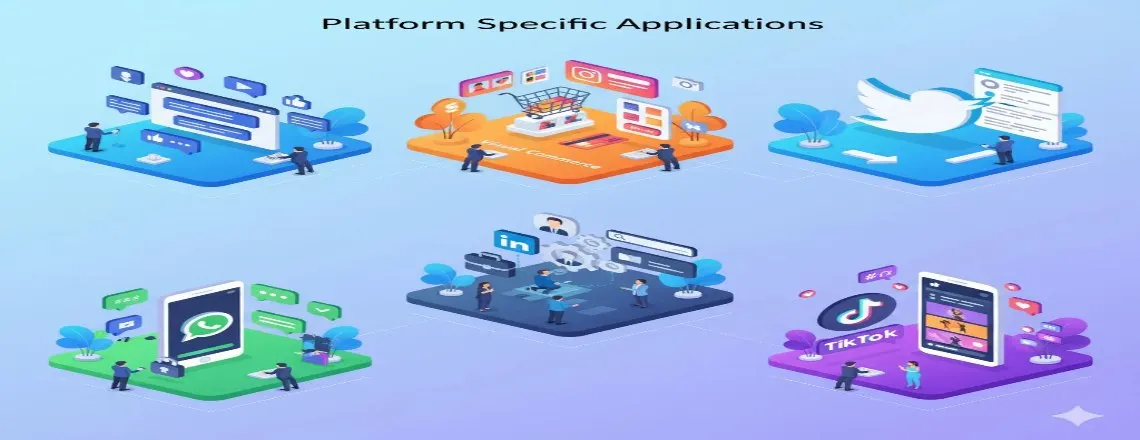
Facebook Messenger
Facebook Messenger Chatbot remains the high standard for experienced chatbot functionality. The platform’s robust API supports persistent menus, carousel product displays, and seamless payment processing.
Retail clients generate 30% of online sales through social media chatbots. The key is treating conversations like in-store shopping experiences where chatbots act as knowledgeable sales associates.
Instagram Visual Commerce
Instagram excels at visual commerce and lifestyle brand engagement. Social media chatbots respond to story mentions, handle product inquiries from shopping tags, and manage constant DM streams.
Beauty and fashion brands find success with Instagram chatbots evaluating photos customers send and suggesting matching products or styling advice, just like having a 24/7 personal shopping assistant.
Twitter chatbots are utilized for customer service in real time, along with crisis management. The public context of the platform makes it essential to provide quick and helpful responses to mitigate any potential impact on brand reputation.
Examples of companies using Twitter chatbots successfully are airlines and telecommunications companies, where service complaints and outages are common. The bot would acknowledge the situation publicly, collect further information from the customer privately, and escalate if necessary.
LinkedIn provides Business-2-Business users with professional, comprehensive conversations with chatbots. These bots qualify leads, set up sales meetings, and build business relationships by having meaningful conversations.
SaaS companies get great results when they use social media chatbots to screen higher leads before sending them to sales teams. Bots collect information about the company, find the people who make decisions, and set up follow-up calls.
WhatsApp social media chatbots are a useful tool for customer service, interacting with customers from other parts of the country. The platform’s end-to-end encryption and mobile-first design make it perfect for managing private and secure customer communications, such as setting up appointments, confirming orders, and processing payments.
TikTok
TikTok represents the newest frontier for social media chatbots implementation. Brands experiment with bots responding to comments with helpful information or directing users to profiles for detailed conversations, matching TikTok’s casual, playful conversational environment and creative culture.
Best Practices For Implementation
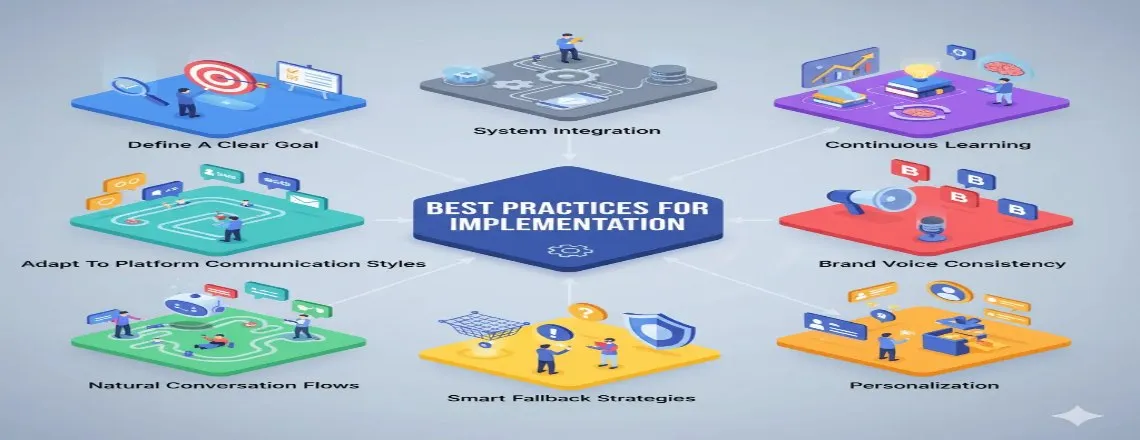
Define A Clear Goal
Start with clear objectives like support automation, lead generation, or engagement growth. Different goals require different conversation designs and success metrics. Different goals require different conversation designs and success metrics.
Adapt To Platform Communication Styles
Instagram users expect casual, emoji-filled interactions. LinkedIn audiences want professional responses. Twitter users prefer concise replies. Your chatbot personality should adapt while maintaining core brand values.
Natural Conversation Flows
The best social media chatbots solutions feel like consultations, not rigid FAQ systems. Build conversation trees that anticipate follow-ups and guide users toward resolution.
Smart Fallback Strategies
Any chatbot faces questions it cannot answer. Thus, a smooth escalation to human agents should feel like a natural progression. The context from chatbot conversations must be provided to customers so that repeated information can be avoided.
Personalization
Modern chatbots access customer purchase history, previous interactions, and platform-specific behavior for tailored responses. Returning customers should get different treatment from first-time visitors.
Brand Voice Consistency
A chatbot should reflect your brand. Develop clear tone-of-voice guidelines, clear language rules, and personality traits that fit your brand. Always ensure you connect with your target audience consistently and familiarly.
Continuous Learning
Regular conversation log analysis reveals optimization opportunities. Which questions confuse? Where do users drop off? Use insights to refine responses and expand capabilities.
System Integration
Effective chatbots connect with CRM, inventory management, and support ticketing systems. This allows them to provide personalized responses using real customer data.
Overcoming Common Challenges
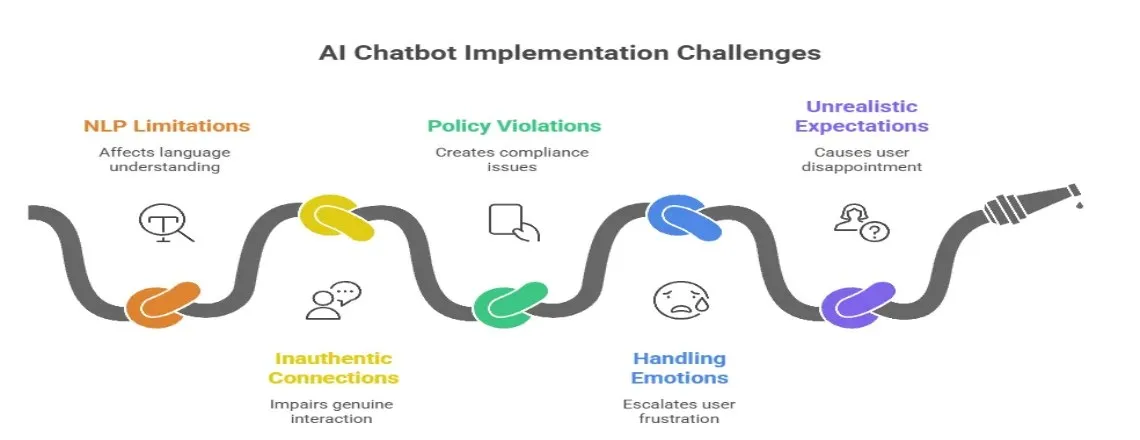
- NLP & Language Understanding: Natural Language Processing (NLP) is powerful, but not perfect. Combine AI-driven free text recognition with guided menus for smoother experiences.
- Authentic Connections: Social media chatbots should be transparent about automation while being genuinely helpful.
- Platform Policy Compliance: Chatbots must comply with GDPR, CCPA, and platform-specific rules for automation and consent.
- Emotional Situations: AI struggles with empathy. Brands should ensure immediate human escalation for sensitive interactions.
- User Expectations: Be upfront about chatbot capabilities and limitations. Users who understand what to expect from automated interactions are more patient and likely to have positive experiences.
Chatbot Case Studies: Proven Business Results
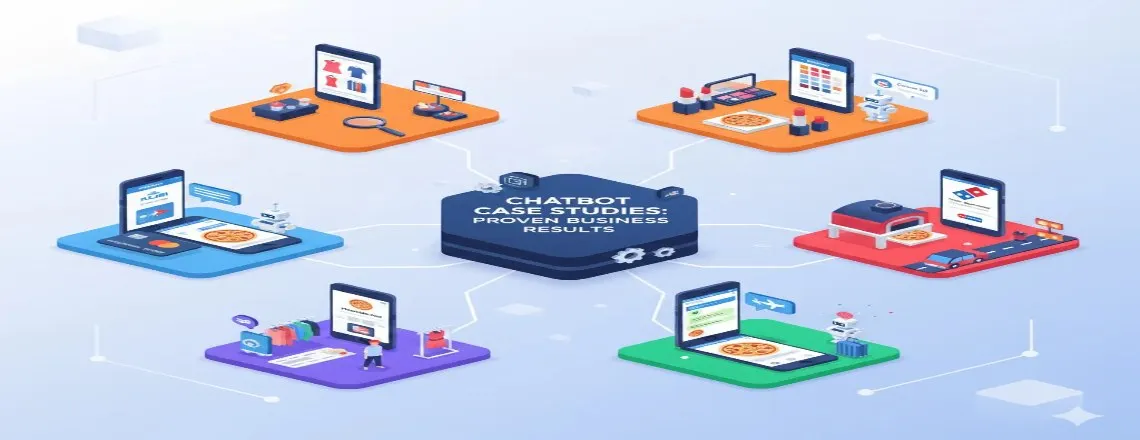
- Sephora’s Color IQ: Messenger chatbot assists customers in finding foundation shades, provides makeup tutorials, and schedules appointments. Integrating this chatbot increased mobile app bookings by 11% while decreasing customer service costs by 40%.
- Domino’s Dom Ecosystem: Comprehensive chatbot spanning Facebook, Twitter, and mobile app handles pizza customization, tracks deliveries, and manages preferences. Result: 75% of orders through digital channels with higher satisfaction than phone orders.
- KLM Airlines: Multilingual social media chatbots handle customer service in 10 languages. The system processes over 15,000 interactions weekly with 90% accuracy and responds in under 2 minutes.
- H&M Fashion Assistant: Offers personalized styling advice, which boosts engagement rates by 70% compared to email marketing. It also drives 20% higher conversion rates for featured products.
- Mastercard’s KAI: This banking bot assists customers with financial questions, their transaction history, and spending analysis. After implementation, customer satisfaction scores rose by 35%.
- Pizza Hut Messenger Bot: This conversational commerce experience leads to 30% higher average order values compared to traditional online ordering through smart upselling during chats.
How to Choose the Best Chatbot Platform for Social Media

- Platform Support: Native support in every social media site where your customers are available. Workarounds with third-party tools usually do not have sufficient features.
- Customization Ability: Look for rich conversation flows, response templates, and visual design consistency with brand personality.
- NLP & AI Comprehension Accuracy: Test social media chatbots with real queries to assess comprehension.
- Scalability: Cloud platforms handle bursts of traffic better. Opt for performance during viral outbreak times and reasonable price scales.
- CRM & Saas System Integration: Combine with CRM, inventory, and support systems to facilitate personalized, contextual replies.
- Security Features: Encryption, data control over retention, and compliance certifications for sensitive customer data.
Measuring ROI And Success Metrics
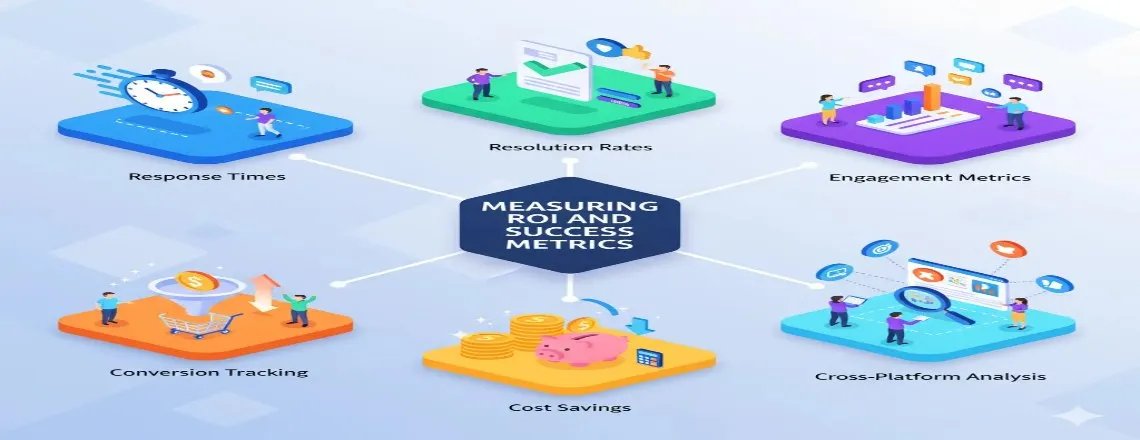
- Response Times: Target under 30 seconds for routine queries, 2-3 minutes for complex questions, which has significant improvements over typical human response times.
- Resolution Rates: Aim for 80% automated resolution while maintaining 4.0/5.0+ satisfaction scores, directly correlating with cost savings and efficiency improvements.
- Engagement Metrics: Keep traces of completion rates, follow-up frequency, and user retention. These show the value of chatbot conversations.
- Conversion Tracking: Link social media chatbots interactions to leads and revenue.
- Cost Savings: Include reduced agent requirements, improved efficiency, and decreased response times. Most businesses report 40-60% cost reductions after comprehensive implementation.
Platform-Specific Metrics
- Instagram: Story mentions, shopping tag interactions
- LinkedIn: Lead qualification, meeting scheduling success
- Facebook: E-commerce conversions, cart abandonment prevention
- Twitter: Crisis response times, public sentiment improvements
Cross-Platform Analysis: Track how customers move between social channels during complex interactions and how chatbots support these transitions.
Implementation Action Steps
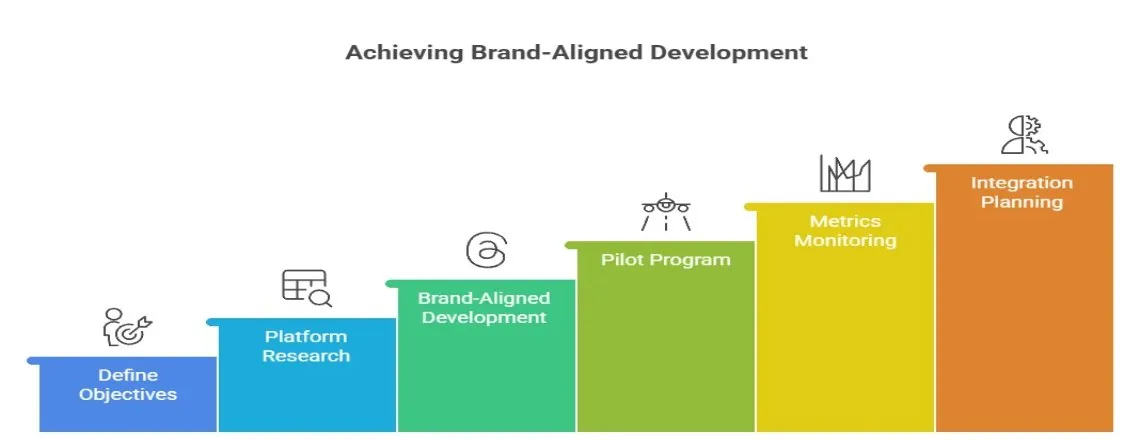
- Performance Audit: Analyze response times, inquiry patterns, and engagement rates across platforms to identify chatbot opportunities.
- Define Objectives: Establish specific goals like 80% response time reduction, 75% automated inquiries, or 25% higher conversion rates.
- Platform Research: Study unique features and user expectations on each active social platform.
- Brand-Aligned Development: Create personalities and templates reflecting brand voice while adapting to platform-specific communication styles.
- Pilot Program: Start with one platform and limited use cases for testing and optimization before expanding.
- Metrics Monitoring: Track response times, resolution rates, satisfaction scores, and business impact metrics.
- Integration Planning: Connect chatbot solutions with existing CRM, support, and e-commerce systems for personalized experiences.
Conclusion
Social media chatbots are no longer optional; now they’re a strategic necessity. With the market projected to reach $46.6 billion by 2029 (Statista), early adopters secure competitive advantages in engagement, efficiency, and customer loyalty.
By combining AI automation with human empathy, businesses can build scalable, secure, and personalized customer experiences across every digital touchpoint.
Frequently Asked Questions (FAQs)
It’s an AI-powered tool that automates conversations on platforms like Facebook, Instagram, Twitter, LinkedIn, WhatsApp, and TikTok.
They respond instantly, anticipate questions, and keep conversations active, boosting engagement by up to 25%.
No. They automate about 70–80% of routine queries, while complex issues are escalated to human agents.
They manage high inquiry volumes instantly without overtime costs or service breakdowns.
Facebook, Instagram, LinkedIn, Twitter, WhatsApp, and TikTok all support different use cases like e-commerce, lead generation, and customer support.
Yes, they can cut customer service costs by 40–60% through automation and efficiency.
By using CRM and past data to tailor responses, product suggestions, and conversation styles.
Response times, resolution rates, satisfaction scores, engagement, conversions, and cost savings.
Yes, leading platforms provide encryption and compliance features for data protection.
Run a performance audit to identify gaps in response time, engagement, and customer support needs.

Daniel Wong
Technical Content Writer
My name is Daniel Wong, a Technical Content Writer from Singapore with a strong interest in AI-powered tools and digital automation. At ChatBoq AI, I focus on creating practical and easy-to-follow content that helps businesses and individuals understand how chatbots work and how to use them effectively.
I enjoy breaking down complex topics like natural language processing (NLP) and conversational AI into simple guides that anyone can follow. Each article is based on careful research, real-world examples, and testing to ensure accuracy and reliability.
Through ChatBoq AI, my goal is to provide readers with trustworthy insights, step-by-step tutorials, and the latest trends in chatbot technology.
✍️
Expert in AI & Chatbot Technology

Leave A Comment