
How to Write an Apology Email to Customers After a Bad Experience
Ever sent an apology and still lost a customer? Maybe the problem isn’t your intention but your execution. Customer complaints are common in every business. Your response could be what turns a lost customer into a loyal one. A rushed or plain apology usually backfires. It pushes frustrated customers towards your customers.
📑 Table of Contents
- How to Write an Apology Email to Customers After a Bad Experience
- Key Highlights
- Key Elements of an Effective Apology Email to Customers
- Step-by-Step Guide to Writing Effective Apology Emails
- Best Apology Email Examples and Templates for Different Scenarios
- How to Test and Improve Your Apology Emails for Better Results
- How Email Automation Tools Improve Customer Apologies
- Why Apology Emails Are Critical for Customer Retention
- Most Common Customer Complaints That Need Apology Emails
- Best Practices for Customer Relationship Management After Apologies
- Conclusion
- Frequently Asked Questions (FAQs)
Smart businesses today use automation tools to prevent these costly mistakes. These tools help you respond better and fix errors before customers see them.
This article covers everything you need to write an apology email to customers. It covers writing techniques, templates, and automation strategies that can save relationships. You’ll learn how to turn complaints into stronger customer relationships.
Key Highlights
| Strong apology emails strengthen customer trust. Personalization ensures every message feels genuine. Clear responsibility shows accountability and care. Testing prevents costly mistakes before sending. Automation tools improve speed and consistency. |
Key Elements of an Effective Apology Email to Customers
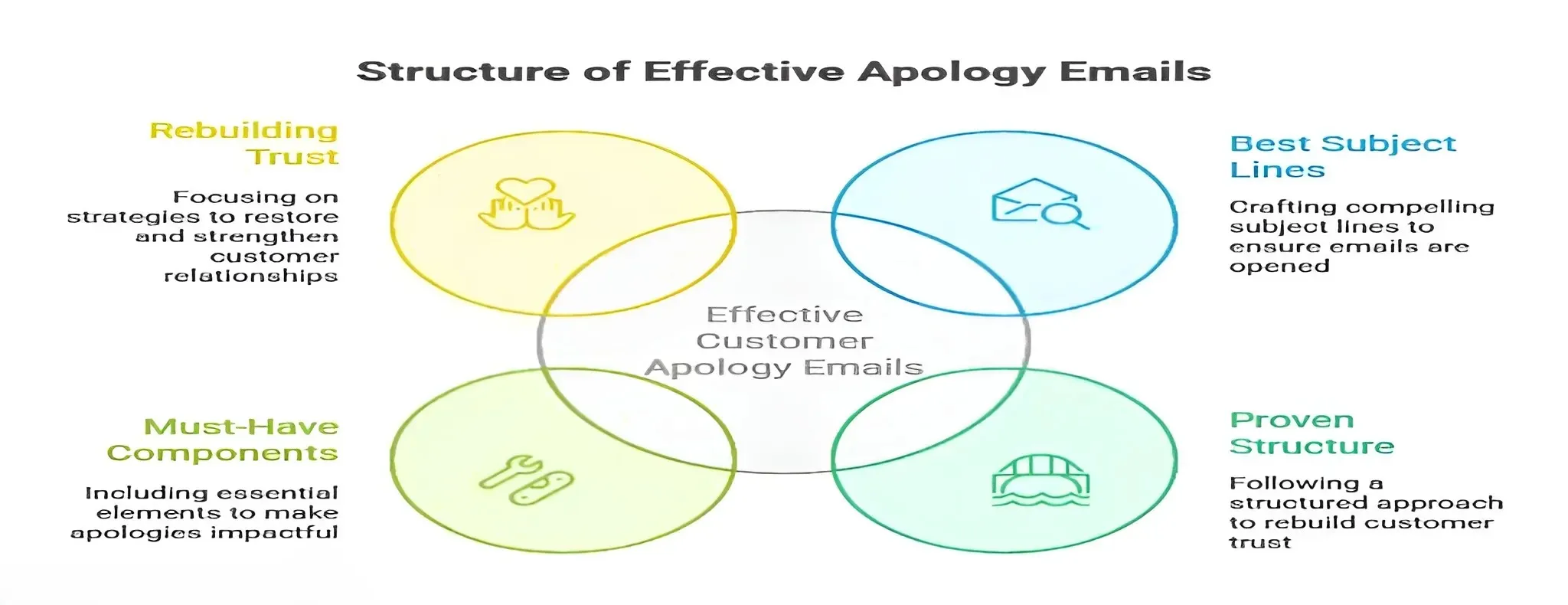
Successful apology emails follow a proven structure. Each component serves a specific purpose in rebuilding damaged customer relationships.
5 Must-Have Components of a Customer Apology Email
Missing even one key element weakens your entire message. Complete apologies include all five of these parts.
Strong apology emails contain these critical elements:
- Specific acknowledgment of exactly what went wrong
- Genuine empathy that validates customer frustration
- Clear responsibility without deflecting blame elsewhere
- Actionable solutions or fair compensation offers
- Open communication channels for follow-up questions
These components work together to show customers their concerns matter to your business.
Best Subject Lines for Apology Emails That Get Read
Your subject line determines whether customers read your carefully crafted apology. Weak subject lines mean wasted effort on great content.
Ever wonder why perfectly written emails get ignored? Usually, it’s the subject line. Effective ones follow these principles:
- Include “apology” or “sorry” prominently
- Add customer names when your system allows it
- Reference the specific issue briefly but clearly
- Avoid spam triggers like excessive punctuation
Strong subject line examples:
- “Sarah, we’re sorry about your delayed shipment.”
- “Apology for yesterday’s website problems.”
- “Our mistake with your billing – here’s what we’re doing”
How to Write Apology Emails That Rebuild Trust
The way you write your apology shapes how genuine your customers feel it is. Write with the right mix of professional and genuine so it feels personal. Ensure your message sounds like it’s coming from a real person and not a corporate committee. Some steps to follow are:
- Write short paragraphs that are easy to scan.
- Use everyday language instead of business terms.
- Include plenty of white space for better readability.
- Add bullet points for pieces of information.
- Bold only the most important details.
Make your customers feel heard and valued, not like they’re speaking to a robot.
Step-by-Step Guide to Writing Effective Apology Emails
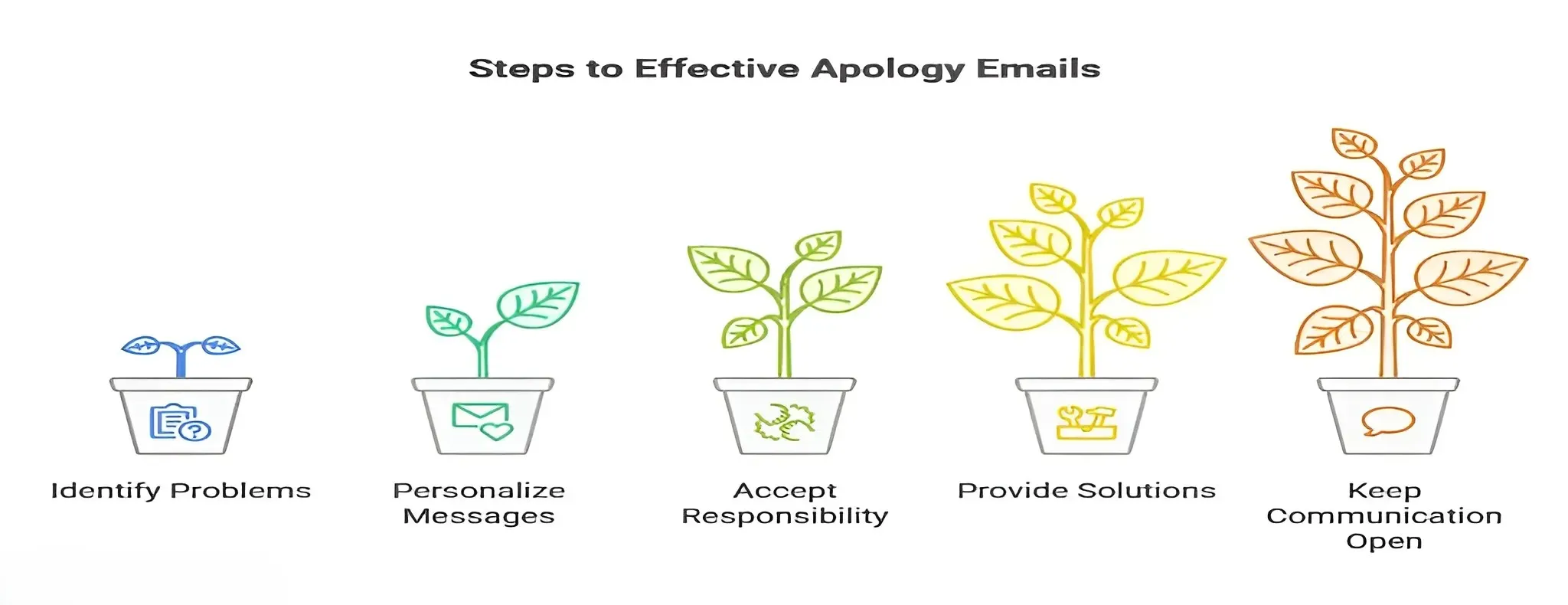
Follow this proven process to create apology emails that repair relationships. Each step done in order provides the strongest impact.
Step 1: Identify Customer Problems Quickly
Quick response times show customers their concerns matter. Delayed responses often make angry customers even more frustrated. You have about 24 hours to respond before frustration turns into a lost customer. Fast identification requires:
- Careful reading of the complete complaint.
- Understanding the customer’s main frustration point.
- Reviewing their order and interaction history.
- Assessing how serious the problem really is.
Use Chatboq to automatically track and categorize customer complaints, respond faster, and reduce churn.
Step 2: Personalize Every Message
Generic responses tell customers they’re just another ticket number. Email personalization shows you understand their unique situation. Customers always notice when you don’t customize your response. They expect personalization that includes:
- Their name is used naturally throughout the email.
- Specific details about their order or experience.
- Relevant information from their account history.
- Recognition of the length of their relationship with your company.
Test your personalized emails in real-time with Chatboq to ensure every customer feels valued.
Step 3: Accept Full Responsibility
Apologies that are clear and direct work better than evasive apologies. You should also not make excuses or blame other people or circumstances. You should take complete ownership of whatever went wrong. Effective responsibility includes:
- Direct statements using “I” or “we” language
- No conditional phrases like “if you were upset”
- Recognition of the customer’s feelings without minimizing them
- Simple explanations without lengthy justifications
Make sure you recognize their frustration and own your part in causing it.
Step 4: Provide Real Solutions and Compensation
Simply saying sorry often isn’t enough for unhappy customers. They want to see concrete actions that fix their problems or prevent future ones. Match your solution to the problem size. Small issues need appropriate responses, while major problems need significant gestures.
Effective solutions might include:
- Complete or partial refunds for defective items
- Discount codes for future purchases with your company
- Free shipping upgrades on replacement orders
- Account credits to offset service interruptions
- Priority support access for ongoing issues
You should always deliver exactly what you promised in your apology.
Step 5: Keep Communication Open
You should close your email by asking customers to contact you again if needed. This shows that their satisfaction is still a priority. Some issues need several conversations to resolve completely. Make future contact easy by including:
- Direct phone numbers and email addresses.
- Specific hours when customer support is available.
- Clear next steps if the situation requires them.
- Invitations for more feedback or questions.
- Genuine thanks for their patience during the resolution.
Remove barriers that might prevent customers from reaching out again.
Best Apology Email Examples and Templates for Different Scenarios
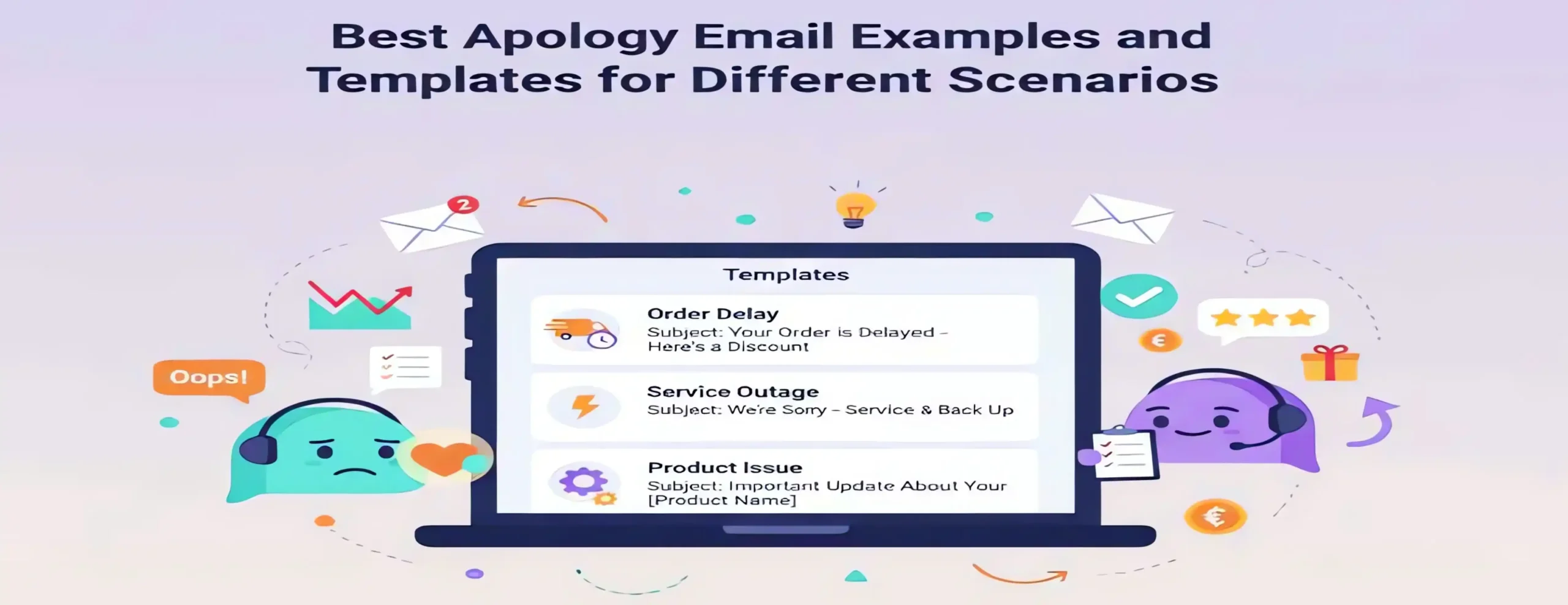
Learning from successful examples can show you what truly works. You can adapt these apology email templates to fit your own business. Many companies have transformed customer complaints into loyal relationships using these templates. You can achieve similar results with the right approach.
Shipping Delay Apology Template
Mistakes happen, especially when the post office or a courier service gets involved. Orders will sometimes be delayed. If an order is delayed, respond quickly and let customers know. A short email can make the wait less frustrating. Including a discount code may even reduce churn while boosting loyalty and revenue.
Subject: We’re Sorry for Your Delayed Order
Dear [Customer Name],
We sincerely apologize for the delay in delivering your order #[Order Number]. We understand how frustrating it is when a package doesn’t arrive on time, especially when you’re counting on it.
What happened: [Brief, honest explanation: e.g., “Due to unexpected carrier delays/weather conditions/high order volume, your shipment has been delayed.”]
What we’re doing: Your order is currently [status] and we expect it to arrive by [new estimated date]. You can track your package here: [tracking link]
How we’re making this right: As an apology for this inconvenience, we’d like to offer you [15%/20%] off your next purchase with code: SORRY[XX]. This code is valid until 2026.
We truly value your business and patience. If you have any questions or concerns, please don’t hesitate to reach out to us at [contact information].
Thank you for your understanding.
Sincerely,
[Your Name]
[Your Title]
[Company Name]
Service Quality Apology Template
When service fails, admit the mistake and show how you’ll prevent it. A heartfelt apology can turn a bad experience into stronger customer loyalty.
Subject: Our Sincere Apologies for Falling Short
Dear [Customer Name],
I’m reaching out personally to apologize for the poor service experience you received on 2026. This falls well below the standard we set for ourselves, and I’m truly sorry we let you down.
What went wrong: [Specific acknowledgment of the issue: e.g., “Your call was transferred multiple times without resolution/Our staff was unprepared to handle your request/We failed to follow through on our commitment.”]
What we’re doing to fix this: We take your feedback seriously. Here’s what we’re implementing immediately:
- [Specific action 1: e.g., “Additional staff training on…”]
- [Specific action 2: e.g., “Updated procedures to ensure…”]
- [Specific action 3: e.g., “Direct escalation path for similar situations”]
How we’re making this right: [Specific compensation: e.g., “We’ve issued a full refund/provided a complimentary service/credited your account with $XX”]
Your business matters to us, and we’re committed to regaining your trust. If you’d like to discuss this further, please contact me directly at [direct contact information].
Sincerely,
[Your Name]
[Your Title]
[Company Name]
Inaccurate Communication Apology Template
Occasionally, you’re going to jump the gun or communicate information that isn’t true. When that happens, it pays to own up to the error and make the situation right:
Subject: Correction: Important Update About [Topic]
Dear [Customer Name],
I need to apologize for providing you with incorrect information in our recent communication on 2026.
What we said: [Quote or summarize the incorrect information]
The accurate information: [Provide the correct details clearly and completely]
Why this happened: [Brief, honest explanation without making excuses: e.g., “This was due to an internal miscommunication/outdated information in our system/an error on our part.”]
What this means for you: [Explain any impact on the customer and what steps they need to take, if any]
We understand that you rely on us for accurate information, and we failed to deliver that. We’re reviewing our [communication process/information verification procedures] to prevent this from happening again.
If you have any questions or if this has caused you inconvenience, please reach out to me directly at [contact information]. We’re here to help make this right.
Thank you for your patience and understanding.
Sincerely,
[Your Name]
[Your Title]
[Company Name]
Want to test your apology emails before sending? Try Chatboq’s free email testing tool.
How to Test and Improve Your Apology Emails for Better Results

Even genuine apologies can miss their mark completely. Testing systematically helps catch issues before they reach customers.
Why Email Testing Matters
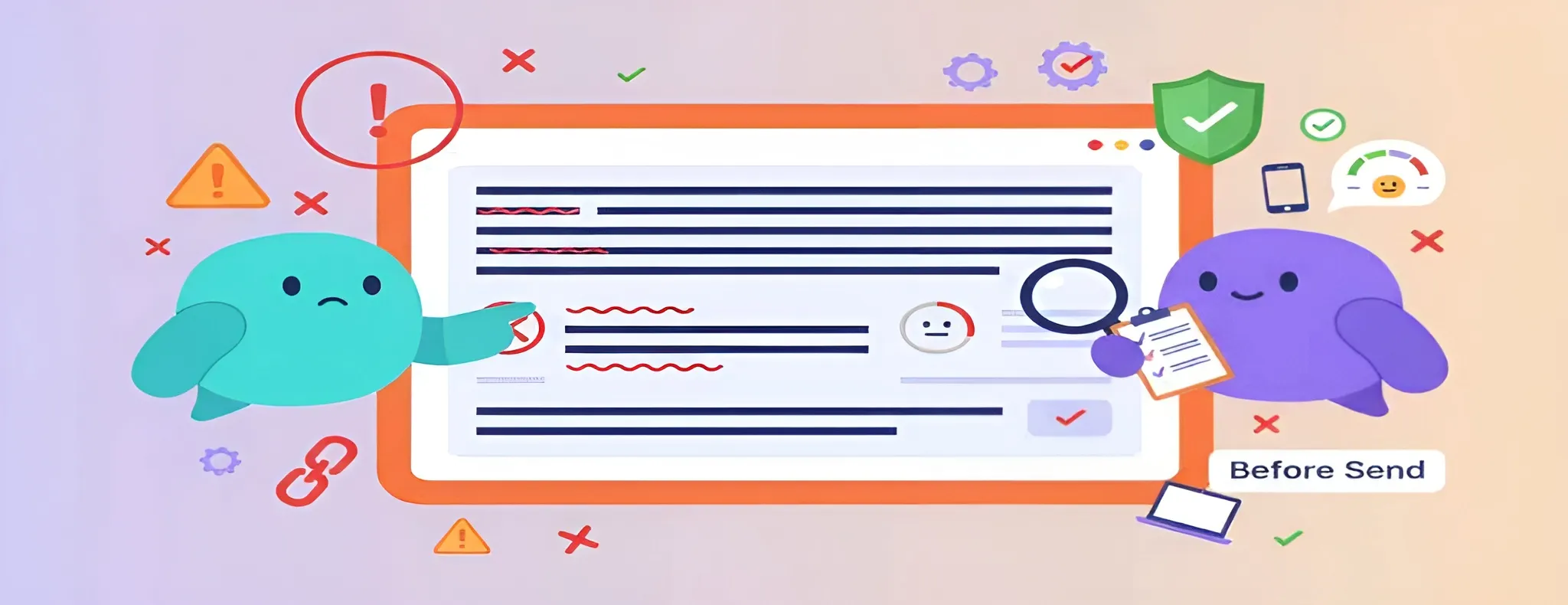
Emails with wrong tones, broken links, or bad formatting can make situations worse. Testing prevents these costly mistakes. Have you ever immediately regretted hitting the send button? Proper testing helps you avoid:
- Obvious spelling and grammar mistakes.
- Broken hyperlinks or missing contact information.
- Inappropriate tone choices for specific situations.
- Technical problems with email display.
- Confusing or unclear messaging.
Single mistakes in apology emails can destroy all your good intentions.
Apology Email Testing & KPIs

Comprehensive testing examines both technical functionality and emotional impact. Using several testing approaches produces better results.
Test these crucial elements before sending any apology:
- Subject line effectiveness for higher open rates.
- Email content clarity and appropriate tone.
- Email personalization accuracy in customer details.
- All links and contact information functionality.
- Display quality across different devices.
Track key performance indicators like open rates, customer responses, and follow-up complaint frequencies. This data guides future improvements. Leverage Chatboq’s multi-scenario testing to catch errors and optimize tone before sending.
How Email Automation Tools Improve Customer Apologies

The right tools don’t take away empathy but make it stronger. They help you reply quickly without sounding robotic.
Features to Look for in Automation Tools To Improve Email Quality
Modern platforms can analyze and improve your apology emails before customers see them. This prevents embarrassing mistakes that make situations worse.
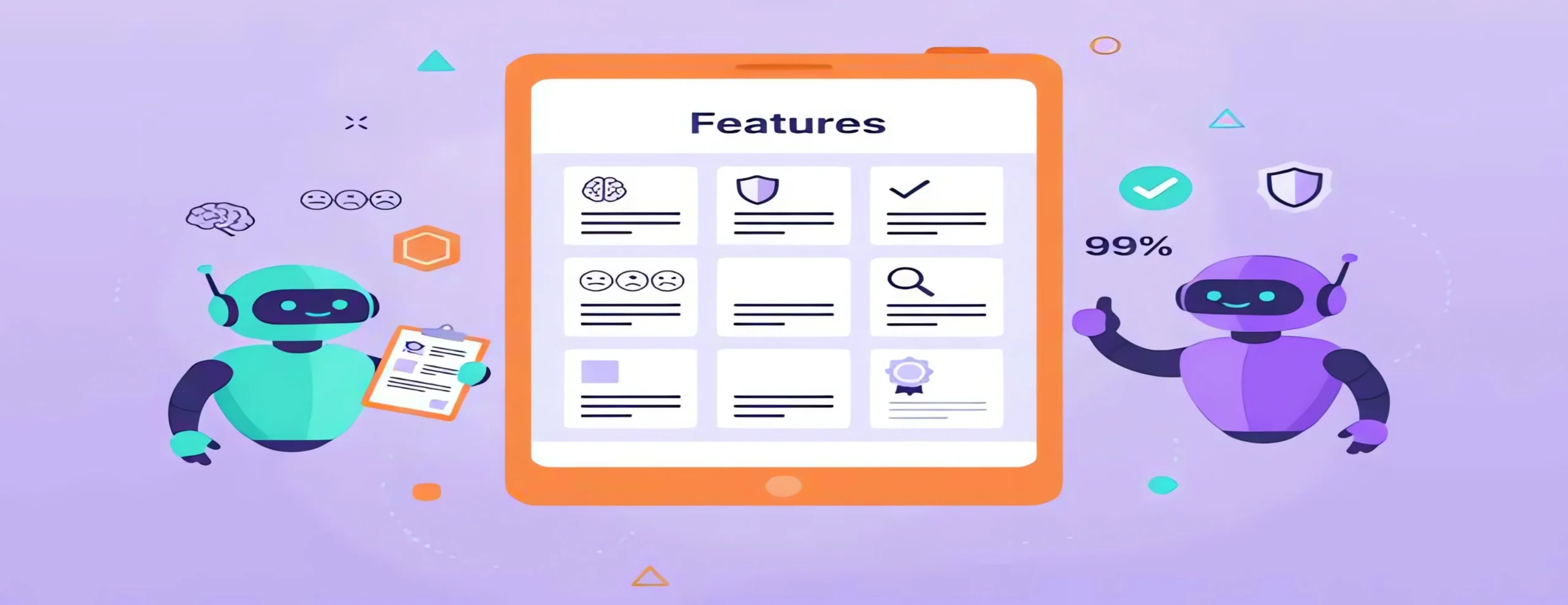
Some valuable features for customer service teams:
- Smart sentiment analysis that identifies frustrated customers quickly
- Personalized draft creation based on complaint types and history
- Multi-scenario testing to ensure messages work in different situations
- Tone evaluation that checks for appropriate empathy levels
- Quality control that notices spelling, grammar, and formatting errors
These features help ensure every customer gets a reliable, high-quality response.
Why Using Automation Works
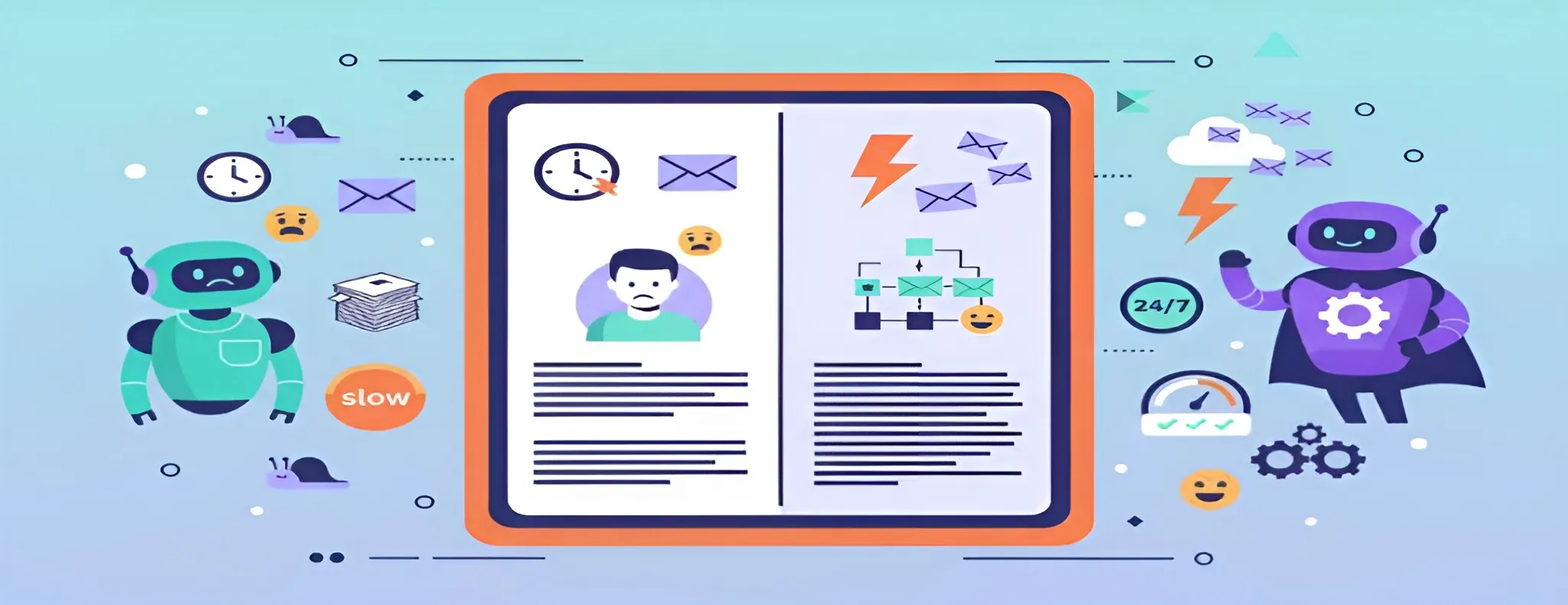
Automation manages everyday tasks so your team can focus on complex customer needs. It improves speed without sacrificing quality. What if your system could prevent mistakes before customers notice them? Smart automation provides:
- Much faster response times to urgent complaints
- Identical messaging standards across all team members
- Fewer human errors in email composition and sending
- Better tracking systems for measuring apology success
- More available time for handling complicated issues
The goal is to support human judgment, not replace it entirely.
Automate routine apology emails without losing the human touch. Try Chatboq for free today.
Why Apology Emails Are Critical for Customer Retention

Getting apology emails right can save your business thousands in lost revenue. Getting them wrong costs you much more than just one unhappy customer.
The Real Cost of a Poor Apology
Bad apology emails create bigger problems than the original complaint. Research shows 32% of customers abandon brands after just one negative experience.
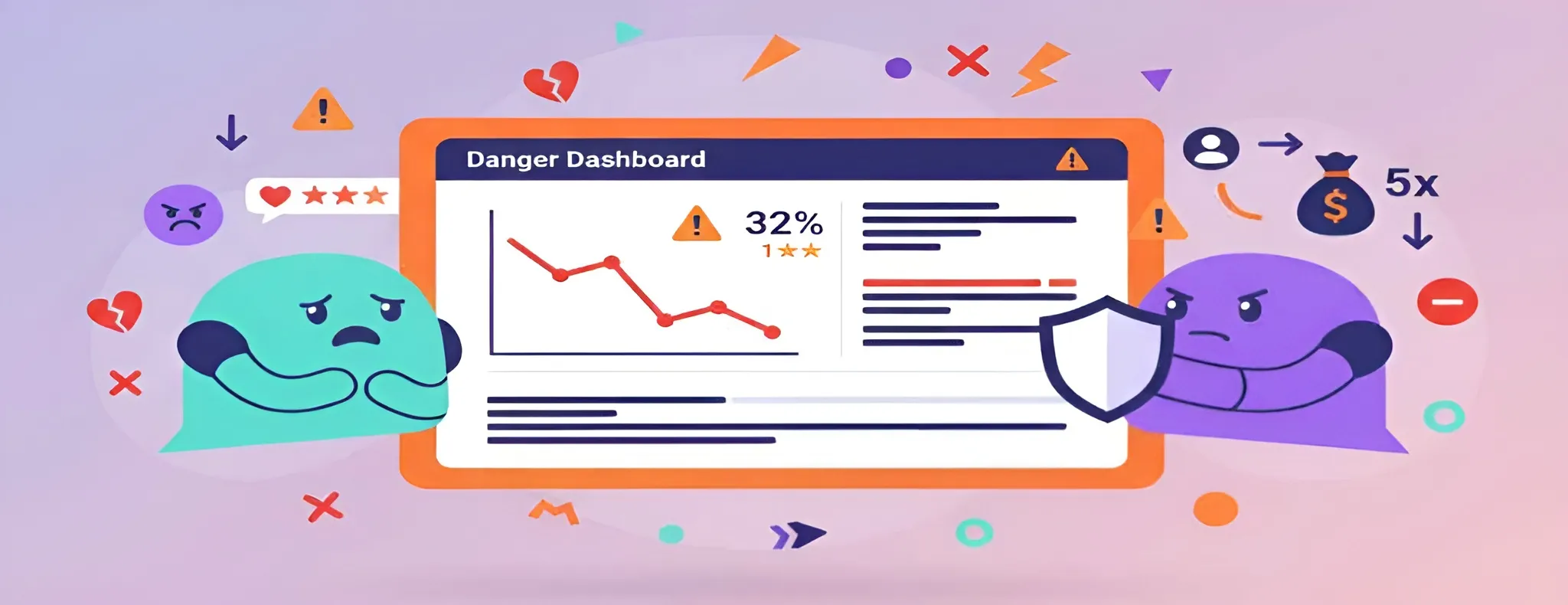
Your customers won’t automatically forgive small mistakes anymore. Poor apologies create these expensive problems:
- Brand damage that spreads through social media
- Negative online reviews that hurt future sales
- Lost customers who switch to competitors immediately
- Missed referral opportunities from unhappy customers
Finding new customers costs five times more than retaining existing ones. This makes every apology email a critical business decision.
The Impact of Getting Apologies Right
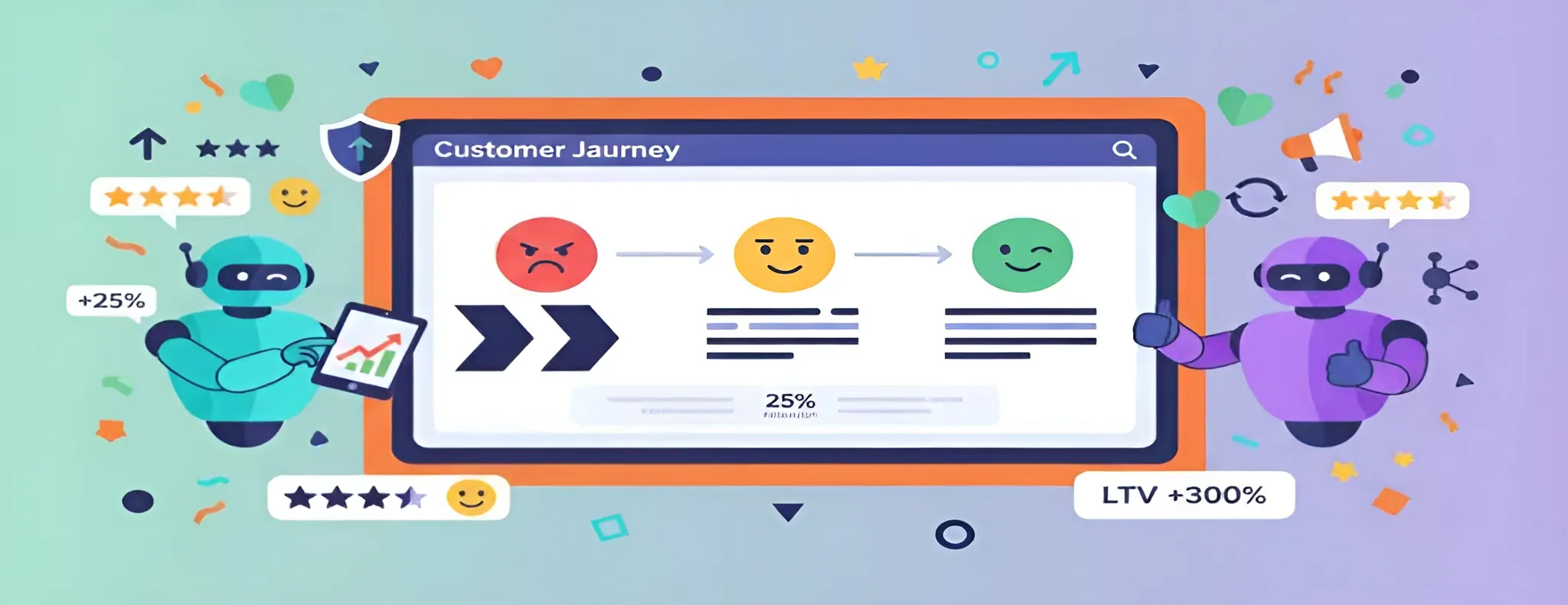
Heartfelt and well-written apologies strengthen customer relationships. They prove that you care about solving problems and not just making excuses.
Can one email really transform an angry customer into a loyal supporter?
Absolutely. Effective apology emails deliver these benefits:
- Higher trust scores and customer satisfaction ratings.
- Increase in customer lifetime value and repeat purchases.
- Positive word-of-mouth recommendations to others.
- Stronger emotional connections with your brand.
- Better complaint resolution outcomes.
Companies that handle complaints well keep 25% more customers in the long term.
Most Common Customer Complaints That Need Apology Emails

Different problems need different apology approaches. Knowing common complaint patterns helps you respond better and faster.
Most Common Customer Complaints
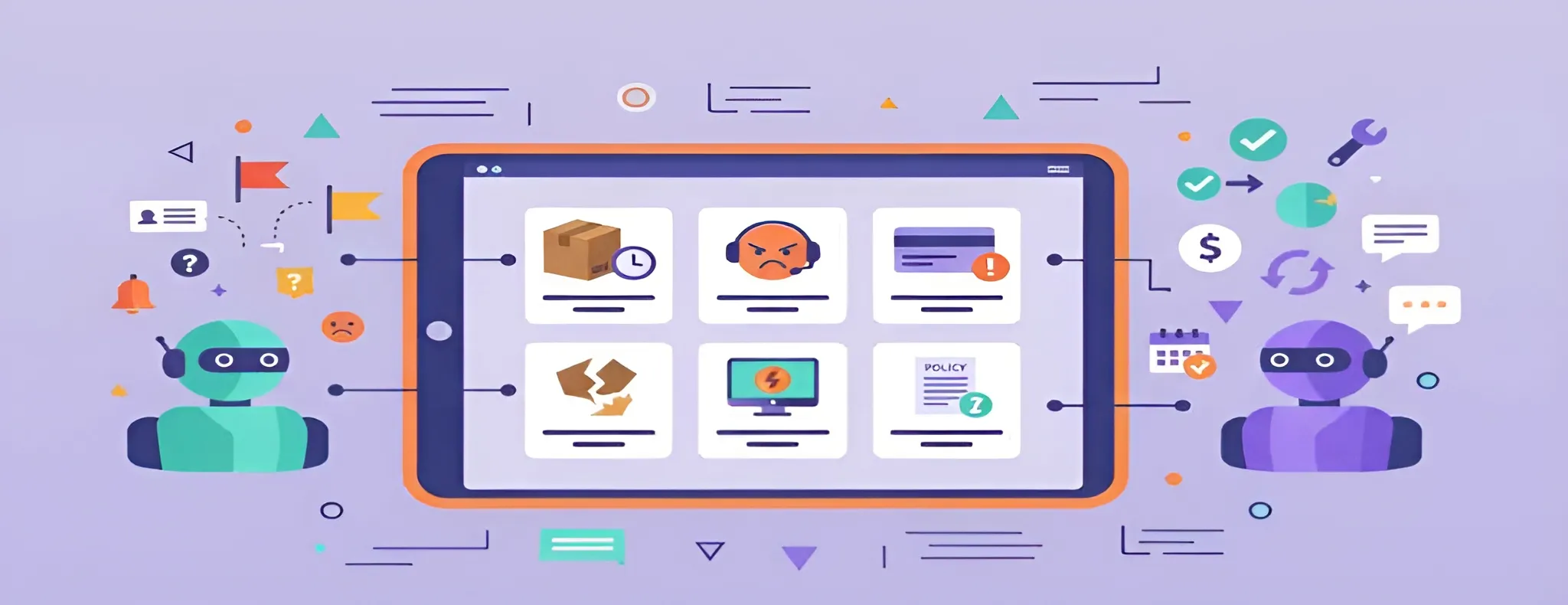
Certain issues appear repeatedly in customer service queues. Preparing for these situations helps your team respond confidently.
Some customer mistakes get forgiven easily, while others don’t. Here are the complaints that demand immediate apologies:
- Delays in delivery or lost packages.
- Rude or unhelpful customer service interactions.
- Billing mistakes or unexpected charges.
- Broken or defective products.
- Website crashes during important transactions.
- Poor communication about changes in policy.
Each situation needs a unique response. Billing errors need a different language than shipping problems.
What Customers Expect in an Apology Email Today
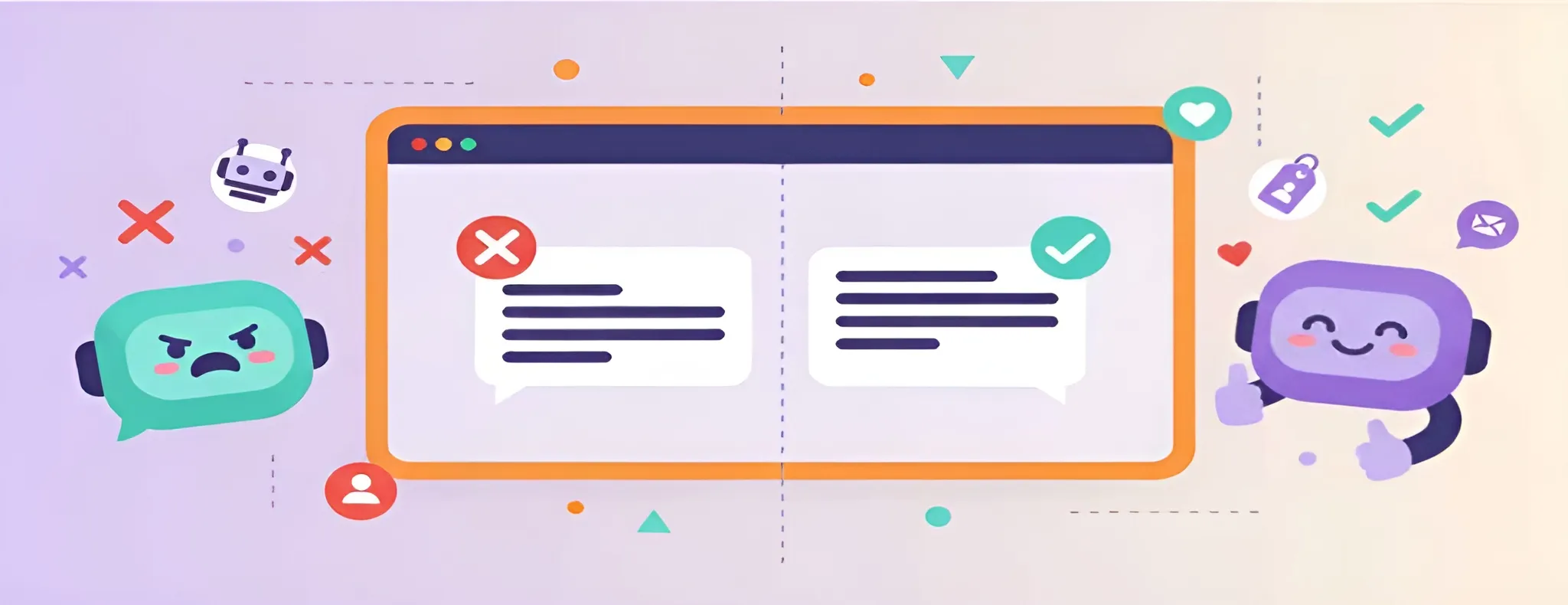
Generic “sorry for the inconvenience” messages don’t fulfill today’s customers. They expect personalized responses that address their specific situations. Customers today can instantly notice template emails. They want apologies that include these elements:
- Personal details like names and account information.
- Specific acknowledgment of their exact problem.
- Clear explanations about what went wrong.
- Concrete action steps to prevent future issues.
- Direct contact methods for extra questions.
Generic apologies feel insulting to customers who explained their problems.
Best Practices for Customer Relationship Management After Apologies
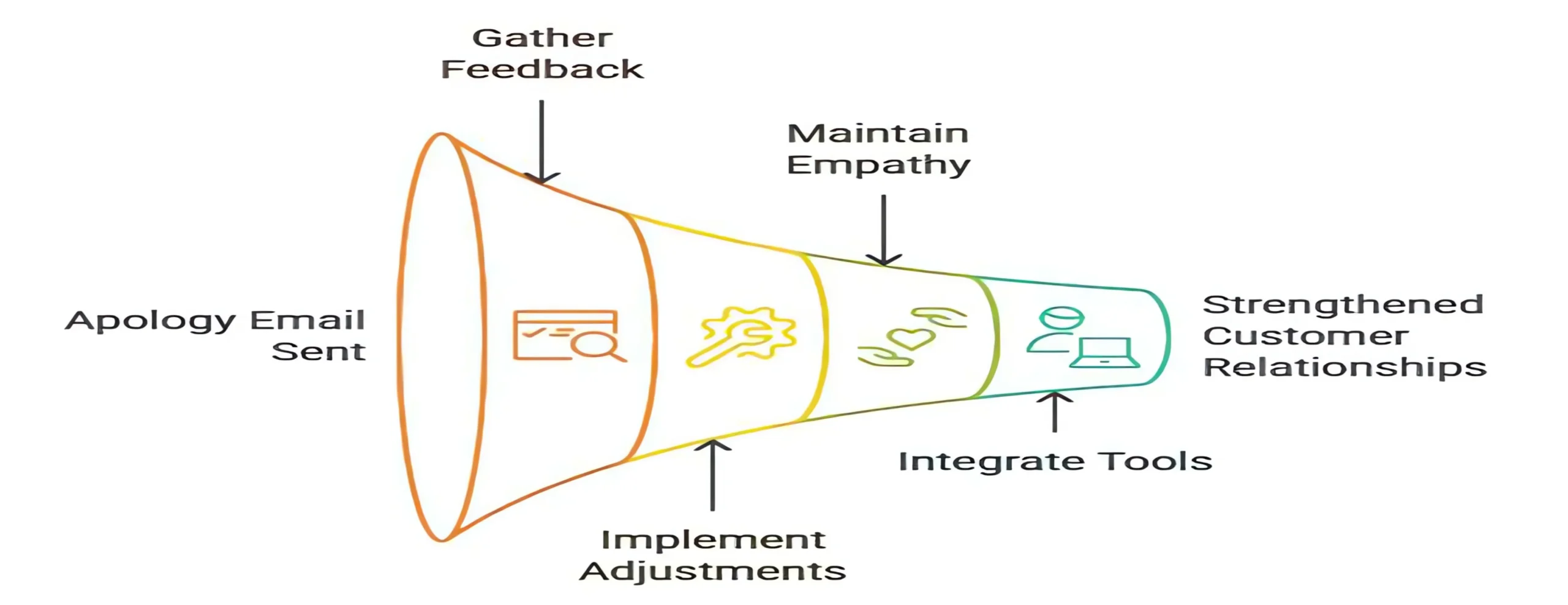
Apology emails represent just one component of excellent customer relationship management. Sustained success requires consistent effort across all interactions.
Check Feedback and Make Adjustments
Customer responses to your apologies provide valuable insights for improvement. Their feedback helps you refine your approach over time.
Are you actually listening to customer feedback, or just hoping complaints disappear? Effective monitoring includes:
- Following up systematically after sending apology emails
- Tracking customer satisfaction scores and trending changes
- Analyzing complaint patterns to identify recurring issues
- Requesting specific feedback about your response quality
- Updating apology email templates and processes based on what works
Use this information to make every future apology more effective.
Maintain Consistent Empathy Everywhere
Customers contact you through several channels, expecting similar treatment. Your response quality should remain high regardless of the communication method.
Consistency across platforms prevents customers from receiving conflicting information. This includes:
- Similar tone and messaging, whether they email, call, or message
- Equal response timeframes across all communication channels
- Comparable compensation offers for identical types of issues
- Coordinated information sharing between different departments
This prevents confusion and demonstrates your commitment to quality service.
Combine Smart Tools with Human Empathy
Technology improves efficiency and reliability, but genuine human empathy cannot be replaced. Automation should only be used to support and not replace personal connections.
The most effective approach combines automated efficiency with authentic human care:
- Use templates as starting frameworks, not final messages
- Automate routine tasks like account lookups and data entry
- Test all emails with tools like Chatboq before sending
- Have experienced team members review complex situations
- Train staff to add meaningful personal touches to every interaction
Remember that real people with legitimate concerns stand behind every complaint email.
Conclusion
Effective apology emails show a genuine understanding, personalization, and clear actions. The most successful ones admit mistakes, take full responsibility, and provide real solutions.
But consider this: what if you could stop most problems before they ever reach your customers? It’s always better to prevent issues than to fix them later.. Check all your messages to make sure they are clear and helpful. When apologies are required, you should make them meaningful. You can use the apology email templates and plans outlined in this guide. Most importantly, you should think about how you would like to be treated in the same situation.
Prevent churn and save customers. Start testing apology emails with Chatboq today.
Frequently Asked Questions (FAQs)
An apology email is a professional message sent to customers after a negative experience. It helps rebuild trust, improve customer satisfaction, and prevent churn. Properly written apologies can turn unhappy customers into loyal ones.
An effective apology email should include acknowledgment of the issue, empathy, responsibility, actionable solutions, and an invitation for further communication. Email personalization and clarity are key to building trust.
Every apology email should include: 1. Specific acknowledgment of the problem. 2. Genuine empathy. 3. Clear acceptance of responsibility. 4. Actionable solutions or compensation. 5. Open communication channels for follow-up.
Use the customer’s name, reference specific details about their order or issue, and write in a conversational tone. Avoid generic phrases like “sorry for the inconvenience” to ensure the email feels genuine.
Subject lines that include “sorry” or “apology,” mention the customer’s name, and briefly reference the issue perform best. Example: “Sarah, we apologize for the delay in your order.” Avoid spam triggers and excessive punctuation.
Yes. Offering refunds, discounts, account credits, or priority support shows that your business takes responsibility and values the customer’s experience. Match the compensation to the severity of the issue.
Responding within 24 hours is ideal. Quick responses show customers that their concerns matter and help prevent frustration from escalating into churn. Automation tools like Chatboq can help speed up responses.
Test for subject line open rates, content clarity, personalization accuracy, tone, link functionality, and display across devices. Track KPIs such as customer responses, follow-ups, and complaint recurrence to improve future emails.
Yes. Tools like Chatboq can help with sentiment analysis, personalized drafts, multi-scenario testing, and tone evaluation, ensuring every email is timely, empathetic, and accurate without losing the human touch.
A well-crafted apology email can prevent brand damage, negative reviews, and lost revenue. It strengthens trust, encourages repeat purchases, and demonstrates that your business genuinely cares about customer satisfaction.

Daniel Wong
Technical Content Writer
My name is Daniel Wong, a Technical Content Writer from Singapore with a strong interest in AI-powered tools and digital automation. At ChatBoq AI, I focus on creating practical and easy-to-follow content that helps businesses and individuals understand how chatbots work and how to use them effectively.
I enjoy breaking down complex topics like natural language processing (NLP) and conversational AI into simple guides that anyone can follow. Each article is based on careful research, real-world examples, and testing to ensure accuracy and reliability.
Through ChatBoq AI, my goal is to provide readers with trustworthy insights, step-by-step tutorials, and the latest trends in chatbot technology.
✍️
Expert in AI & Chatbot Technology

Leave A Comment