
Digital Customer Service in 2025: Tools, Trends, and Best Practices for Modern Businesses
Digital customer service refers to utilizing new tools and technologies, employing clear concepts, following trends, and adhering to best practices to provide better customer service. All businesses are focused on reaching customers with a new strategy, and they are using technology to connect with them. Digital customer service is no longer optional; it’s a battleground where businesses win or lose. The customer wants an online journey that is smooth, quick, and relaxing. With the products and services, customer wants pleasure, and that’s their online journey. Digital customer service evolves from the time of long phone calls, long waits in the queue, ticket numbers, etc, to chatbots that provide instant replies, real-time support, and suggestions by AI.
📑 Table of Contents
- Digital Customer Service in 2025: Tools, Trends, and Best Practices for Modern Businesses
- What is Digital Customer Service?
- How has the digital customer service evolved?
- What are the main tools that boost the Digital customer service for modern businesses in 2025?
- What are the major trends for shaping customer service in 2025?
- What are the best practices of Digital customer service for modern businesses in 2025?
- What are the challenges in Digital Customer Service in 2025?
- Real-World Examples that Encourage Digital Customer Service
- Conclusion
- Frequently Asked Questions (FAQs)

2025 is the age of technology and advancements, where people are using only sophisticated technology to make their tasks easier. The daily life of people began with technology and is driven by digital technology. People are accustomed to using phones, mobile devices, laptops, the internet, online shopping, live chat, chatbots, and other digital tools. Most people use social media to interact with others, and modern businesses have integrated their tools and technology with social media platforms to reach them. Businesses are not just competitive in products and services, but also in customer service and support, which helps make customers loyal and trustworthy towards the businesses.
What is Digital Customer Service?
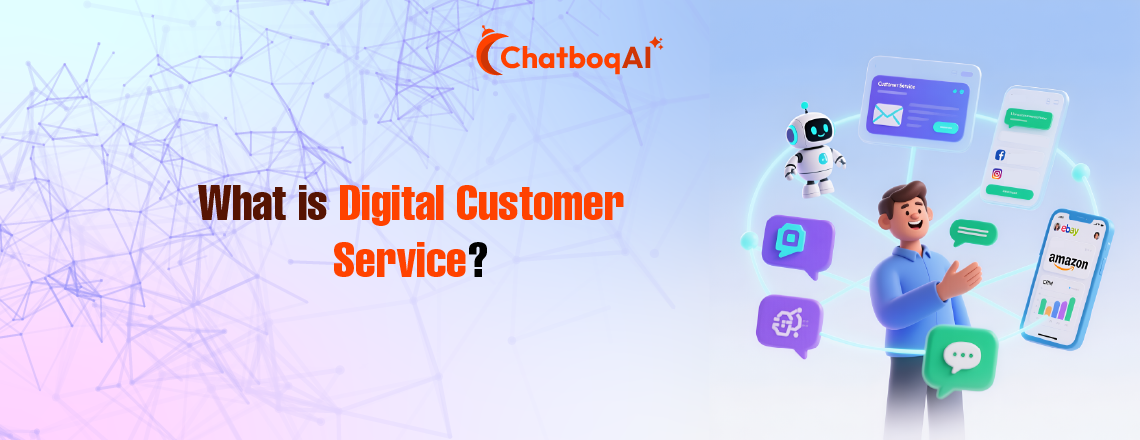
Digital customer service refers to how businesses and brands utilize various technologies, such as live chat, AI chatbots, CRM tools, and SaaS software, to address customer inquiries and issues, ultimately making customers feel valued. Customers should not feel frustrated or irritated while purchasing products, and after-sales service is also provided to ensure customer satisfaction. Reaching customers digitally through various applications and media can help provide better customer service. Top companies like Amazon, eBay, etc, use chatbots for handling the instant return and ordering of products. Chat, email, social media, SMS, messaging apps, chatbots, and many other channels are used for providing customer support.
How has the digital customer service evolved?
Generations of offline sales practice and turning the customer to the digital world of technology. Various technologies and inventions are utilized, and some are listed along with their respective time frames.
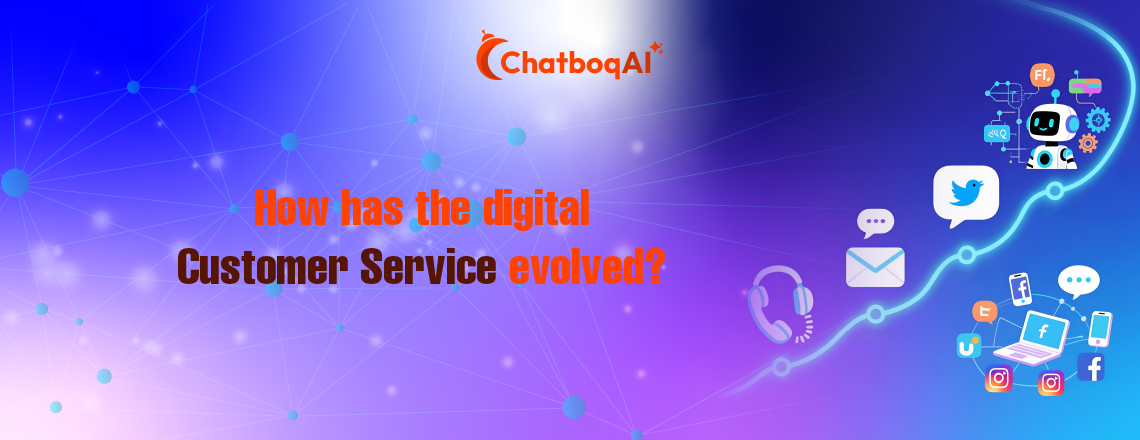
- Email support and call centers: During the 1990s to 2000s, call centers and email support evolved to provide support directly to customers. Businesses relying on human agents and ticket leads often experience long wait times and various issues, which are usually resolved through email and call centers.
- Social media and live chat: During the 2010s, live chat and social media significantly enhanced the customer experience, offering faster responses and chat support. The use of Twitter, Facebook, and other platforms helped businesses reach their customers quickly.
- AI chatbots and self-service: During the 2020s, AI chatbots and self-service entered the market, providing automation for handling orders, returns, troubleshooting, and FAQs.
- Omnichannel experience: By 2025, customers will expect sophisticated tools and support, as well as seamless interaction across all platforms, including mobile apps, SMS, WhatsApp, social media, and websites.
What are the main tools that boost the Digital customer service for modern businesses in 2025?
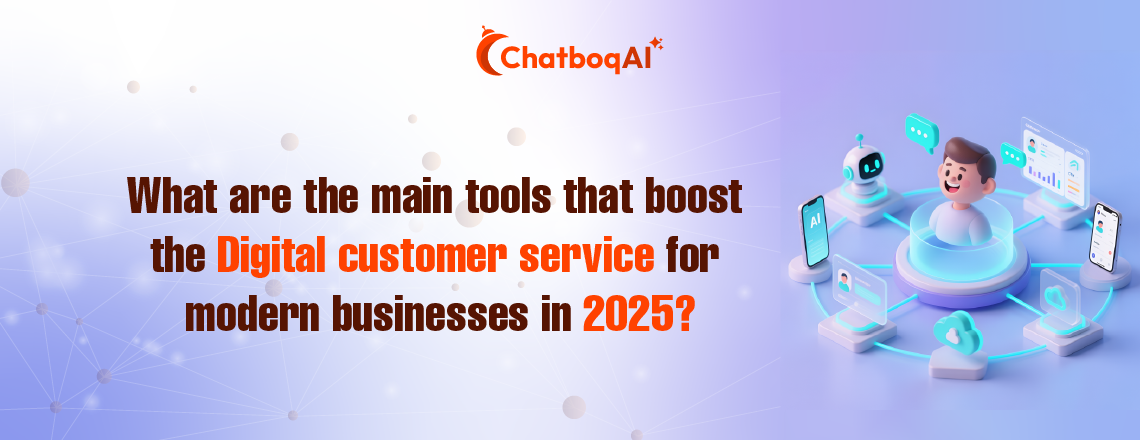
Modern businesses are using sophisticated tools and technology to provide effective digital customer service. Some of the key tools are explained below:
AI Chatbots and virtual assistants
Chatbots can engage in interactions with customers to resolve issues and manage customer feedback. AI chatbots and virtual assistants provide real-time support 24/7, which can help businesses save on costs.
Omnichannel platforms
All channels, including email, phone, social media, and chat, are unified in one place for managing all inboxes simultaneously. Customers can use email, websites, and WhatsApp to talk with brands about the products without losing context.
CRM tools
Personalization of customer data can be done with CRM tools with the use of customer data platforms. It can manage data across support, sales, and marketing teams to provide customers with relevant information and preferences. It enables faster responses and automates customer interactions.
Automation and Workflow Management
Automation includes routing of tickets, order status updates, notifications, reminders, etc, which are repetitive in the workflow for freeing the human agents. So that human agents can give preference to complex issues.
Integration of Social media and messaging
Social media has billions of users. So businesses integrated into Facebook, WhatsApp, Instagram, Twitter, email, etc, for reaching high traffic on websites. Brand and business take over their products where there is high engagement of users.
AI and ML
The use of artificial intelligence and machine learning for making AI tools can help predict trends and automate workflows. It enhances the customer experience and also boosts the digital reach.
Cloud services
Cloud service means anyone can access the information through the internet, which makes cloud computing more popular. Cloud services like AWS, Microsoft Azure, Google Cloud, etc, are the most popular cloud services. It provides storage, databases, networking, and software facilities to users. It saves cost, facilitates remote work options, and provides flexibility to working models. Types of cloud service include IaaS, PaaS, and SaaS.
Business intelligence tools
BI tools like Looker, Tableau, Power BI, etc, collect, process, analyze, and visualize the data. It provides visual storytelling, advanced analytics, and self-service reporting, which make decisions faster, enhance efficiency, and facilitate collaboration.
What are the major trends for shaping customer service in 2025?
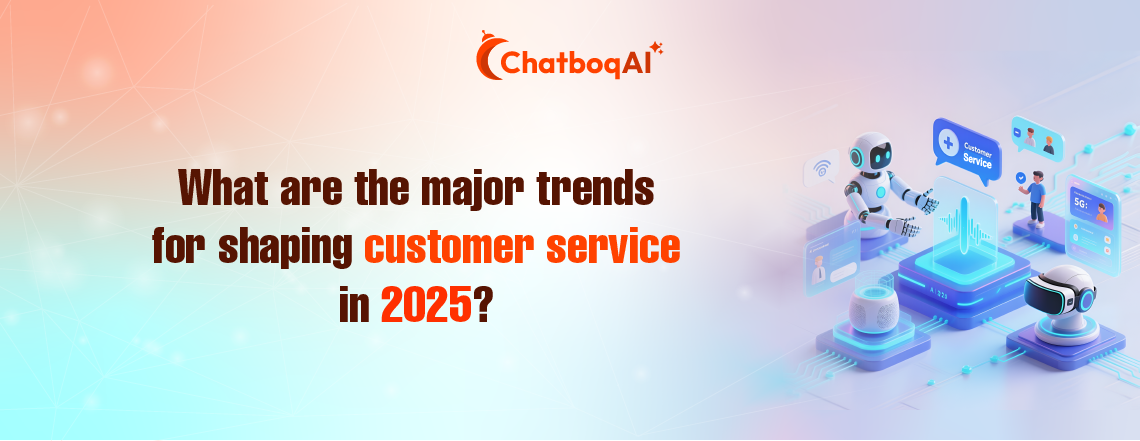
Digital customer service doesn’t just talk about tools but also about how these tools are used by businesses. The various trends of digital customer service in 2025 are listed below:
Artificial intelligence and machine learning
AI is used for automation of tasks, improving data, and increasing productivity in business. With AI and ML, various AI tools and chat widgets are designed to serve the customer in real time.
Personalization using AI and data
Suggesting to the customer various services and products according to the customer’s preference using the data and AI. Human-like response by use of AI helps the customer feel natural.
Proactive and predictive support
Sending proactive messages, such as welcome messages, greeting messages, and wish messages, and identifying and tracking software bugs can boost engagement and reduce customer frustration.
Voice AI and NLP
AI tools like Alexa, Google Assistant, and Siri are powered by voice commands and help customers. Natural language processing makes the response smoother and natural.
AR/VR
Using AR / VR makes the customer experience better. It can be used for providing instructions on how to assemble the parts of laptops, furniture, and many other items.
5G technology
With the introduction of 5G, customers can enjoy better internet access, which collects and enhances data to improve business connectivity.
What are the best practices of Digital customer service for modern businesses in 2025?
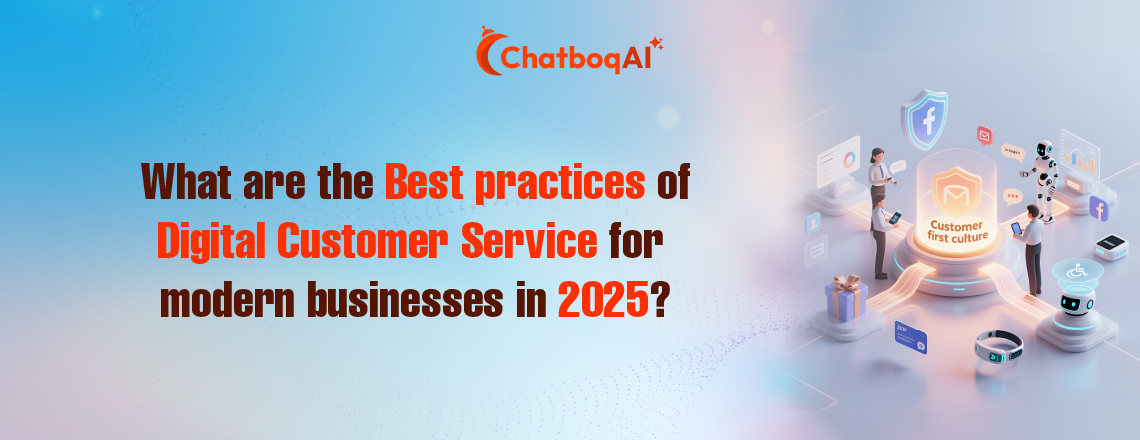
Just with tools and trends, a business can not grow and succeed; there should be the right methods and processes. Businesses can provide world-class digital customer service in 2025 by following these steps:
Make a customer-first culture
Customer support staff must be trained for problem-solving, providing empathy, and ensuring customer satisfaction.
Combine human agents and AI
Replacing human agents is not the option, but working humans and AI side by side can increase efficiency and provide authenticity of data and answers.
Automation with human touch
Balance the automated replies with a human touch and make them feel like humans. It can increase connectivity and relationship trust.
Provide after-sales service
Offer customer after-sales service, which includes troubleshooting support, real-time assistance, training, offers, discounts, membership, and reminders.
Provide omnichannel communication
Connect every communication channel, like social media, email, in-app messaging, etc, to enhance the interaction in one place.
Focus on customer experience
Use different AI tools to interact with customers and support the customer in real time. Chatbots, chat widgets, etc, can be used for making a great customer experience.
Ensure data security and better governance
Use a backup system for data, and ensure privacy and security are maintained with various rules and regulations. Scam, hacking, phishing, etc, are to be protected for the customer, and various protection devices like antivirus, firewall, filter, etc must be used.
Go with trends
Encourage the employees to embrace innovation and follow the trends to explore various technologies, and it can reach a huge audience or users.
Work on Various insights
Make a report and analyze the various metrics of the businesses like response time, satisfaction rate, resolution rate, etc, to improve the service, and it helps in forecasting demand and optimizing staffing.
Make it accessible and inclusive
Ensure that every customer can reach the services globally. So features like screen reader, multilingual support , and better navigation should be used.
What are the challenges in Digital Customer Service in 2025?
Use of advanced tools and trends also brings various challenges to businesses. Some of the challenges are listed below:
- High expectations of customers: Customers want instant service and support without any flaws in all touchpoints of the customer purchasing journey.
- Security and Privacy Concerns: Following the regulations of GDPR and CCPA, there are challenges in protecting customer data and information, and also challenges of various attacks.
- Poor technology integration: Customer experience gets fragmented in business without proper and suitable integration of technology and software.
- Balancing empathy: Digital tools can feel robotic and inhuman with tone and language, so balancing the human warmth or empathy is the challenge in digital customer service.
Real-World Examples that Encourage Digital Customer Service
There are many examples that provide the best digital customer service, and some are listed below:
- E-commerce: Companies like Amazon, eBay, and Shopify use AI chatbots to track orders, returns, and suggest products. Also, provide insights on various products with real-time customer support.
- SaaS: Software as a service companies like Intercom, Zendesk, Slack, CRM, etc., use various chatbots to onboard new users and guide them through the websites. It reduces the churn rate and enhances the customer service.
- Finance and banking: Finance and banks use chatbots to provide customer service and support on account inquiries, loan calculators, tips, reminders, and fraud alerts.
- Tech Companies: Top companies like Apple, Samsung, Microsoft, Tesla, etc, also use AI chatbots like Siri, Alexa, Capilot, etc, to assist the users and provide support and services.
Conclusion
Digital customer service in 2025 is faster, smarter, connected, and automated to drive growth in business. Use of AI chatbots or widgets, omnichannel platforms, SaaS software, CRM tools, etc, makes a strong customer experience for businesses. Real success in business only comes through balancing empathy and automation, or working human agents side by side with AI tools.
Building a culture of customer service first and after-sales service could enhance modern businesses. Use of AI chat widgets provides real-time support and service to customers and also generates leads and builds strong relationships with customers. Focusing on the tools and trends, and practicing the best practices for digital customer service, is the key to growing modern businesses.
Products and services can be the same for various brands, but customer service and experience can be the real winner with a great experience. So focus on maintaining effective customer experience and make the customer loyal toward the brand.
Frequently Asked Questions (FAQs)
5G technology, remote work, integration with social media, AI chat widgets, AI agents, etc, are the recent trends in modern business.
Technological, Economic, Social, and Regulatory are the four types of trends in business.
To stay current with the latest trends, technologies, and best practices, the following steps are carried out: Read and follow the industry and tech blogs. Participate in webinars or various training sessions related to technology. Subscribe to the newsletters of top companies.
Business tools and technologies are sophisticated solutions that help streamline office work and reduce employee workload.
The use of generative AI and automation is a trend in customer service in 2025 that enhances both the customer experience and agent productivity.
Digital customer service involves providing support to customers through various channels, including email, chat, social media, messaging apps, and more.
Digital customer service requires skills such as communication, problem-solving, digital and product knowledge, relationship-building, empathy, and more.

Daniel Wong
Technical Content Writer
My name is Daniel Wong, a Technical Content Writer from Singapore with a strong interest in AI-powered tools and digital automation. At ChatBoq AI, I focus on creating practical and easy-to-follow content that helps businesses and individuals understand how chatbots work and how to use them effectively.
I enjoy breaking down complex topics like natural language processing (NLP) and conversational AI into simple guides that anyone can follow. Each article is based on careful research, real-world examples, and testing to ensure accuracy and reliability.
Through ChatBoq AI, my goal is to provide readers with trustworthy insights, step-by-step tutorials, and the latest trends in chatbot technology.
✍️
Expert in AI & Chatbot Technology

Leave A Comment