

What Is Conversational AI & How It Works
In 2025, conversational AI is completely reshaping how businesses engage with customers. AI chatbots, natural language processing (NLP), and machine learning (ML) now create surprisingly human-like conversations through text or voice.
📑 Table of Contents
- What Is Conversational AI & How It Works
- Key Highlights
- What is Conversational AI?
- Conversational AI vs Chatbot: Key Difference Explained
- How Conversational AI Works (Step-by-Step Breakdown)
- Key Benefits Of Conversational AI
- Conversational AI Examples And Use Cases By Industry
- Conversational AI Implementation (Best Practices)
- Common Challenges (And How To Overcome Them)
- Case Studies: Proven ROI Examples
- Choosing the Best Conversational AI Software for 2025
- Measuring ROI and Success Metrics
- The Future of Conversational AI Technology
- Conclusion: Your Action Plan for AI-Driven Success
- Frequently Asked Questions (FAQs)
A conversational AI system transforms customer engagement by delivering faster, more personalized experiences. With large language models (LLMs) and real-time data, these tools understand context, intent, and emotions better than ever.

This guide explains what conversational AI is, how it works, and why it’s revolutionizing customer experience. You’ll find real-world examples, key benefits, and top platforms to help you get started.
Key Highlights
| Conversational AI transforms customer engagement globally. AI chatbots deliver 24/7 personalized support. Machine learning enhances real-time customer understanding. Businesses cut costs while boosting satisfaction. Future AI agents will enable autonomous service. |
What is Conversational AI?
Conversational AI refers to technologies that let computers understand, process, and respond to human language in ways that feel genuinely natural. We’re way past those clunky automated phone trees from the 2000s that made everyone want to scream “representative!” into their phone.
This artificial intelligence-powered system creates actual dialogue by leveraging sophisticated machine learning and natural language processing. Think less robot, more helpful assistant.
Here’s what’s happening under the hood
- Natural Language Processing (NLP): Consider this the brain that helps machines actually comprehend what we’re saying. It breaks sentences into digestible chunks, then decodes what you mean and the context surrounding your words. Without NLP, you’d just be yelling at a very expensive calculator.
- Machine Learning: These algorithms make the system progressively smarter with every conversation. Response accuracy gets sharper, understanding happens quicker—it’s constantly learning from interactions.
- Natural Language Generation (NLG): This creates responses that sound like they came from an actual person. It analyzes structured data and learned patterns to craft replies that just click.
When you message an AI conversation system, here’s the magic: it processes your words, decodes what you’re genuinely after, and fires back a response that feels surprisingly human. No scripts, no awkward pauses, just natural flow.
Conversational AI vs Chatbot: Key Difference Explained
| Feature | Conversational AI | Chatbot |
| Definition | Advanced AI that understands context, intent, and can engage in dynamic, human-like conversations. | Pre-programmed software that responds to specific commands or keywords. |
| Understanding | Uses NLP, machine learning, and contextual understanding to interpret user input. | Follows predefined rules or scripts; limited understanding of context. |
| Flexibility | Can handle complex, multi-turn conversations and adapt responses over time. | Handles simple, single-turn interactions; struggles with unexpected questions. |
| Learning Ability | Continuously improves through training data and interactions. | Limited or no learning; requires manual updates. |
| Integration | Can integrate with multiple platforms, CRM systems, and databases. | Often platform-specific and less versatile. |
| User Experience | Provides more natural, human-like interactions. | Can feel rigid or robotic. |
| Examples | ChatGPT, Google Dialogflow, Microsoft Azure Bot Service | Rule-based website bots, FAQ bots |
How Conversational AI Works (Step-by-Step Breakdown)

Want to understand how conversational AI actually operates? That knowledge becomes your secret weapon for implementing it effectively. The whole process breaks down into three distinct stages:
Stage 1: Input Processing
The millisecond you type something or speak your question, the conversational AI platform springs into action. For voice queries, automated speech recognition (ASR) first converts those sound waves into text data.
Then comes the interesting part. The system dissects your message using natural language processing, hunting for crucial elements such as entities, intent, grammatical structure, and all the linguistic building blocks.
Stage 2: Understanding Intent
This is where things get fascinating. Deep learning algorithms and natural language understanding work in tandem to crack what you’re genuinely asking. The AI conversational bot examines context, digs through any previous exchanges if they exist, and pinpoints the specific intent buried in your question.
Take “I need to return this” as an example. Seems straightforward on the surface, right? Wrong. The system needs to determine whether you’re trying to initiate a return, ask about return policies, or check the status of an existing return. Three totally different paths from four simple words.
Stage 3: Response Generation
Once it’s decoded what you actually need, the system constructs an appropriate response through dialogue management. The conversational AI chatbot either pulls the perfect answer from its knowledge base or creates something fresh using natural language generation.
Here’s what separates good from great: the system weighs how the conversation’s been flowing, factors in details from earlier exchanges, and delivers something that sounds natural and genuinely helpful. This entire dance typically happens in milliseconds, creating what feels like an authentic, real-time conversation with AI.
Key Benefits Of Conversational AI
24/7 Availability Without Human Limitations
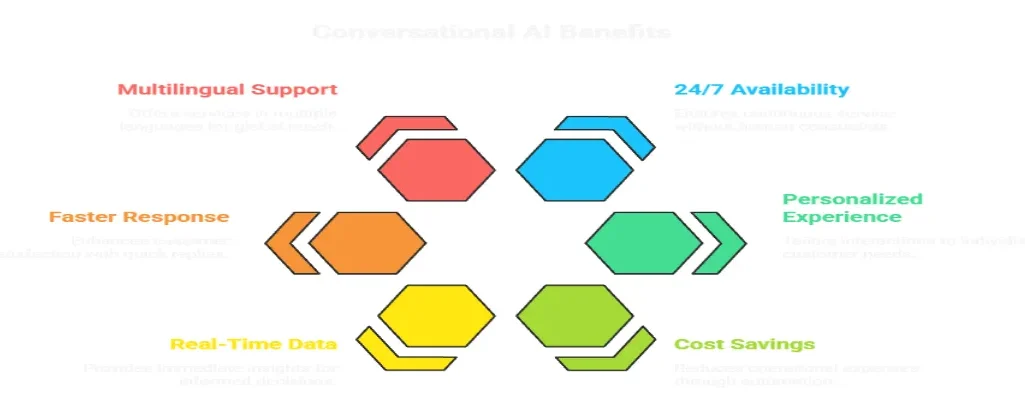
Let’s be real, conversational AI platforms never need sleep. Unlike human agents who require coffee breaks, lunch hours, and actual rest, this technology runs constantly. Is your customer in Singapore messaging at 3 AM their time? They get help instantly. Someone in New York reaching out at midnight? Same story. This perpetual availability dramatically boosts customer satisfaction while giving your human support teams much-needed relief from the grind.
Personalized Customer Experience At Scale
An advanced conversational AI system possesses this almost uncanny ability to remember customer preferences, purchase history, and how previous conversations unfolded. That memory unlocks personalized recommendations and support that feels genuinely crafted for each individual.
Check out this stat: recent research discovered shoppers are 40% more likely to spend more money with companies that nail personalized experiences. An AI conversation platform can deliver this exact caliber of personalization to thousands, even millions, of people simultaneously. Same quality, massive scale.
Significant Cost Savings
Implementing conversational AI solutions is putting a serious dent in labor expenses. Gartner forecasts that this technology will slash contact center labor costs by $80 billion by 2026. That’s not pocket change. Businesses handle exponentially more customer inquiries without expanding headcount, which means healthier margins and resources flowing toward initiatives that actually move the needle.
Real-Time Data Collection And Insights
Every single conversation with an AI conversation bot is essentially a goldmine of behavioral data. Conversational AI platforms track what frustrates customers, which questions surface repeatedly, how sentiment shifts during interactions, and exactly where friction points emerge. This intelligence empowers businesses to refine their products, sharpen messaging, and anticipate customer needs before people even articulate them.
Faster Response Time
Conversational AI completely obliterates wait times for common queries. Standard questions get answered instantly, no queue, no “your call is important to us” loops. When something complex demands human expertise, the AI two-person conversation generator collects basic information, qualifies leads, and routes customers to the appropriate department with all relevant context already assembled.
Multilingual Support And Omnichannel Engagement
Conversational AI platforms handle multiple languages fluently, effectively erasing geographical barriers. A single AI conversation system serves customers across different countries and languages simultaneously, eliminating the need for separate support teams in each region.
Even better, these systems maintain context seamlessly across every channel, website, chat interface, mobile app, social media platform, and email thread. That’s genuine omnichannel customer engagement, not just marketing speak.
Conversational AI Examples And Use Cases By Industry

Customer Service and Support Automation
This remains the most popular application of conversational AI technology. Companies deploy AI-powered conversation bots on the front lines to handle repetitive tasks—password resets, order tracking, FAQ responses, all the mundane stuff that eats up agent time.
When something exceeds the bot’s capabilities? It seamlessly hands things off to human agents with complete context preserved. Sephora offers a perfect example—they’re leveraging conversational AI to recommend products, answer beauty-related questions, and guide customers through their shopping experience. No awkward transitions, just smooth assistance.
E-Commerce and Conversational Commerce
Conversational AI chatbots essentially function as personal shoppers, steering customers through product choices and offering personalized suggestions. Here’s a number that should grab your attention: studies reveal AI-enabled e-commerce sites experience 47% faster purchase completion rates.
These systems upsell and cross-sell products naturally based on genuine customer needs. The AI conversation feels authentically helpful instead of sleazy salesy, which improves conversion rates while preserving positive customer relationships.
Enterprise AI Chat Solutions for HR
HR departments tap conversational AI platforms to handle employee inquiries about benefits, policies, and procedural details. New hires interact with AI assistants during onboarding, receiving instant answers without burying the HR team under an avalanche of repetitive questions.
Conversational AI Implementation (Best Practices)
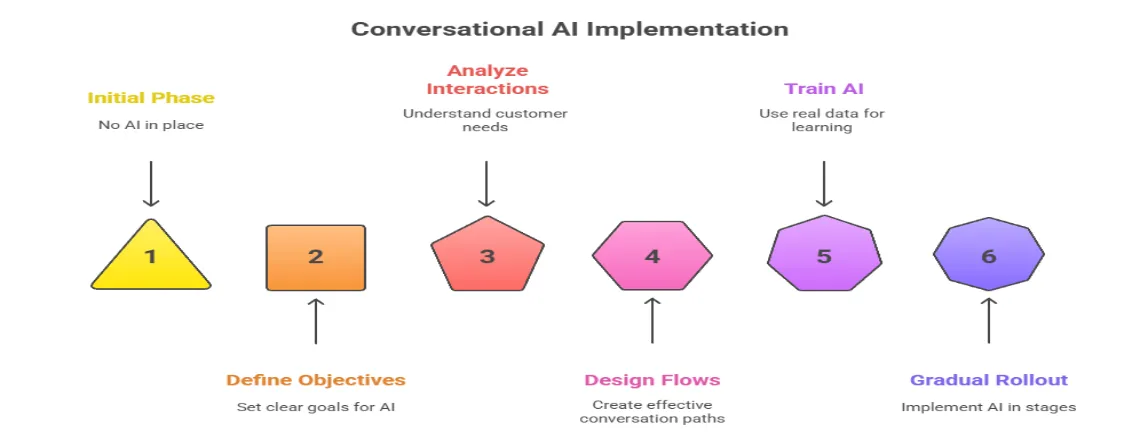
Start With Clear Objectives
Before you launch or deploy conversational AI, nail down your specific goals with crystal clarity. Are you aiming to reduce support tickets by half? Pump up sales conversion rates? Improve your customer satisfaction score by 20 points? Getting laser-focused on your objectives shapes your entire implementation strategy and provides measurable benchmarks to evaluate success against.
Analyze Your Customer Interactions
Dig through existing customer service logs, email threads, and chat transcripts like a detective. You’re hunting for patterns, the questions that surface constantly, the pain points people repeatedly hit, the confusion that crops up again and again. This investigative work reveals precisely which interactions your conversational AI platforms should prioritize handling first.
Design Effective Conversational Flows
Map out typical customer journeys and plan how conversations should naturally unfold. Walk through different scenarios in your head. Build pathways for various intents people might have.
And here’s absolutely crucial, which includes clear escape routes to human agents for complicated situations that the AI conversation bot simply can’t resolve. Smart conversation design principles create natural dialogue that authentically guides users toward resolution instead of trapping them in frustrating loops.
Train On Real Data And Chatbot Training Data
Feed your conversational AI system actual customer conversations from your specific business. This real-world chatbot training data teaches the technology to understand your particular customer base in ways generic training data never could. Include edge cases and bizarre requests to build genuine robustness into the system.
Implement Gradual Rollout
Start small, deploy it for simple, high-volume queries initially. Monitor performance obsessively, gather feedback from both users and staff members, then refine the system before expanding to more complex interactions. This phased approach minimizes risk and creates breathing room for continuous improvement as you discover what actually works.
Maintain Brand Voice Consistency
Your conversational AI platforms need to sound authentically like your brand. Whether you’re buttoned-up and professional, warm and approachable, playful and quirky, or authoritative and expert-driven, the AI’s responses should perfectly match that personality. Inconsistency here feels jarring and damages trust.
Ensure AI Integration With CRM And Business Systems
Your conversational AI platform absolutely must access customer data, inventory systems, and other business tools to provide accurate, helpful information. Plan your technical architecture meticulously. Make certain the conversational AI platforms can communicate smoothly with your CRM, order management systems, and knowledge base infrastructure.
Common Challenges (And How To Overcome Them)
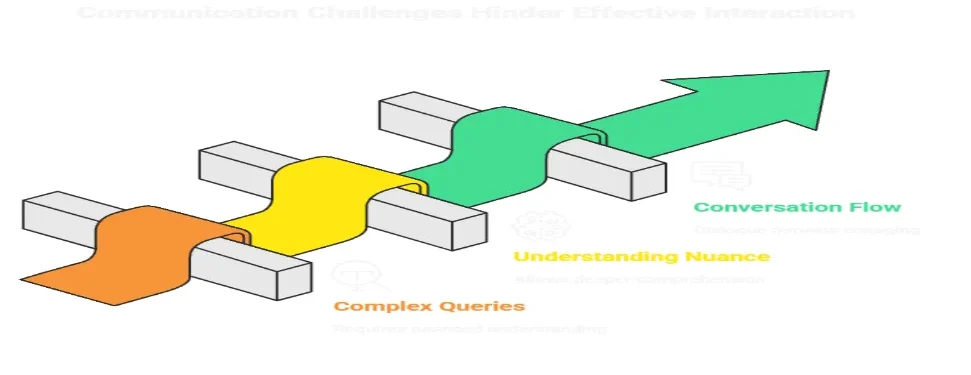
Challenge: Handling Complex Queries
Conversational AI excels at routine inquiries but can stumble badly when confronted with complicated problems requiring nuanced judgment or genuine human empathy. Address this by clearly defining what the bot can and cannot do, then constructing smooth handoff procedures to human agents.
Train the AI conversation bot to recognize when it’s operating outside its competence zone and proactively suggest connecting with an actual person who can help.
Challenge: Understanding Context and Nuance
Human language overflows with emotions, sarcasm, cultural references, idioms, and subtleties that confuse AI systems. Strengthen context understanding by training on diverse datasets that authentically represent your actual customer base.
Layer in sentiment analysis to detect frustration or confusion early, then adjust responses accordingly. Regular updates based on real conversations teach the system to recognize patterns and behavioral cues over time.
Challenge: Maintaining Natural Conversation Flow
Nobody enjoys answering identical questions repeatedly or dealing with robotic responses that sound painfully canned. Build conversation memory into your AI chatbot so it remembers information shared earlier in the dialogue.
Use natural language generation that varies phrasing organically instead of recycling identical scripted responses. Test conversation flows extensively to identify awkward transitions or dead ends before they frustrate actual users.
Case Studies: Proven ROI Examples

Retail Success: 35% Reduction in Cart Abandonment
A mid-size e-commerce retailer deployed a conversational AI chatbot specifically to handle product questions and guide purchases. Three months after launch? Cart abandonment rates plummeted by 35% while average order value jumped by 28%.
The AI conversation bot delivered personalized product recommendations based on individual browsing history and preferences. Customer satisfaction scores climbed by 42%. When they surveyed customers about the improvement, immediate response times and genuinely helpful product guidance topped the feedback list.
Healthcare Provider: 60% Automation Rate
A regional healthcare network implemented conversational AI to manage appointment scheduling and initial symptom assessment. The AI conversation platform successfully handled over 60% of scheduling inquiries without requiring any human involvement, freeing staff to concentrate on actual patient care instead of administrative phone tag.
Missed appointment rates dropped by 23% thanks to automated reminders and effortless rescheduling through the conversational interface.
Choosing the Best Conversational AI Software for 2025
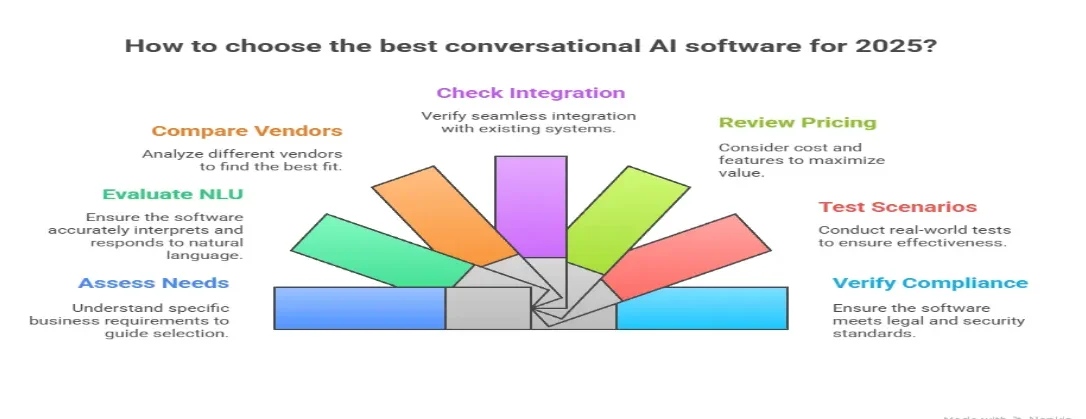
Assess Your Specific Needs
Different businesses require completely different capabilities. A simple FAQ bot looks absolutely nothing like a complex AI conversation platform managing multi-step transactions with payment processing and inventory checks.
Define your use cases clearly, expected conversation volume realistically, required integrations specifically, and success metrics measurably before you start comparing solutions.
Evaluate Natural Language Understanding Capabilities
Put each platform through rigorous testing. Evaluate how well it understands different phrasings of identical questions, whether it handles typos and misspellings gracefully, and how accurately it extracts intent from ambiguous queries. The best conversational AI platforms demonstrate strong NLU capabilities without demanding excessive training time.
Compare Top Conversational AI Vendors
Do thorough homework on vendor reputation beyond their marketing materials. Read actual user reviews from people implementing these systems, not just curated testimonials. Ask for references you can genuinely call and question. Conversational AI represents a significant financial investment, so you want a vendor that’ll exist long-term and provide reliable support when implementation gets rocky.
Examine their documentation quality closely, customer success resources availability, and how responsive their support team actually proves when you reach out with questions.
Check Integration Capabilities and APIs
Your conversational AI chatbot must play nicely with your existing technology systems—CRM platforms, inventory management software, payment processors, knowledge bases, all the infrastructure you’ve already built. Verify that potential solutions offer robust APIs or pre-built integrations for your specific technology stack.
Review Conversational AI Pricing and Features
Conversational AI pricing varies wildly across vendors, like per-conversation models, per-agent seat pricing, tiered packages based on features, or custom enterprise pricing negotiated individually. Calculate the total cost of ownership honestly. Factor in implementation costs, training time, ongoing maintenance, and scaling expenses down the road.
Test With Real Scenarios
Most reputable vendors offer trials or demonstration periods. Excellent—leverage them aggressively. Put the platform through its paces with actual customer questions and realistic scenarios from your specific business. Get team members who’ll use the system daily involved in testing and evaluation processes.
Verify Compliance and Security
Make absolutely certain the platform meets relevant compliance requirements for your particular industry. Healthcare requires HIPAA compliance. Payment processing demands PCI-DSS certification. European customers bring GDPR regulations into play.
Measuring ROI and Success Metrics
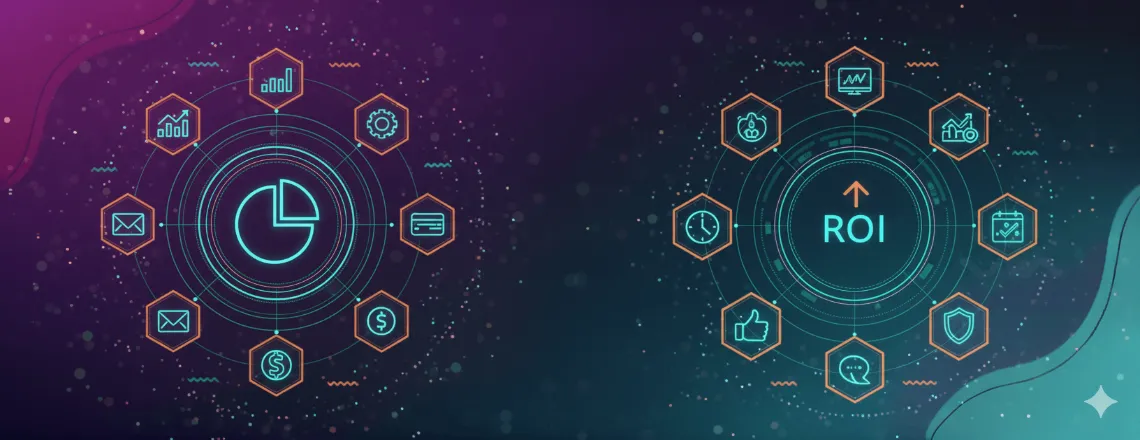
Cost Savings Analysis
Crunch the numbers carefully on savings from reduced customer service staffing needs, lower call center volumes, and decreased operational overhead. Stack up total conversational AI platform costs against salaries and overhead expenses of equivalent human agents performing the same work.
Customer Satisfaction Scores
Track CSAT (Customer Satisfaction Score), NPS (Net Promoter Score), and other satisfaction metrics before and after implementation. Successful deployments typically demonstrate satisfaction improvements ranging from 20-40%.
Resolution Rate and Response Time
Measure what percentage of customer inquiries the conversational AI chatbot resolves completely without requiring human backup. Industry benchmarks suggest 60-80% resolution rates for properly implemented systems.
Compare average response times before and after conversational AI deployment. The technology typically slashes response times from minutes or hours down to mere seconds.
Revenue Impact and Conversion Rates
For sales-focused implementations, track revenue generated directly through AI conversations, conversion rate improvements across the funnel, average order value changes, and upsell success rates. Many businesses report 15-30% increases in conversion rates after deploying conversational AI platforms effectively.
The Future of Conversational AI Technology
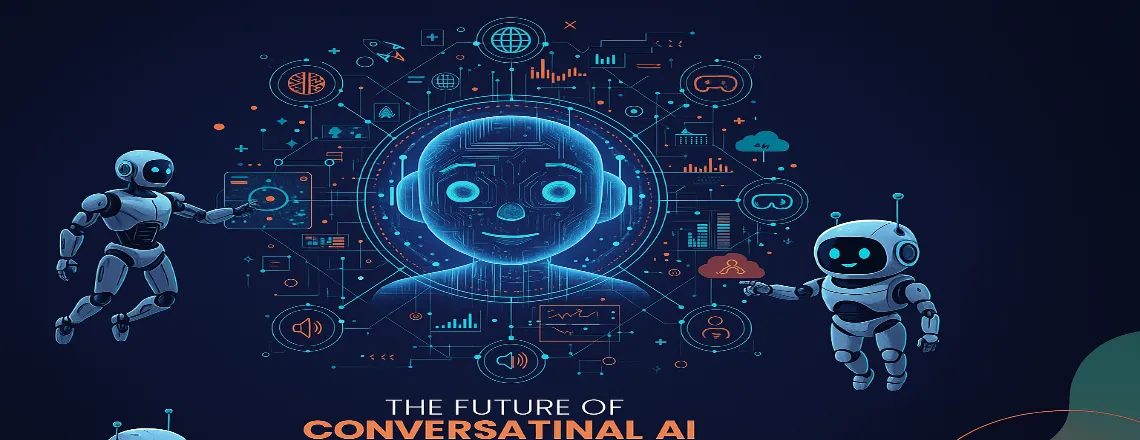
Generative AI for Customer Support
Generative AI models are fundamentally reshaping conversational AI capabilities in remarkable ways. These advanced systems generate more natural, contextually aware responses and handle increasingly complex queries without leaning on pre-programmed scripts or decision trees.
Multimodal Interactions
The next generation of conversational AI platforms will process multiple input types simultaneously, such as text, voice, images, and even video streams. Users will snap photos of products to get instant information while speaking naturally, and the system displays visual responses in real-time. All seamlessly integrated.
Emotional Intelligence and AI Customer Experience
Advanced sentiment analysis will enable AI conversation bots to detect emotional states accurately and respond with appropriate empathy. The technology will recognize frustration, excitement, confusion, or satisfaction in real-time, then adjust tone and approach to match the moment.
Autonomous AI Agents
Beyond simply fielding questions, conversational AI will proactively complete complex tasks across multiple systems independently. These autonomous agents will handle end-to-end processes like researching products, comparing options, making purchases, scheduling delivery, and processing returns. The whole customer journey is automated intelligently.
Conclusion: Your Action Plan for AI-Driven Success
Conversational AI has become essential for modern businesses. Companies using conversational AI platforms see lower costs, happier customers, and genuine competitive advantages.
Choose a conversational AI platform that fits your needs. The AI conversation bot handles routine inquiries, freeing your team for complex problems.
Businesses embracing conversational AI chatbot solutions now are positioning themselves for genuine success. Your customers already expect instant support through AI customer experience solutions and AI conversation systems.
Frequently Asked Questions (FAQs)
Traditional chatbots follow rigidly scripted rules and respond only to specific commands. Conversational AI uses machine learning and natural language processing to understand intent and generate contextually appropriate responses. Conversational AI platforms learn and improve progressively with each interaction.
Costs range from $25–$150 monthly for basic conversational AI platforms to $500–$5,000 monthly for mid-size companies. Enterprise conversational AI chatbot solutions with custom requirements can cost $10,000+ monthly plus implementation fees.
Yes. Most conversational AI platforms support multiple languages effectively. Popular languages like English, Spanish, French, and German offer excellent accuracy. Always test your specific language requirements before choosing an AI conversation bot.
Simple FAQ bots deploy in 1–2 weeks. Sophisticated AI conversation platforms with multiple integrations require 3–6 months. The timeline depends on data preparation, system integrations, and chatbot training data requirements.
No. Conversational AI complements human agents rather than replacing them entirely. The AI conversation bot handles routine inquiries efficiently, allowing human staff to focus on complex issues requiring empathy and judgment. It’s about augmentation, not replacement.
Well-trained conversational AI platforms achieve 85–95% accuracy for straightforward inquiries. Accuracy improves over time as the AI system learns from interactions and expands its data knowledge base.
Retail, e-commerce, financial services, healthcare, hospitality, telecommunications, and SaaS businesses benefit significantly. Any industry with high-volume customer inquiries or 24/7 support needs gains real value from conversational AI chatbot solutions.
Yes. Reputable conversational AI platforms implement encryption, access controls, and compliance with GDPR and HIPAA regulations. Always verify that your chosen AI conversation platform meets your industry-specific security requirements.
Yes. Modern conversational AI platforms offer APIs and pre-built integrations with CRM systems, inventory management, payment processors, and knowledge bases. AI integration with CRM is essential for personalized customer experiences.
Track resolution rate, customer satisfaction scores, response time, cost savings, and revenue impact. Most successful conversational AI implementations show 60–80% resolution rates and 20–40% satisfaction improvements within the first year.

Daniel Wong
Technical Content Writer
My name is Daniel Wong, a Technical Content Writer from Singapore with a strong interest in AI-powered tools and digital automation. At ChatBoq AI, I focus on creating practical and easy-to-follow content that helps businesses and individuals understand how chatbots work and how to use them effectively.
I enjoy breaking down complex topics like natural language processing (NLP) and conversational AI into simple guides that anyone can follow. Each article is based on careful research, real-world examples, and testing to ensure accuracy and reliability.
Through ChatBoq AI, my goal is to provide readers with trustworthy insights, step-by-step tutorials, and the latest trends in chatbot technology.
✍️
Expert in AI & Chatbot Technology

Leave A Comment