Chatbot vs Live Chat Explained: Which Is Better in 2025
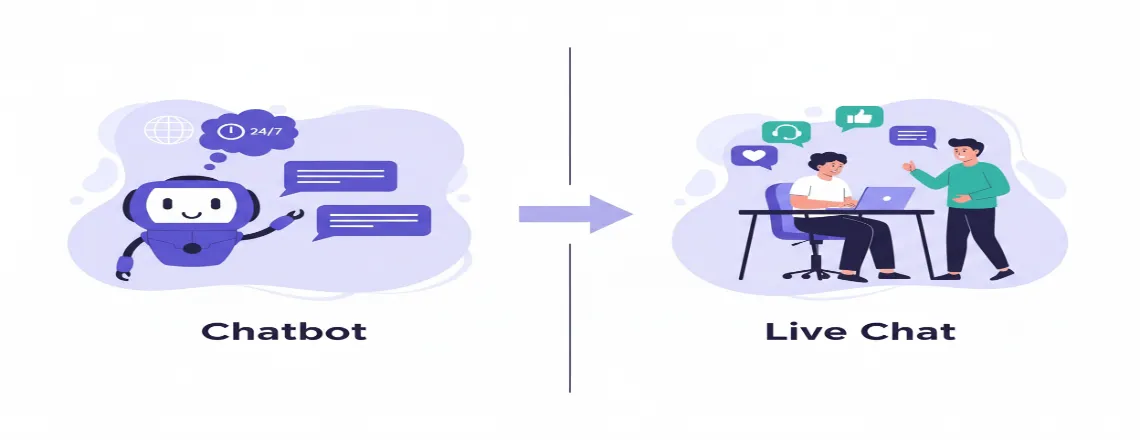
The answer? It depends on what you’re trying to accomplish. Chatbots excel at handling high-volume, repetitive questions instantly and cost-effectively as they think of FAQs, order tracking, and basic troubleshooting. They work 24/7 and scale infinitely, but they struggle with complex problems and lack emotional intelligence.
📑 Table of Contents
- Chatbot vs Live Chat Explained: Which Is Better in 2025
- Key Highlights
- Understanding Chatbots and Live Chat – What’s the Real Difference?
- Why the Chatbot vs Live Chat Decision Impacts Your Bottom Line
- Chatbot vs Live Chat for Customer Support – Pros and Cons
- Comparison Table: Chatbot vs Live Chat
- When to Use Chatbots vs Live Chat Agents
- Chatbot vs Live Chat Cost Comparison
- Real-World Examples – What Works in Practice
- The Hybrid Model – Why You Might Need Both
- How to Choose the Right Solution for Your Business
- Key Metrics to Track Your Success
- Conclusion – Making the Right Choice for 2025
- Frequently Asked Questions (FAQs)
Live chat delivers human expertise, empathy, and flexibility for nuanced situations, consultative sales, technical support, and frustrated customers. It builds real relationships and converts better, but it costs significantly more and can’t scale like automation. For most businesses in 2025, the optimal strategy isn’t choosing one over the other’s combining both. Use chatbots to handle routine queries instantly, then seamlessly transfer complex issues to human agents who have the full conversation context.
This guide breaks down the costs, performance metrics, and real-world examples to help you determine the right mix for your specific business needs.
Key Highlights
| ompare chatbot and live chat effectiveness Understand automation versus human interaction trade-offs Discover pros, cons, and cost comparisons Explore hybrid models combining both systems Learn how to choose the right solution |
Understanding Chatbots and Live Chat – What’s the Real Difference?
Before we start comparing chatbot vs live chat options, we should probably get clear on what each one actually does. No point debating the details if we’re not talking about the same things.
What is a Chatbot?
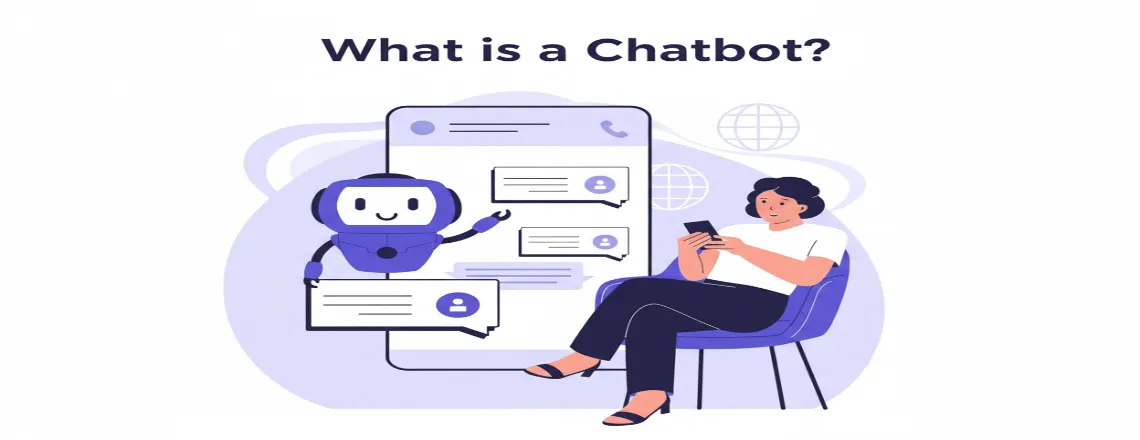
A chatbot is basically an automated software program that’s designed to have conversations with your customers through text or voice interfaces. The keyword there is “automated”, no humans required once it’s set up. Now, modern chatbots are pretty impressive. They use natural language processing (NLP) and machine learning to actually understand what customers are asking, then provide answers that (hopefully) make sense. We’re not talking about those old-school “press 1 for this, press 2 for that” phone menus here.
The range is huge, though. On one end, you’ve got simple rule-based bots that just follow predefined decision trees. Like, “if customer asks about shipping, show shipping info.” Pretty straightforward. On the other end, you’ve got sophisticated AI-powered assistants that actually learn from every interaction and keep getting better at handling complex queries over time. Companies like Intercom, Drift, and ManyChat have basically made chatbot technology accessible to businesses across tons of different industries. You don’t need a PhD in computer science to use this stuff anymore.
What is Live Chat?
Live chat is more straightforward, honestly. It connects customers directly with human support agents through a real-time messaging interface that lives on your website or app. Someone clicks your chat widget, and they get connected to a trained representative, an actual person, who can answer questions, troubleshoot problems, and provide personalized assistance. Simple as that.
The major platforms powering this stuff are names you’ve probably heard: Zendesk, LiveChat, Freshdesk. These tools handle millions of conversations every single day. And they come packed with features to help agents work faster, canned responses, file sharing, screen sharing, all that good stuff.
Key Differences Between Chatbot and Live Chat
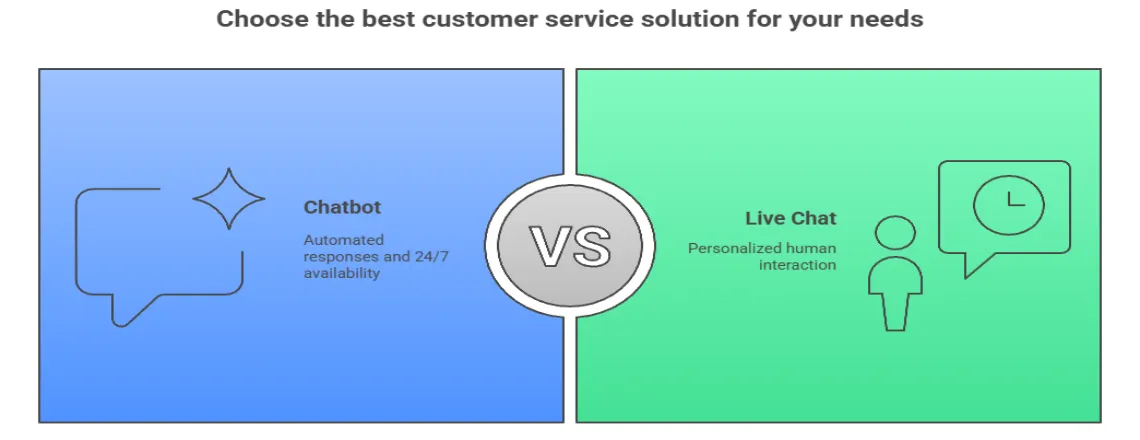
The fundamental distinction really comes down to automation versus human interaction. That’s the core split.
- Where responses come from: Chatbots generate their responses from databases and algorithms they’ve been fed. Live chat responses come from real people who bring contextual understanding and genuine empathy to each conversation.
- When they’re available: Chatbots operate 24/7 without needing breaks, vacation time, or sleep. Live chat agents work scheduled shifts, which creates potential coverage gaps unless you’re paying to staff round-the-clock support (and most companies aren’t).
- Handling complexity: Chatbots absolutely crush routine, repetitive questions, the stuff they were specifically programmed to answer. Live chat agents handle nuanced problems that need judgment, creativity, or emotional intelligence. You know, actual human skills.
- The cost structure: Chatbots have higher upfront development costs, but once they’re running, the ongoing expenses are pretty low. Live chat flips that, lower tech costs, but you’re paying salaries continuously.
- How they personalize: Chatbots personalize by analyzing data and pulling up user history. Live chat agents personalize through active listening and making real human connections.
Understanding these differences is really the starting point for making a smart decision in the chatbot vs live chat process.
Why the Chatbot vs Live Chat Decision Impacts Your Bottom Line
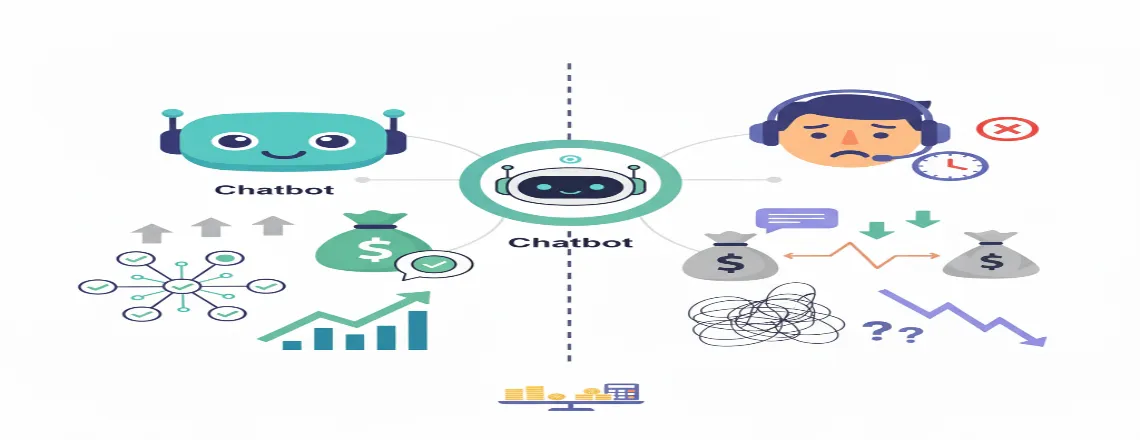
Getting customer support right has direct consequences for revenue and retention in 2025. This isn’t abstract stuff.
Research from Forrester shows that 73% of customers say the most important thing a company can do is value their time. When support fails? Customers don’t just write negative reviews. They leave. And they don’t come back. Data from Salesforce indicates that 80% of customers have actually switched to a competitor after experiencing poor service.
Your choice between chatbots and live chat directly influences these outcomes. Make the wrong call and you’re either overspending on human staff to answer questions that could easily be automated, or you’re frustrating the hell out of customers with inadequate automation for problems that genuinely require human judgment.
Support costs typically eat up somewhere between 10-15% of revenue for service-focused businesses. Companies that nail the right support channel mix are reporting 30-40% cost reductions while maintaining (or even improving) their customer satisfaction scores. The ones that choose poorly? They see declining satisfaction and rising costs simultaneously. That’s the nightmare scenario nobody wants.
The economic stakes here are pretty clear: match your support approach to actual customer needs and query complexity, or watch your competitors who figured this out steal your customers one bad support experience at a time.
Chatbot vs Live Chat for Customer Support – Pros and Cons
Let’s break down what each solution does well and where it completely falls short.
Advantages of Chatbots
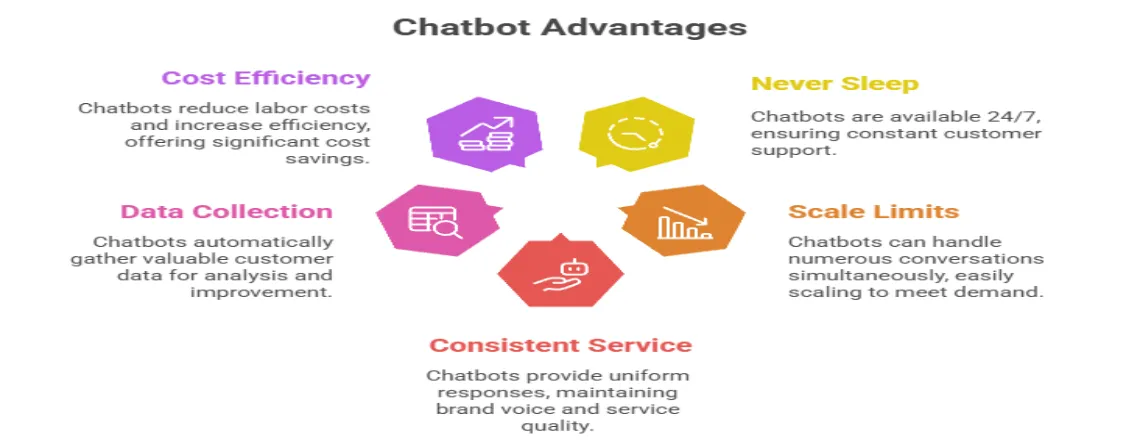
- Instant responses every single time: Chatbots answer immediately. Zero wait time. For simple questions like “What are your business hours?” or “How do I reset my password?”, that instant gratification makes a huge difference in customer experience.
- They literally never sleep: Your chatbot doesn’t need rest, vacations, sick days, or coffee breaks. Customers get support at 3 AM just as easily as they do at 3 PM. This matters tremendously for global businesses serving multiple time zones.
- Scale without limits: One chatbot handles 1,000 simultaneous conversations just as easily as it handles one. During traffic spikes from marketing campaigns or product launches, chatbots maintain a totally consistent service without any additional costs on your end.
- Consistent every time: Every customer receives the exact same, accurate information. Human agents might explain policies differently depending on their mood or how they were trained. Chatbots deliver uniform responses that align with your brand guidelines, no matter what.
- Automatic data collection: Chatbots capture conversation data, customer sentiment, and common pain points, all automatically. This information helps you identify trends, improve products, and refine your support processes over time.
- Insane cost efficiency: After the initial setup investment, chatbots handle thousands of conversations for a fraction of what you’d pay human agents. For high-volume, low-complexity support needs, the economics strongly favor automation. Like, it’s not even close.
Limitations of Chatbots
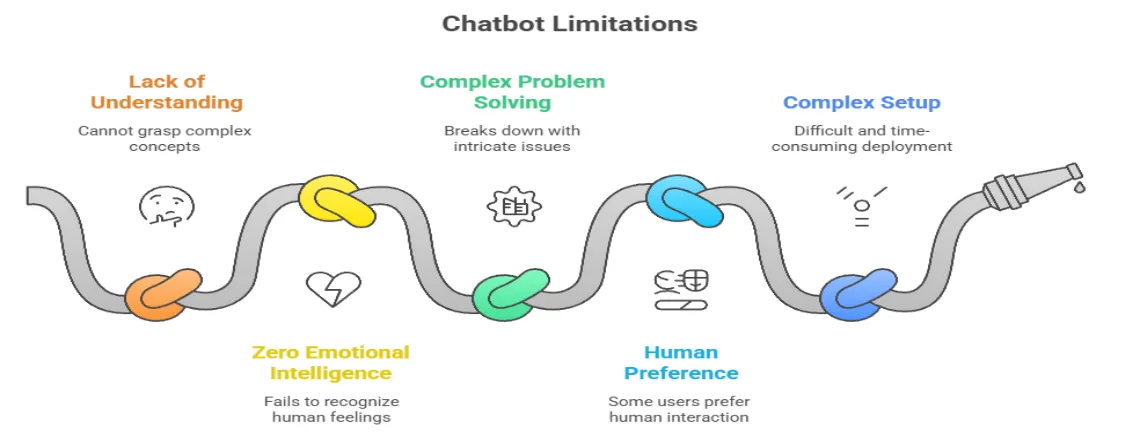
- They still don’t really “understand”: Despite all the AI advances we’ve seen, chatbots still struggle with ambiguous questions, complex scenarios, and nuanced language. Customers get frustrated fast when bots misunderstand what they need or keep providing irrelevant answers that don’t help.
- Zero emotional intelligence: Chatbots can’t read between the lines. They can’t sense when someone’s frustrated. They can’t adjust their approach based on emotional cues. When customers are upset or dealing with sensitive issues, automated responses often come across as tone-deaf or even insulting.
- Complex problems break them: Multi-step troubleshooting, exceptions to standard policies, situations requiring creative solutions, these expose chatbot limitations pretty quickly. These scenarios need actual human judgment and flexibility.
- Some people just prefer humans: Many customers simply prefer talking to real people, especially for important purchases or serious problems. If you force chatbot-only interactions, you’re going to damage relationships with a significant chunk of your customer base.
- Setup is genuinely complex: Building an effective chatbot requires significant upfront investment in design, content creation, testing, and integration with your existing systems. And poorly implemented bots? They create worse experiences than having no automation at all. Seriously.
Advantages of Live Chat
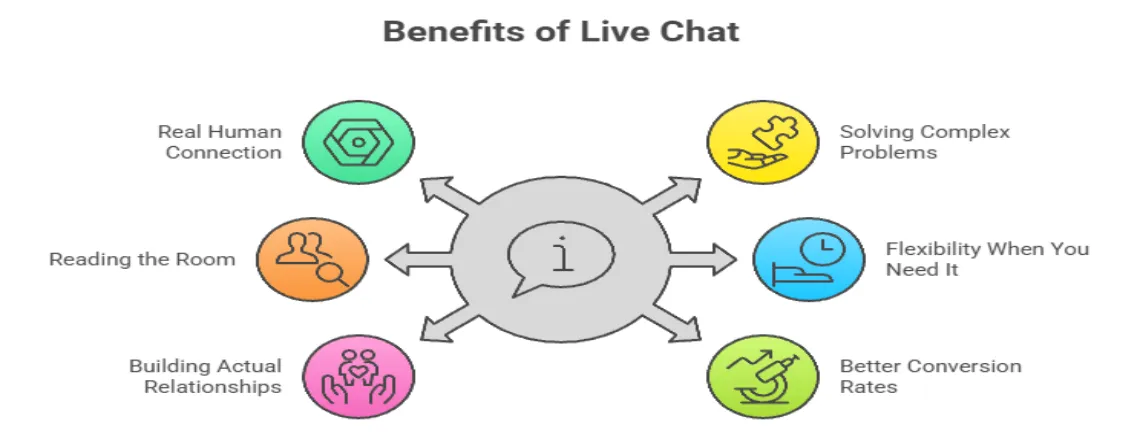
- Real human connection: Real people build rapport. They show genuine empathy. They create emotional connections that actually foster customer loyalty. This human touch becomes especially valuable for premium brands or complex services where relationships matter.
- Solving complex problems: Live chat agents think critically, ask clarifying questions, and develop custom solutions for unique situations. They handle exceptions gracefully without needing to escalate everything to phone support.
- They read the room: Trained agents recognize frustration in how customers type. They adjust their communication style accordingly. They de-escalate tense situations. This emotional awareness prevents negative experiences from turning into lost customers.
- Flexibility when you need it: Agents adapt to unexpected situations. They make judgment calls within company guidelines. They find creative solutions that automated systems simply can’t generate on their own.
- Building actual relationships: Conversations with helpful agents create memorable positive experiences that strengthen customer relationships and encourage repeat business. People remember when someone really helped them.
- Better conversion rates: For sales-oriented chat, human agents often convert at significantly higher rates by reading buying signals, handling objections smoothly, and providing personalized recommendations that actually match what the customer needs.
Limitations of Live Chat
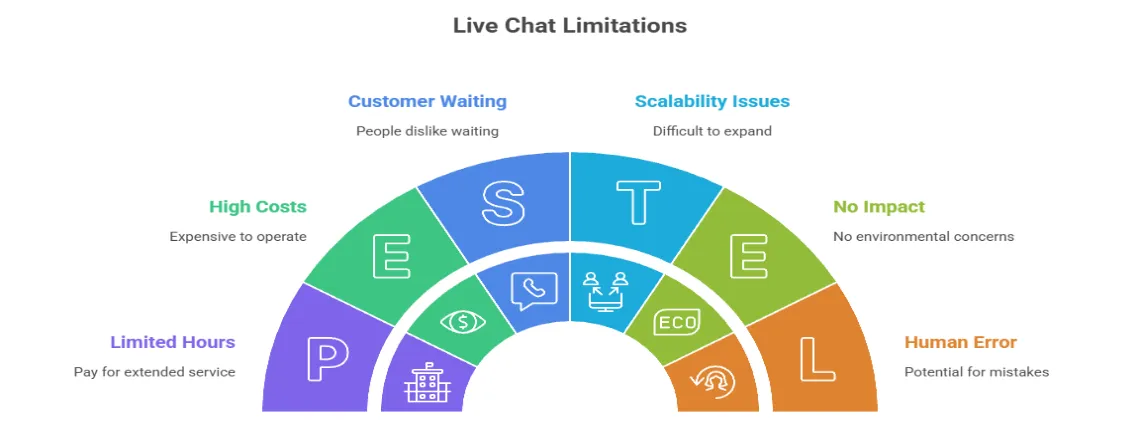
- It costs more, a lot more: Staffing live chat means recruiting, training, managing, and paying agents continuously. These labor costs add up incredibly quickly, especially if you want 24/7 coverage across multiple time zones.
- People wait: Unless you massively overstaff (which kills your budget), customers often wait several minutes for available agents during peak periods. These delays frustrate people and increase the chances they’ll just give up and leave.
- Can’t scale easily: Each agent handles maybe 2-4 simultaneous chats maximum. Sudden volume spikes mean you either have long queues or you need expensive surge staffing strategies.
- Inconsistency problems: Different agents have varying skill levels, knowledge bases, and communication styles. This inconsistency creates uneven customer experiences and can create messaging problems for your brand.
- Limited hours unless you pay big: Without round-the-clock staffing, customers outside your business hours have no support access. That potentially means lost sales or problems that go unresolved for hours.
- Humans make mistakes: Agents sometimes provide incorrect information. They overlook important details. They have bad days. These human errors can actually create bigger problems than the original issue the customer had.
Understanding these pros and cons helps you frame the chatbot vs live chat decision around your specific business context instead of just following generic best practices that might not apply to you.
Comparison Table: Chatbot vs Live Chat
| Feature | Chatbot | Live Chat |
| Definition | An AI-powered or rule-based system that automates responses to customer queries. | A real-time chat system where customers talk directly to human support agents. |
| Availability | 24/7, handles multiple queries simultaneously. | Limited to agent availability; one-to-one conversations. |
| Response Time | Instant replies, no waiting time. | Depends on agent workload or availability. |
| Personalization | Can use user data for automated personalization, but is limited in empathy. | Highly personalized, empathetic, and human-driven. |
| Cost Efficiency | Cost-effective, reduces workload and staffing costs. | Higher operational costs (requires human agents). |
| Best Use Case | Handling FAQs, lead generation, appointment booking, and first-level support. | Complex problem-solving, escalations, or emotional customer interactions. |
When to Use Chatbots vs Live Chat Agents
The answer to “live chat vs chatbot, which is better” depends entirely on what you’re actually trying to accomplish. Context is everything here.
Best Use Cases for Chatbots
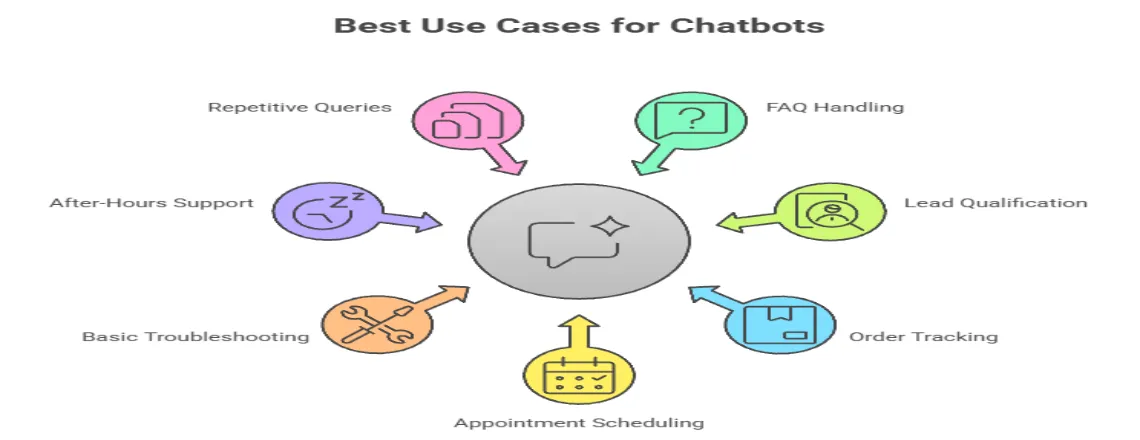
- FAQ handling: Questions about shipping policies, return procedures, account access, and product specifications. These are absolutely perfect for chatbot automation. They have straightforward answers and come up constantly.
- Lead qualification: Chatbots efficiently collect basic information, qualify prospects based on criteria you define, and route hot leads to your sales teams. This screening saves your agents’ time and improves conversion efficiency.
- Order tracking: Customers checking order status, delivery times, or tracking numbers get instant automated responses that pull data directly from your systems. No agent involvement needed.
- Appointment scheduling: Booking appointments, checking availability, sending calendar invites, all this works perfectly through automated chat flows connected to your scheduling software.
- Basic troubleshooting: Simple tech support, like as password resets, account unlocks, or guided troubleshooting for common issues, can follow automated decision trees really effectively.
- After-hours support: When live agents aren’t available, chatbots provide basic assistance and collect information for follow-up. Customers never hit a complete dead end.
- High-volume repetitive queries: Any situation where you’re answering the same questions repeatedly thousands of times? That’s screaming for chatbot automation.
Best Use Cases for Live Chat
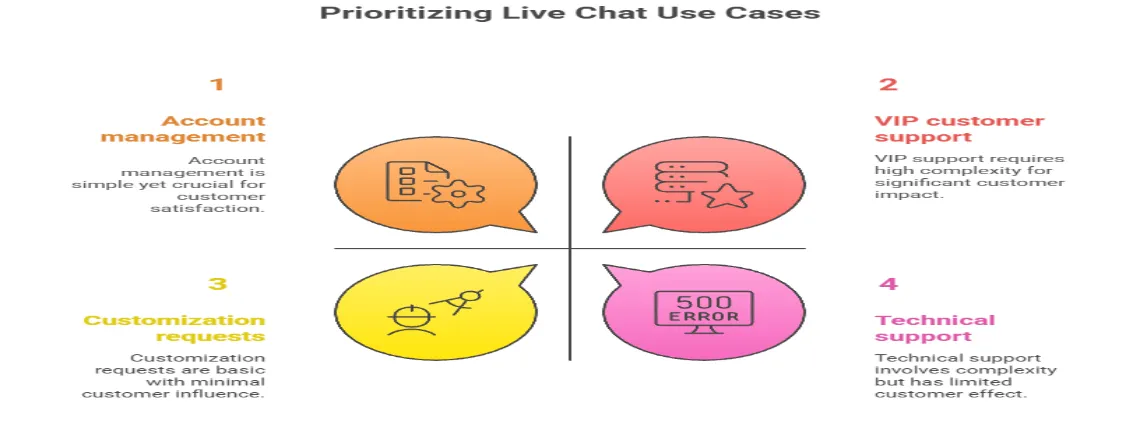
- Complex sales: High-value products, B2B solutions, complex services, these benefit massively from human agents who can build relationships, understand specific needs, and customize recommendations.
- Technical support: Detailed troubleshooting, software bugs, and multi-step solutions require the flexibility and problem-solving ability that only humans provide right now.
- Complaints and escalations: When customers are unhappy, human empathy and the authority to offer solutions beyond standard policies become absolutely essential for retention.
- Account management: Existing customers with specific questions about their accounts, contracts, or services need personalized attention that reflects their relationship history with your company.
- Customization requests: Special orders, custom configurations, anything deviating from standard offerings. This stuff requires human judgment and creativity.
- Consultative interactions: When customers need advice, comparisons, or actual guidance rather than just information, human expertise creates significantly more value.
- VIP customer support: High-value customers often expect (and frankly, deserve) white-glove service from knowledgeable human representatives who know their history.
Industries That Benefit Most from Each
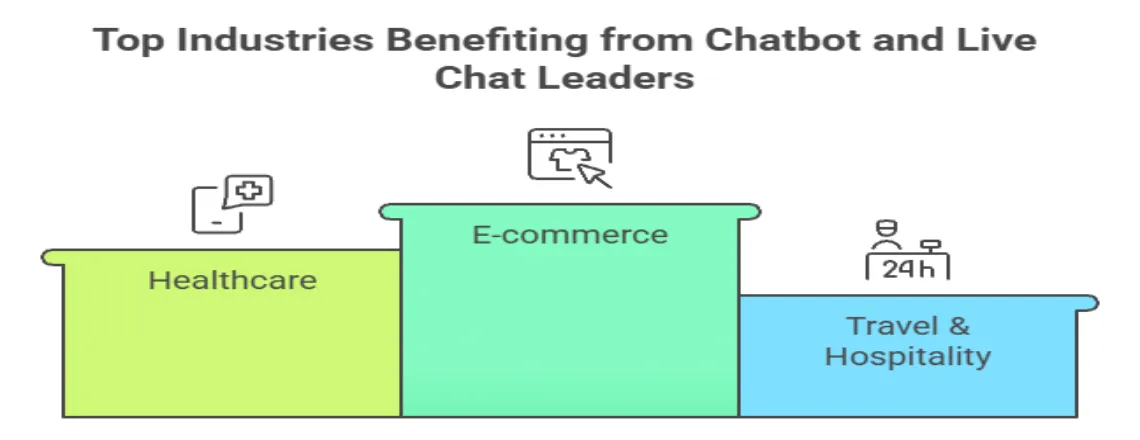
- Chatbot leaders: E-commerce retailers with standardized product inquiries, SaaS companies offering self-service products, airlines and travel booking sites handling reservations, banks managing routine transactions, and telecommunications providers answering account questions.
- Live chat leaders: Healthcare providers managing sensitive patient information, financial advisors offering personalized guidance, luxury brands emphasizing relationship-building, B2B software companies with complex implementations, and professional services requiring consultative selling.
Here’s the reality, though most successful businesses don’t actually choose exclusively. They implement hybrid models that route conversations intelligently based on complexity, customer value, and query type.
Chatbot vs Live Chat Cost Comparison

Budget considerations significantly influence the chatbot vs live chat decision for most businesses. Let’s talk real numbers.
Initial Setup Costs
Chatbot setup
You’re looking at somewhere between $3,000-$50,000+ for initial chatbot development, depending on how complex you want to get. Simple rule-based bots using platforms like MobileMonkey or Chatfuel might cost you $50-$500 per month. Pretty affordable. Custom AI chatbots with serious NLP capabilities and deep integrations with your existing systems? Those can easily exceed $100,000 for enterprise-level implementations. You’ll also invest significant time in conversation design, content creation, testing, and refinement. Budget somewhere between 2-6 months for a quality implementation that actually helps customers instead of just frustrating them.
Live chat setup
Live chat platforms typically cost $15-$150 per agent per month, depending on which features you need. Tools like Olark, LiveChat, or Zendesk Chat have pretty minimal setup complexity; you can honestly launch in days rather than months.
However, you still need to recruit, hire, and train agents. Hiring costs average around $4,000 per employee in most markets, and training takes 2-6 weeks before agents reach full productivity, where they’re actually helping instead of learning.
Ongoing Operational Expenses
Chatbot operations
Monthly platform fees range from basically $0-$500 for basic bots all the way up to $1,000-$10,000+ for enterprise AI solutions with all the bells and whistles. Add maintenance costs for updating content, improving conversation flows, and fixing issues that pop up; typically, that’s about 10-20% of your original development costs annually. The real savings appear when you look at volume handling. A chatbot managing 10,000 monthly conversations costs roughly the same as one managing 100,000. That creates tremendous economies of scale that human support just can’t match.
Live chat operations
Agent salaries absolutely dominate live chat costs. In the United States, chat agents typically earn $30,000-$45,000 annually, plus benefits (add another 30-40% on top of salary). Then factor in management overhead, ongoing training, quality assurance, and technology costs.
A single agent handles approximately 1,000-2,000 chats per month, depending on complexity. So if you’re getting 10,000 monthly chats, you need somewhere between 5-10 full-time agents. That’s costing you $200,000-$450,000 annually in the US market. Offshore alternatives can reduce labor costs by 60-80%, though you might see service quality impacts depending on language skills and cultural fit.
ROI Considerations
Chatbot ROI
Returns come from cost reduction, conversion improvement, and 24/7 availability, enabling sales outside business hours.
A company handling 50,000 monthly chats might save $300,000-$500,000 annually by automating 70% through chatbots while routing the remaining 30% to live agents for complex issues that genuinely need human attention.
Additional ROI comes from increased conversions; chatbots respond instantly when buying intent is at its highest, while live chat makes people wait.
Live chat ROI
Returns here focus on conversion optimization and customer lifetime value rather than pure cost savings.
Studies show live chat increases conversion rates by 20-40% for e-commerce sites and 30-50% for B2B sales. Human agents upsell effectively, handle objections smoothly, and close deals that automated systems would absolutely lose.
For a company pulling in $5 million annual revenue, a 25% conversion improvement from live chat might generate $1.25 million in additional revenue, which easily justifies $200,000 in annual live chat costs.
The chatbot vs live chat cost comparison isn’t straightforward at all. Chatbots win decisively on pure efficiency metrics. Live chat often delivers way better revenue generation. Your optimal choice depends on whether you’re primarily optimizing for cost minimization or revenue maximization.
Real-World Examples – What Works in Practice
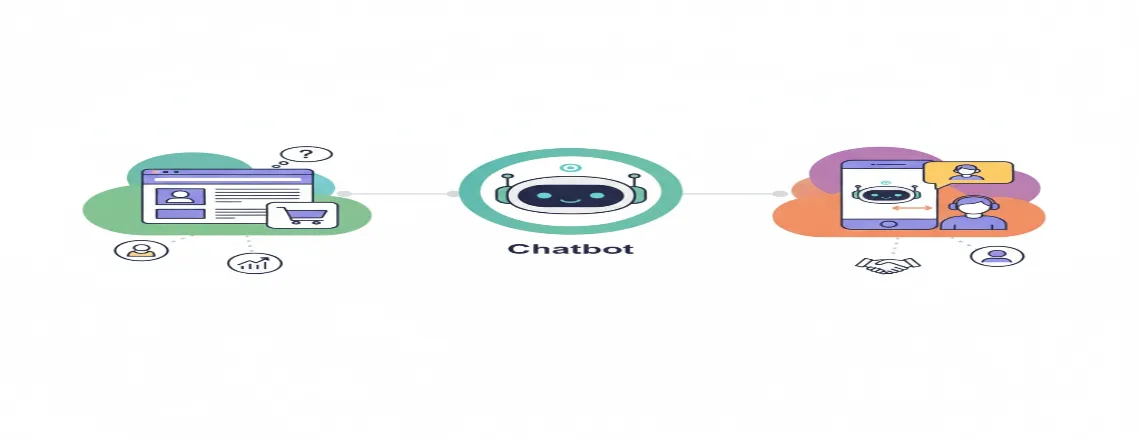
Let’s look at how actual companies approach the chatbot vs live chat decision in practice.
Sephora’s chatbot success story
The beauty retailer implemented a chatbot on Facebook Messenger that helps customers find products through conversational quizzes about their preferences, skin type, and the looks they’re trying to achieve. The bot handles product recommendations, makeup tutorials, and store locator functionality.
Results showed 11% higher conversion rates for users who engaged with the chatbot compared to traditional browsing behavior. The bot manages over 5 million messages monthly, work that would require literally hundreds of human agents if done through live chat. However, Sephora still maintains live chat and phone support for complex questions, returns, and customer service issues that fall outside the bot’s capabilities.
The lesson here: chatbots excel at guiding shoppers through product discovery when you’ve got large catalogs and standardized selection criteria.
HubSpot’s live chat approach
This SaaS company relies heavily on live chat for both sales and support functions. Their chat agents engage website visitors, qualify leads, schedule demos, and answer product questions in real-time.
They found that conversations starting with live chat convert to paying customers at rates 10 times higher than contact form submissions. The human element allows agents to understand specific business needs, explain complex features in context, and overcome objections, capabilities that their previous automated systems simply couldn’t match.
HubSpot does use chatbots for initial greeting and basic routing, but they always aim to connect qualified prospects with actual humans pretty quickly. For a complex B2B product with average contract values exceeding $10,000, this human investment drives genuinely profitable growth.
Bank of America’s hybrid model
Their Erica chatbot handles routine banking questions, transaction history, bill pay, and account alerts. When conversations exceed Erica’s capabilities, seamless handoffs connect customers to live agents who receive the full conversation context.
This hybrid approach processes over 1 billion client requests annually while maintaining high satisfaction scores. Customers get instant help for simple tasks and human expertise for complex issues, genuinely the best of both worlds.
The bank reports that Erica handles about 80% of interactions completely, routing the remaining 20% to human agents. This balance significantly reduces their support costs while maintaining service quality for situations that genuinely require human judgment.
These examples show pretty clearly that the question often isn’t chatbot vs live chat at all, it’s how to implement both strategically to cover different use cases.
The Hybrid Model – Why You Might Need Both
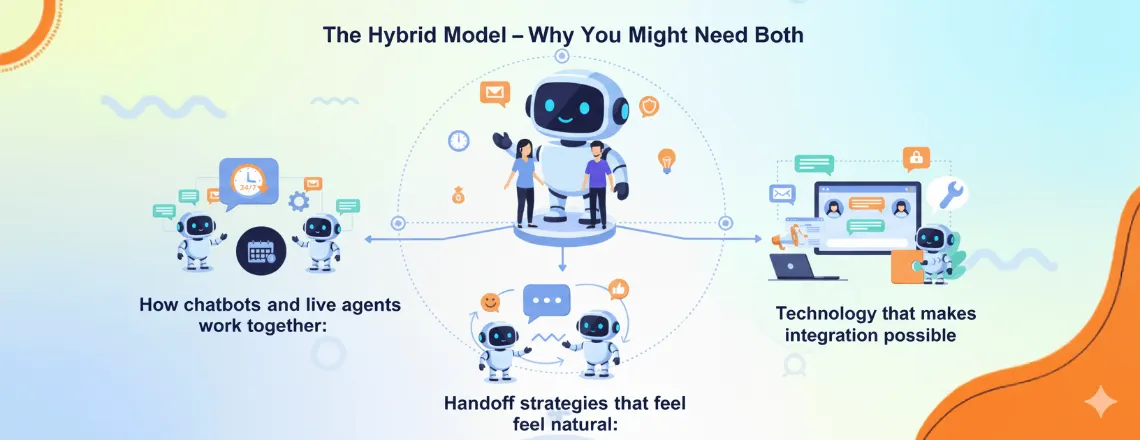
For many businesses, combining chatbots with live chat agents creates way better outcomes than choosing one exclusively. This is actually where most companies are heading in 2025.
How chatbots and live chat agents work together
The optimal hybrid model uses chatbots as first-line responders that greet visitors, answer simple questions immediately, and qualify what people actually need.
When conversations become too complex, fall outside the bot’s training, or the customer gets clearly frustrated, it smoothly transfers to human agents who can actually solve the problem.
This approach delivers instant responses for straightforward queries while preserving human expertise for situations that truly need it. Customers get help faster, agents focus on meaningful work instead of answering “What’s your return policy?” for the thousandth time, and businesses optimize their cost efficiency.
Handoff strategies that feel natural
The transition from bot to human matters enormously here. Clunky handoffs frustrate customers and completely negate whatever efficiency benefits you got from automation.
Best practices include
- Clear expectations: Saying “Let me connect you with someone who can help better with this” works way better than suddenly switching without any explanation
- Context preservation: Agents need to receive the full conversation history automatically, eliminating customer frustration from having to repeat everything they just told the bot
- Proactive routing: Good bots detect frustration indicators like repeated questions or negative language and transfer proactively before customers get really angry
- VIP fast-tracking: High-value customers or complex query types should bypass bots entirely, going straight to your most experienced agents
Technology that makes integration possible
Modern platforms like Intercom, Zendesk, and Freshdesk offer unified interfaces where chatbots and live agents operate within the exact same system. This integration enables smooth handoffs, shared conversation history, and genuinely consistent experiences.
AI improvements have also helped bots recognize their own limitations better. Natural language understanding has advanced enough that bots can actually identify when they’re getting in over their heads and transfer appropriately, rather than just frustrating customers with increasingly irrelevant responses.
The hybrid model directly addresses the core weakness of both standalone approaches: chatbot limitations in handling complexity and live chat’s fundamental scalability constraints.
How to Choose the Right Solution for Your Business
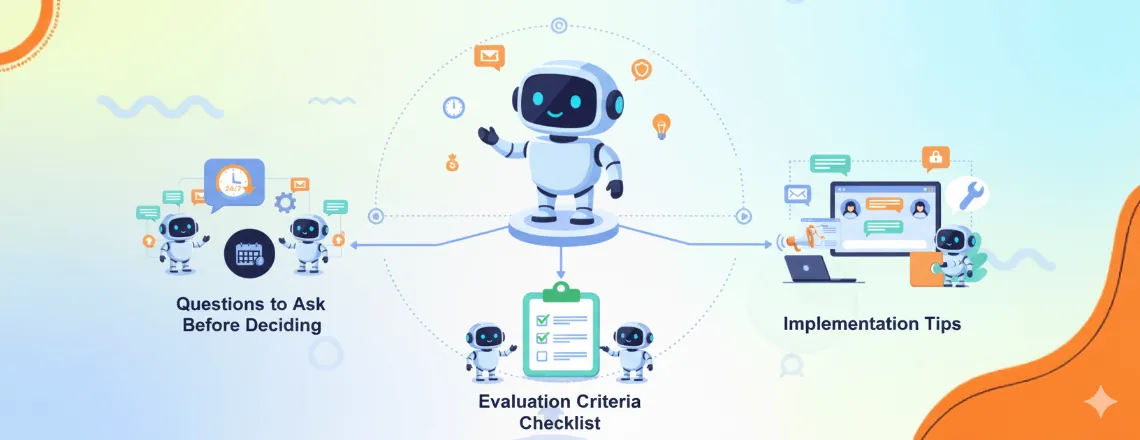
Ready to actually make your decision? Here’s a practical framework that works.
Questions to Ask Before Deciding
- What’s your conversation volume? Under 1,000 monthly chats probably doesn’t justify chatbot development costs. Over 10,000 makes automation economically compelling enough to seriously consider.
- How complex are your typical questions? If 80% of inquiries are basically variations of 20 common questions, chatbots will excel. If every conversation is genuinely unique and nuanced, humans will perform way better.
- What’s your budget reality? Tight budgets favor chatbots for volume handling. Larger budgets enable human teams or hybrid approaches that deliver better customer experiences.
- Who are your actual customers? Tech-savvy audiences typically accept chatbots readily. Older demographics or premium customers often have a strong preference for human interaction.
- What are you really optimizing for? Pure cost reduction points toward chatbots. Revenue growth and customer lifetime value often favor the human touch through live chat.
- Do you genuinely need 24/7 support? Global businesses or those with international customers benefit enormously from always-available chatbots. Regional businesses with predictable hours can usually staff live chat adequately during business hours.
Evaluation Criteria Checklist
Score each solution, chatbot, live chat, or hybrid, on these factors using a simple 1-5 scale:
- Meets customer expectations for your specific industry
- Fits within budget constraints (both setup and ongoing costs)
- Scales appropriately with your business growth plans
- Handles your most common support scenarios effectively
- Provides acceptable response times for your customer base
- Integrates smoothly with existing systems (CRM, helpdesk, etc.)
- Offers measurable ROI within an acceptable timeframe
- Aligns with your brand values and market positioning
The highest-scoring option indicates your best fit. But if scores are within about 10% of each other, that probably suggests a hybrid approach might work best for your situation.
Implementation Tips
- Start small: Whether you’re choosing chatbots or live chat, begin with a limited implementation. Test with one customer segment, one product line, or one channel before rolling out broadly across everything.
- Define success metrics upfront: Establish clear measurement criteria, CSAT scores, resolution rates, cost per conversation, and conversion rates. Track these metrics from literally day one so you actually know if things are working.
- Gather real feedback: Regularly survey customers about their chat experiences. What worked? What frustrated them? This qualitative input guides improvements that quantitative data often misses completely.
- Iterate continuously: Review conversation logs weekly, identify failure patterns, and keep improving your approach. The first version absolutely won’t be perfect; systematic improvement over time creates excellence.
- Give it adequate time: Allow enough time for meaningful results. Three months minimum for live chat, six months minimum for chatbots. Early struggles don’t always predict long-term performance.
- Always provide human escalation: Even with chatbots, make sure there are clear, easy paths to reach human help. Customers who want humans should get humans without having to jump through hoops.
The chatbot vs live chat decision isn’t permanent or irreversible. Many companies start with one approach, carefully evaluate the results, and then adjust their strategy based on actual performance data and customer feedback.
Key Metrics to Track Your Success
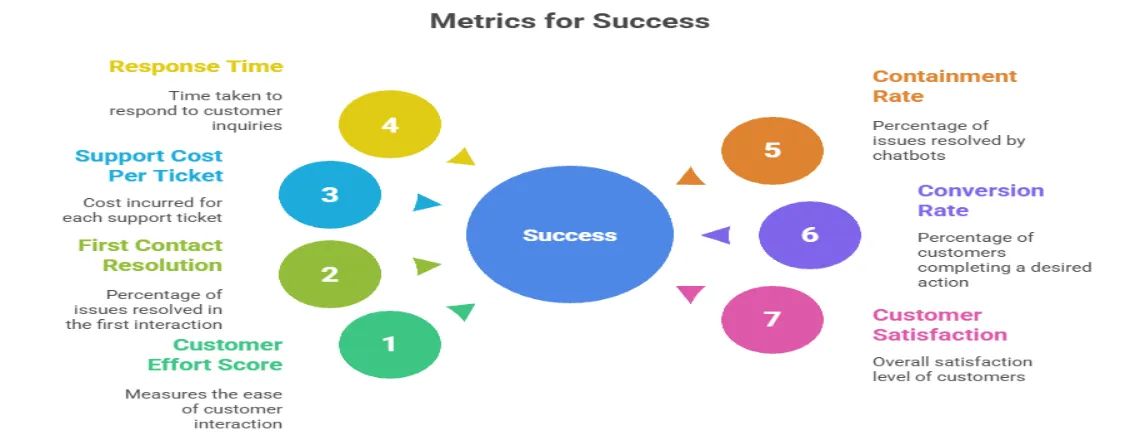
You genuinely can’t improve what you don’t measure. Track these essential metrics to know if your choice is working:
- Customer Effort Score (CES): Measures how easy customers found getting help. Target scores above 4.0 on a 1-5 scale indicate good performance.
- First Contact Resolution (FCR): Percentage of issues resolved in one interaction. Target 75-85% for live chat, 50-70% for chatbots within their scope.
- Support Cost Per Ticket: Total costs divided by volume. Chatbots typically cost $0.25-$2 per resolution, and live chat runs $5-$15 per conversation.
- Response Time: Chatbots should respond under 3 seconds, and live chat should hit under 60 seconds median response time.
- Containment Rate (Chatbots): Percentage of conversations completing without human escalation. Target 60-80% for good chatbot performance.
- Conversion Rate: For sales-oriented chat, track what percentage of conversations lead to actual purchases or qualified leads.
- Customer Satisfaction (CSAT): Post-interaction satisfaction scores. Target 4.0+ out of 5 for either approach.
Regularly reviewing these metrics helps you understand whether your chatbot vs live chat decision is actually delivering the results you expected, and it shows you specifically where refinements could improve performance.
Conclusion – Making the Right Choice for 2025
The chatbot vs live chat debate doesn’t have a universal answer that works for everyone; it has your answer based on your unique business context, customer base, and specific needs.
Chatbots deliver genuinely unmatched efficiency for high-volume, repetitive queries. They provide instant 24/7 responses at a massive scale, making them ideal for FAQs, order tracking, basic troubleshooting, and lead qualification. When you implement them well, they can dramatically reduce support costs while maintaining pretty acceptable customer satisfaction levels.
Live chat excels at building real relationships, handling genuine complexity, and providing that human touch that drives conversions and long-term loyalty. For consultative sales, technical support, and sensitive customer situations, human agents deliver experiences and business outcomes that automation honestly can’t match yet.
For most businesses operating in 2025, the optimal approach actually combines both. Use chatbots as intelligent first responders that handle routine questions instantly, while routing complex issues to human agents with full conversation context. This hybrid model delivers serious cost efficiency where automation genuinely works, and human expertise where it matters most for your business results.
Frequently Asked Questions (FAQs)
A chatbot is automated AI, while live chat connects users to human agents for personalized support.
Chatbots handle repetitive questions faster; live chat is better for complex or emotional issues.
No. Chatbots assist with simple queries, while humans handle complex or sensitive cases.
They offer 24/7 availability, instant response, and cost savings for businesses.
Chatbots can’t handle emotional or complex conversations effectively.
Use live chat for personalized, empathetic, and problem-solving customer interactions.
Yes. Hybrid systems combine both for speed and human empathy.
Well-designed chatbots improve satisfaction; poor ones frustrate users.
Not always. Many chatbot tools offer free or affordable plans.
Chatbots offer better cost efficiency; live chat builds stronger loyalty.

Daniel Wong
Technical Content Writer
My name is Daniel Wong, a Technical Content Writer from Singapore with a strong interest in AI-powered tools and digital automation. At ChatBoq AI, I focus on creating practical and easy-to-follow content that helps businesses and individuals understand how chatbots work and how to use them effectively.
I enjoy breaking down complex topics like natural language processing (NLP) and conversational AI into simple guides that anyone can follow. Each article is based on careful research, real-world examples, and testing to ensure accuracy and reliability.
Through ChatBoq AI, my goal is to provide readers with trustworthy insights, step-by-step tutorials, and the latest trends in chatbot technology.
✍️
Expert in AI & Chatbot Technology

Leave A Comment