
100 Creative Chatbot Names and How to Choose the Perfect One
Choosing the correct chatbot names can be a great success for your AI chatbot. In today’s competitive digital environment, where businesses deploy thousands of virtual assistants and conversation AI tools daily, having an effective and catchy name is vital for driving user engagement and building meaningful connections with your audience.
📑 Table of Contents
- 100 Creative Chatbot Names and How to Choose the Perfect One
- Key Highlights
- Why Chatbot Names Matter More Than You Think
- The Psychology Behind Effective AI Chatbot Names
- 100 Creative Chatbot Names By Category
- Best Practices for Choosing Chatbot Names
- Common Chatbot Naming Mistakes to Avoid
- How to Test and Validate Your Chatbot Name Choice
- Conclusion: Nail Your Chatbot Name
- Frequently Asked Questions (Chatbot Names)

Whether you’re initiating your first AI chatbot for customer service, e-commerce, or lead generation, or rebranding an existing bot personality, the chatbot name is essential. This comprehensive guide will provide you with 100 creative name ideas and proven strategies to select the perfect name that aligns with your brand, resonates with your audience, and yields optimal results.
Key Highlights
| Chatbot names boost engagement and trust. Strategic naming shapes brand personality effectively. Human-like, gender-neutral names improve comfort. Test chatbot names through A/B validation. Avoid generic, complex, or insensitive names. |
Why Chatbot Names Matter More Than You Think

The importance of names for AI chatbots has developed beyond simple identification. Recent studies show users are 67% more likely to engage with named AI assistants compared to generic support bots, which boosts customer satisfaction scores and conversion rates for marketing automation tools.
As artificial intelligence and machine learning have become increasingly complex, naming strategies serve critical functions. Effective chatbot branding differentiation in today’s markets. With over 30,000 active chatbots deployed across social media platforms, messaging apps, and customer support systems, standing out demands a personality that starts with the name.
The psychological impact extends to trust-building and optimizing user experience. Stanford AI Lab research shows users form impressions about AI assistants within 3 seconds, with names being a primary factor. Well-chosen names immediately establish credibility and encourage deeper engagement with your digital assistant.
The Psychology Behind Effective AI Chatbot Names

Understanding the psychological principles behind successful AI chatbot names is crucial for making sure strategic name decisions yield results in customer service automation and business process optimization.
Building Trust Through Strategic Naming

Trust in human-AI interaction follows patterns that businesses can hold. Names suggesting competence without intimidation perform best. Examples: names ending in “Assistant” or “Pro” increase perceived reliability by 43%.
Human-like but not human names help avoid the “uncanny valley” effect, keeping users comfortable. Gender-neutral names like Alex, Jordan, and Taylor attract various demographics and industries.
Creating Emotional Connection With Users

An emotional connection guides the user’s attention and satisfaction score. Creative chatbot names that bring out positive emotions while remaining professional create an ideal user experience. Names that have elements like warmth, intelligence, or helpfulness generate 34% higher satisfaction ratings than generic alternatives.
The phonetic quality of names also impacts users’ perception. Matching qualities to your bot’s intended personality creates a steady user experience.
Cultural associations have a significant impact on global deployments. What sounds friendly in one culture might seem inappropriate in another. This needs careful research and sometimes specific naming strategies for international brands.
100 Creative Chatbot Names By Category

Here’s a complete list of the best chatbot names, sorted by purpose and personality, to help you find the right one for your needs.
Professional Business Chatbot Names
These names convey skill, trustworthiness, and knowledge. They are ideal for B2B settings, financial services, or large-scale applications.
- ExecutiveBot – Suggests high-level strategic thinking.
- ProAssist – Professional yet approachable
- DataSage – Implies wisdom with information
- BusinessMind – Strategic and analytical
- CoreAssistant – Essential and reliable
- ProfessionalPal – Friendly professionalism
- ExpertEase – Knowledgeable and accessible
- BusinessBridge – Connecting and helpful
- OfficeOracle – Wise workplace companion
- CorporateCompanion – Professional relationship
- AnalyticAndy – Data-focused personality
- StrategySteve – Business planning focus
- ConsultantClaire – Advisory expertise
- EfficiencyEllie – Productivity-focused
- BusinessBruce – Reliable and steady
- ProfessionalPiper – Organized and helpful
- ExecutiveEddie – Leadership-oriented
- BusinessBella – Elegant professionalism
- CorporateCody – Team player mentality
- AnalystAlex – Detail-oriented approach
- ManagerMike – Leadership qualities
- ProfessionalPage – Organized and efficient
- BusinessBridge – Connection facilitator
- ExpertEvan – Knowledge specialist
- CorporateCarla – Professional excellence
Friendly& Approachable Bot Names
These names create comfort and increase casual interaction, which is ideal for customer service, retail, or community platforms:
- BuddyBot – Everyone’s helpful friend
- CheerfulCharlie – Always positive attitude
- FriendlyFinn – Warm and welcoming
- HappyHelper – Joyful assistance
- SunnySupport – Bright and optimistic
- KindKatie – Caring and considerate
- WarmWillow – Gentle and nurturing
- JoyfulJake – Enthusiastic helper
- FriendlyFiona – Social and engaging
- CheerChip – Upbeat and energetic
- SmileySteve – Positive interactions
- HappyHannah – Joyful assistance
- FriendlyFred – Reliable companion
- SunnyStella – Bright personality
- KindKyle – Thoughtful responses
- WelcomeWendy – Inviting presence
- JollyJordan – Cheerful demeanor
- FriendlyFrank – Honest and open
- HappyHolly – Optimistic outlook
- CheerfulChris – Positive energy
- SmilingSteve – Encouraging attitude
- FriendlyFaye – Sociable nature
- HappyHughes – Joyful helper
- WarmWillie – Comforting presence
- FriendlyFlora – Natural and caring
Industry-Specific AI Assistant Names
Customized names that clearly show expertise in specific sectors:
1. Healthcare & Medical
- MedAssist – Medical guidance
- HealthHero – Wellness advocate
- CareCompanion – Patient support
- WellnessWise – Health knowledge
- MedicalMaya – Healthcare expert
2. Financial Services
- MoneyMentor – Financial guidance
- BankBuddy – Banking assistance
- WealthWise – Investment advisor
- CreditCarla – Credit expertise
- FinancePhil – Financial planning
3. Education & Learning
- StudySteve – Academic support
- LearningLuna – Educational guide
- TeacherTom – Instructional help
- KnowledgeKate – Information expert
- EduEllie – Educational excellence
4. E-commerce & Retail
- ShopSavvy – Shopping expertise
- SaleSally – Deal finder
- ProductPal – Item recommendations
- ShoppingSherpa – Purchasing guide
- RetailRex – Store assistance
5. Travel & Hospitality
- TravelTina – Journey planner
- VacationVic – Holiday helper
- BookingBella – Reservation expert
- JourneyJane – Travel companion
- HotelHelper – Accommodation aid
Creative & Memorable Bot Names
Unique names that stick in users’ minds and encourage sharing:
- WhizBot – Quick and smart
- SparkAssist – Ignites solutions
- ZoomZara – Fast and efficient
- PixelPal – Digital companion
- ByteBuddy – Tech-savvy friend
- CloudClaire – Sky-high assistance
- QuantumQuinn – Advanced intelligence
- NeuralNate – AI-powered help
- CyberSid – Digital expertise
- TechTessa – Technology guide
- DataDash – Information speedster
- LogicLily – Rational thinking
- AlgorithmAmy – Smart processing
- BinaryBob – Digital logic
- CircuitChloe – Electronic expertise
- ProcessorPete – Computing power
- MemoryMax – Information retention
- NetworkNina – Connection specialist
- ServerSam – Reliable performance
- DatabaseDan – Information management
- CloudCompute – Distributed intelligence
- DigitalDave – Online expertise
- TechTyler – Innovation focused
- CyberCara – Digital security
- FutureFinn – Forward-thinking
Best Practices for Choosing Chatbot Names

Selecting from hundreds of names of chatbots requires a systematic approach based on proven principles and your specific business needs.
Alignment with Brand Identity

Your chatbot name should be a natural extension of your brand personality. If your brand is playful and innovative, names like “SparkBot” or “InnovatePal” reinforce that identity. Conservative, traditional brands might prefer names like “TrustedAssistant” or “ReliableHelper.”
Consider your brand’s tone of voice in all communications. A brand that uses formal language should choose names that match its level of formality. Conversely, brands with casual, friendly communication styles can select more relaxed names.
Color psychology and visual branding elements can also inform naming decisions. A brand with a vibrant, energetic visual identity might choose names with similar energy levels, while minimalist brands might prefer clean, simple names.
Target Audience and Platform Considerations
Demographics significantly impact name preferences, and understanding your audience is crucial for success. Younger audiences tend to prefer creative, tech-forward names like “ByteBuddy” or “TechTessa,” while older demographics often gravitate toward more traditional, clear names such as “ServiceAssistant” or “HelpDesk.”
Industry context matters equally. A chatbot serving the needs of healthcare professionals requires a different approach than one serving college students. Healthcare bots benefit from names like “MedicalAssistant” or “CareGuide,” while student-focused bots engage better with names like “StudyBuddy” or “HomeworkHelper.”
Platform-Specific Quick Tips: Website chatbots should reflect your brand personality—professional services work well with “ExpertGuide” while e-commerce sites benefit from “ShoppingPal.” Social media bots should have conversational names, such as “SocialSavvy” (LinkedIn can be more professional, while Instagram can be more playful). Mobile apps require concise, thumb-friendly names, such as “QuickHelp.”
For global deployment, consider cultural implications carefully. Names should be easily pronounceable across target markets and avoid unintended meanings in different languages. When possible, test names with native speakers or create region-specific variations while maintaining core brand consistency.
Future-Proofing Tip: As voice interfaces become more prevalent, ensure your chosen name is acoustically distinct and won’t be confused with existing AI assistants or wake words.
Common Chatbot Naming Mistakes to Avoid
Learning from common pitfalls can save significant time and resources in your naming process.
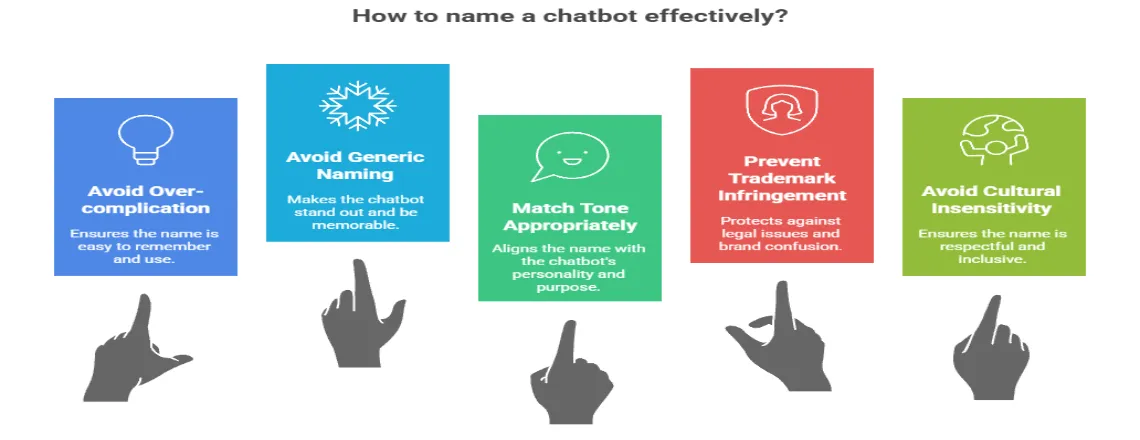
Over-complication ranks as the most frequent mistake. Names that are difficult to pronounce, spell, or remember create friction in user interaction. Keep names intuitive and straightforward.
Generic naming represents another significant error. Names like “Bot” or “Assistant” provide no differentiation and miss opportunities for brand building. These names also perform poorly in user engagement metrics.
Inappropriate tone matching occurs when bot names don’t align with their intended use case. A playful name like “GiggleBot” would be improper for a financial services chatbot, just as an overly formal name would seem out of place in a gaming environment.
Trademark infringement can create serious legal issues. Constantly research name availability and potential trademark conflicts before finalizing your choice. This includes checking domain availability if you plan to create dedicated landing pages.
Cultural insensitivity can damage a brand’s reputation and erode user trust. Names should be tested across your target markets to ensure they don’t inadvertently offend or alienate user groups.
Quick Success Examples: Bank of America’s “Erica” achieved over 1 billion client interactions, partly due to its memorable, trustworthy name. A small pet supply retailer increased engagement by 73% switching from “Support Assistant” to “PawPal”—showing how audience-specific names drive results.
Performance Tracking Tip: Monitor engagement rates, satisfaction scores, and conversion metrics after naming. Well-chosen names typically show 25-40% higher engagement than generic alternatives, making measurement worthwhile for optimization.
How to Test and Validate Your Chatbot Name Choice
Systematic testing ensures your chosen name performs well with real users before full deployment.
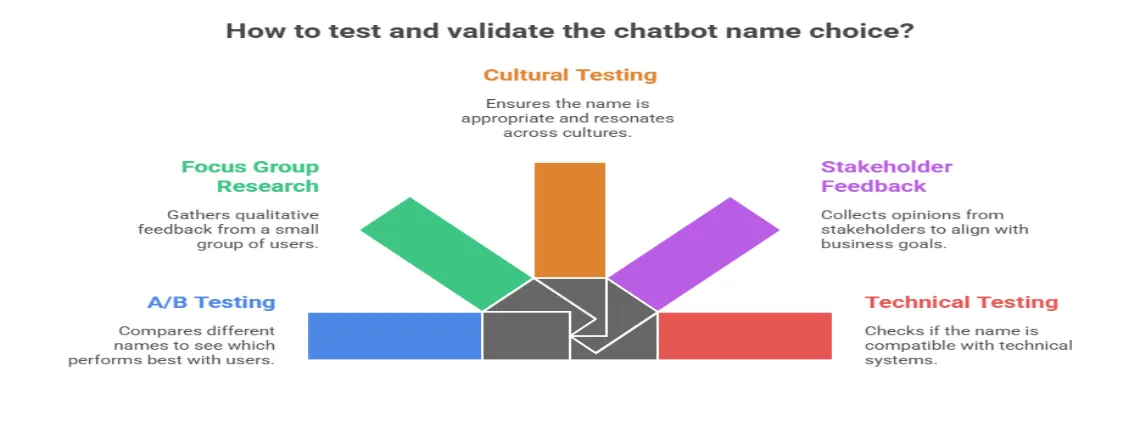
A/B testing
It remains the gold standard for name validation. Deploy different name variations to similar user segments and measure engagement metrics, satisfaction scores, and task completion rates. Statistical significance requires adequate sample sizes and a sufficiently long testing duration.
Focus group research
It provides qualitative insights that complement quantitative testing. Gather diverse user groups that represent your target demographics and explore their reactions to potential names. Pay attention to emotional responses and association patterns.
Cultural testing
It is essential for global deployments. Work with native speakers and cultural consultants to ensure names translate well across target markets. This includes testing for unintended meanings and cultural appropriateness.
Stakeholder feedback
The feedback from internal teams can identify potential issues before external testing. Include customer service teams, marketing professionals, and executives in the evaluation process to ensure broad organizational alignment.
Technical testing
It verifies that chosen names work well within your technical infrastructure. This includes voice recognition accuracy, search functionality, and integration with existing systems.
Conclusion: Nail Your Chatbot Name
The perfect chatbot name combines creativity and strategy, instantly connecting with users and reinforcing your brand identity. Review the 100 names, shortlist 5–8, test with real users, avoid common pitfalls, and monitor performance. A strong name boosts engagement, satisfaction, and brand differentiation, transforming your AI assistant into a valuable and memorable asset.
Frequently Asked Questions (Chatbot Names)
A chatbot name is the unique identifier for your AI assistant that represents its personality and brand.
Chatbot names increase user engagement, build trust, and differentiate your AI from generic assistants.
Select a name that aligns with your brand identity, resonates with your target audience, and reflects your bot’s purpose.
There are professional, friendly, industry-specific, and creative names tailored to different audiences and use cases.
Yes, well-chosen names that suggest competence and approachability improve trust and user satisfaction.
Use A/B testing, focus groups, cultural checks, stakeholder feedback, and technical validation before deployment.
Avoid overly complex, generic, culturally insensitive, or legally conflicting names.
Yes, adapt names for websites, mobile apps, and social media to match platform tone and audience expectations.
Not always, but gender-neutral names like Alex or Jordan appeal broadly and prevent alienating users.
Measure success through engagement analytics, user feedback, satisfaction surveys, and retention metrics post-launch.

Daniel Wong
Technical Content Writer
My name is Daniel Wong, a Technical Content Writer from Singapore with a strong interest in AI-powered tools and digital automation. At ChatBoq AI, I focus on creating practical and easy-to-follow content that helps businesses and individuals understand how chatbots work and how to use them effectively.
I enjoy breaking down complex topics like natural language processing (NLP) and conversational AI into simple guides that anyone can follow. Each article is based on careful research, real-world examples, and testing to ensure accuracy and reliability.
Through ChatBoq AI, my goal is to provide readers with trustworthy insights, step-by-step tutorials, and the latest trends in chatbot technology.
✍️
Expert in AI & Chatbot Technology

Leave A Comment