
Chatbot Automation: Boost Your Customer Support Efficiency
In today’s fast-moving digital world, businesses need to offer fast, reliable, and personalized customer support. Chatbot automation is changing how companies communicate with customers, making support more efficient and improving service quality. With AI-driven solutions, chatbots are now a key tool for providing smooth experiences and reducing costs. This article explains how chatbot automation can improve customer support and why it’s essential for businesses.
📑 Table of Contents
- Chatbot Automation: Boost Your Customer Support Efficiency
- Key Highlights
- Why Chatbot Automation Matters for Customer Support
- The Key Benefits of Chatbot Automation in Customer Support
- How Chatbot Automation Improves Customer Support Efficiency
- Key Features of Effective Customer Service Chatbots
- Overcoming Challenges with Chatbot Automation
- Real-World Examples of Chatbot Automation Improving Customer Support
- How to Choose the Right Chatbot Automation Solution for Your Business
- Conclusion: Why Chatbot Automation Is Essential for Your Customer Support
- Frequently Asked Questions (FAQs)
Key Highlights
| Chatbots offer 24/7, instant support, meeting customer demand for quick responses. Reduced costs and instant replies by automating routine tasks like FAQs. Chatbots handle common inquiries and improve first-contact resolution. NLP (Natural Language Processing) for natural conversations and self-learning to improve over time. Manage customer expectations and ensure data security (e.g., GDPR). Chatbots improve response time and customer satisfaction in e-commerce and SaaS. |
Why Chatbot Automation Matters for Customer Support
Customers now expect quick, 24/7 responses, whether it’s for a simple question or a complex issue. They don’t want to wait in long queues or get slow replies. Today’s consumers want instant support, and traditional customer service can’t always keep up. Chatbot automation helps by offering immediate answers, ensuring your business stays competitive. To understand how AI chatbots are transforming customer service across industries, check out our comprehensive guide on mastering customer service with AI chatbots.
The Key Benefits of Chatbot Automation in Customer Support
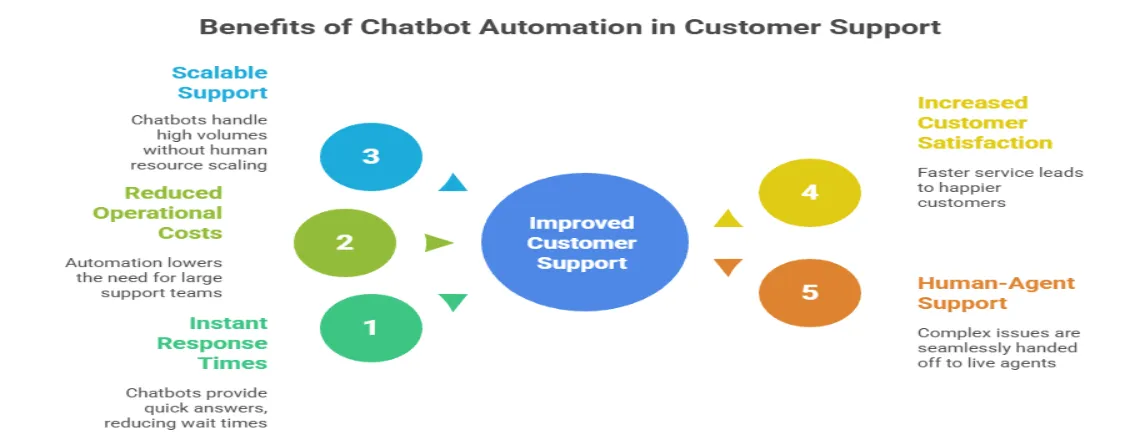
When it comes to improving service efficiency with chatbots, the benefits are clear. Here’s how chatbot automation can transform your customer support:
- Instant Response Times: Automated customer support agents are available 24/7 and provide quick responses to user questions, reducing waiting times.
- Reduced Operational Costs: By automating routine tasks, businesses can reduce the need for large customer support teams and improve operational efficiency.
- Scalable Support: Chatbots can handle high volumes of inquiries without the need to scale up human resources. This makes them perfect for handling peak periods and seasonal surges. The chatbot market size continues to grow as more businesses recognize these scalability benefits.
- Increased Customer Satisfaction: Faster response times and consistent service contribute to a better customer experience, leading to higher satisfaction and retention rates.
- Human-Agent Support: Where needed, customer support chatbots can smoothly hand off complex matters to live representatives, guaranteeing that customers get the focus required.
How Chatbot Automation Improves Customer Support Efficiency
1. Streamlining Routine Inquiries with AI Chatbots
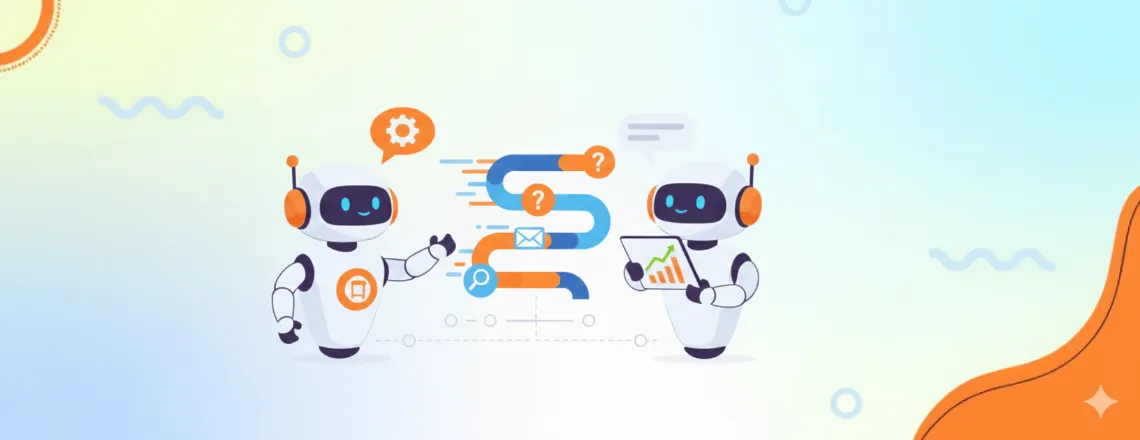
Chatbots excel at managing routine, repetitive inquiries, such as:
- Order status checks
- Account information updates
- Password resets
- General FAQs
AI chatbots make customer service faster by automating simple tasks, such as checking order status, updating account information, and answering common questions. They recognize details like order numbers and account info, allowing them to give quick responses. This helps manage many requests at once, saving time and improving efficiency.
2. Faster Response Time and First-Contact Resolution
The ability to deliver prompt resolutions is one of conversational AI’s most notable benefits for customer service. Customers don’t have to wait in long lines or be sent to several departments when using chatbots for customer service. The chatbot can:
- Provide instant answers to common questions.
- Resolve simple issues immediately, boosting first-contact resolution rates.
- If the chatbot can’t resolve the issue, it quickly forwards the request to a human agent while retaining the entity data (such as the issue or product type) for a smoother handoff.
3. Seamless Integration with Existing Systems
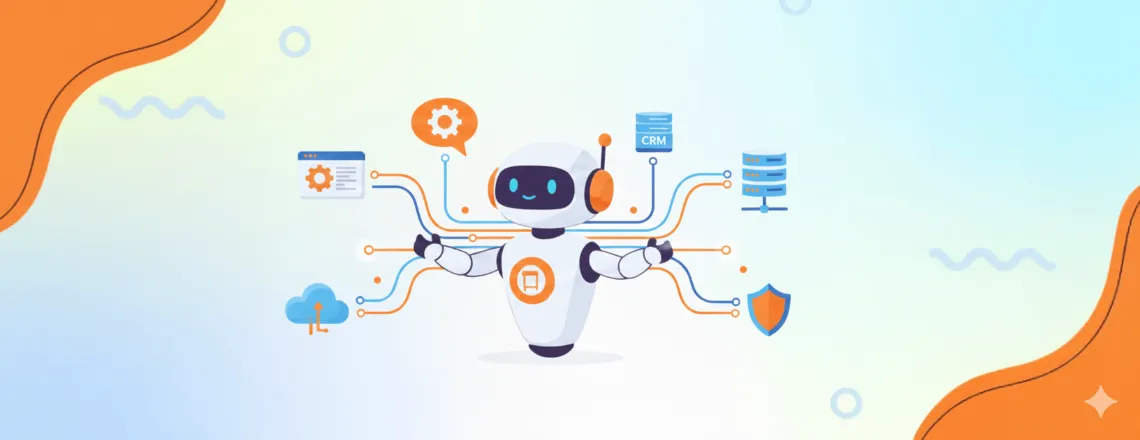
Seamless Integration with Existing Systems refers to the ability of chatbot automation to work smoothly with your business’s current software, tools, and platforms without disruption. This means the chatbot can connect and communicate with systems like:
- CRM (Customer Relationship Management) to access customer data and identify entities such as name, email, or purchase history.
- Ticketing software for managing and tracking customer support issues
- Live chat platforms for smooth transitions between automated and human support
- Helpdesk tools for managing more complex or escalated queries
With seamless integration, chatbots can easily access important information from your systems. They can answer customer questions quickly and pass on more complex issues to human agents without any delays. This makes the support process faster and smoother for both customers and support teams.
Key Features of Effective Customer Service Chatbots
When selecting a chatbot for your customer support team, it’s essential to look for features that ensure its effectiveness:
- Natural Language Processing (NLP): NLP helps chatbots identify and extract entities (such as product names, dates, and order numbers) from user queries, allowing them to understand the intent and provide relevant responses.
- Personalization: A capable chatbot can use entities like customer name, purchase history, or account details to provide personalized responses, making conversations feel more relevant and natural.
- Self-Learning Capabilities: Many AI-powered conversational agents have the ability to learn from previous interactions, improving their performance over time and providing better responses.
- Multichannel Support: A customer service bot should be able to interact with customers through a variety of channels, including social media, email, and real-time chat. It should also recognize entities across these platforms.
- Analytics & Reporting: For continuous improvement, it is essential to track key performance indicators like response time, problem-solving speed, and customer satisfaction, as well as how well the chatbot handles entities in real-time interactions.
Overcoming Challenges with Chatbot Automation
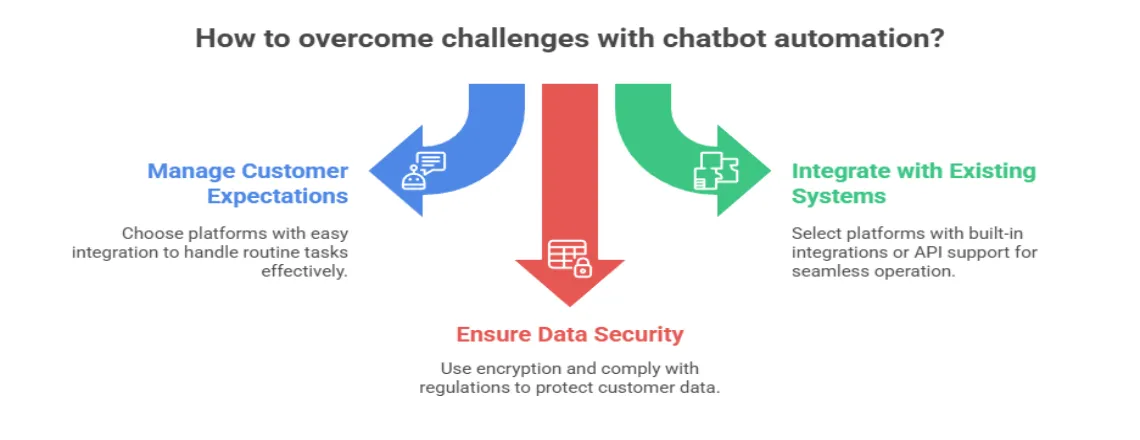
Overcoming Challenges with Chatbot Automation involves addressing several key hurdles that can arise when implementing chatbots in customer support:
1. Managing Customer Expectations
- Challenge: Customers may expect chatbots to handle complex issues, but chatbots are best at managing routine tasks that involve clear entities (such as order IDs or product types).
- Solution: Choose chatbot platforms that offer easy integration with your current software. Many modern chatbots come with built-in integrations or API support, making this process smoother. This allows the chatbot to use entities from various systems, such as customer profiles or order statuses, to provide consistent and personalized service.
2. Integration Issues with Existing Systems
- Challenge: Integrating chatbots with existing tools like CRM systems, ticketing software, and live chat platforms can be technically challenging.
- Solution: Choose chatbot platforms that offer easy integration with your current software. Many modern chatbots come with built-in integrations or API support, making this process smoother.
3. Data Security and Privacy Concerns
- Challenge: Chatbots often handle sensitive customer data, raising concerns about data security and compliance with privacy regulations (like GDPR).
- Solution: Ensure the chatbot platform complies with data security standards and regulations. Use encryption and secure data storage, and clearly inform customers about how their data will be used and protected, especially when handling entities like personal identification information or payment details. Learn more about AI chatbot privacy concerns and how to address them.
By addressing these challenges, businesses can maximize the effectiveness of chatbot automation while maintaining customer trust and operational efficiency.
Real-World Examples of Chatbot Automation Improving Customer Support
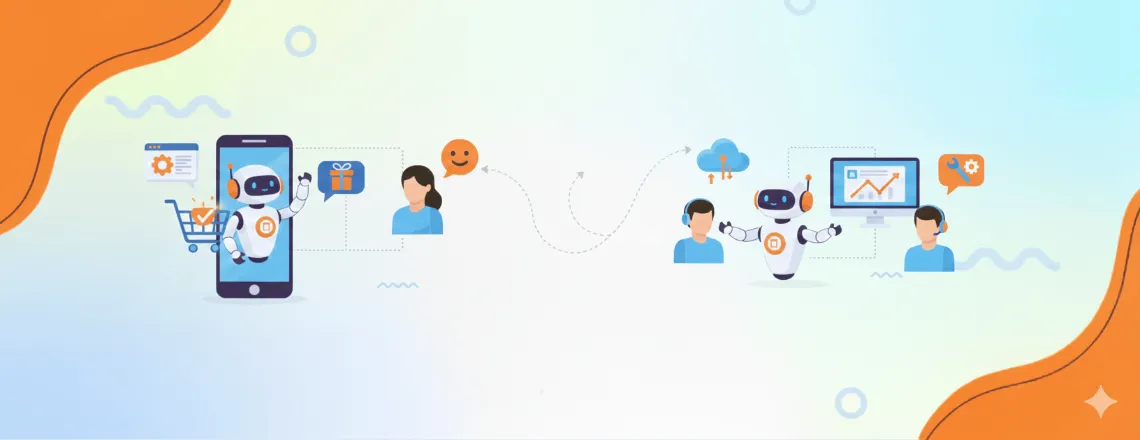
Case Study 1: E-commerce Business
An online store added a chatbot to handle common customer questions about order status, shipping, and returns. By recognizing details like order number, shipping status, and product type, the chatbot reduced response time from hours to seconds. This allowed support staff to focus on more complex issues, leading to a 50% increase in customer satisfaction and a 30% decrease in operating costs.
Example: In 2019, 36.4% of the revenue for Retail & E-commerce companies came from organic search, compared to 27.6% generated from paid search.
Case Study 2: SaaS Company
A SaaS company used a chatbot to automate tasks like onboarding, solving common user issues, and handling account-related questions. By pulling details such as user ID and subscription information, the bot helped boost customer retention by 20% and lightened the load for human agents. Beyond support, many companies are also using chatbots for sales to qualify leads and drive conversions.
Example: In 2024, the SaaS market was estimated to be worth over $250.8 billion, about 7 times higher than in 2015. SaaS projection revenue for 2025 is expected to reach $390.50 billion. With an expected annual revenue growth rate of 19.38% (2025-2029), the SaaS industry market volume will reach $793.10 billion by 2029.
How to Choose the Right Chatbot Automation Solution for Your Business
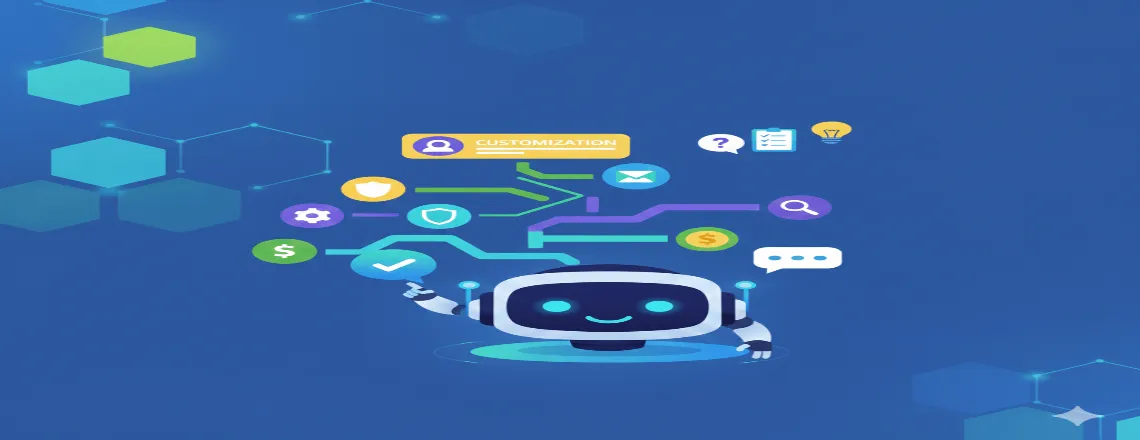
Selecting the right AI chatbot for customer support depends on several factors:
- Scalability: Choose a solution that can grow with your business.
- Customizability: Ensure the platform allows you to customize the chatbot to your specific needs.
- AI Features: Look for robust AI capabilities, including NLP and self-learning features.
- Multichannel Support: Handle multiple communication channels like live chat, social media, email, SMS, or messaging apps (WhatsApp, Facebook Messenger).
Some popular chatbot solutions include:
- Intercom: Best for businesses that need both customer support automation and customer engagement. It’s great for e-commerce and SaaS businesses that want a personalized support experience.
- Zendesk AI: A comprehensive support platform with multi-channel support and ticketing. It’s great for businesses of any size, especially those with larger teams and complex customer support needs.
- Drift: Focused on lead generation and sales support. It helps businesses qualify leads and book meetings quickly, making it perfect for businesses where sales and customer service work closely together.
Conclusion: Why Chatbot Automation Is Essential for Your Customer Support
Chatbot automation is no longer just a trend; it’s essential for businesses that want to enhance customer service, boost satisfaction, and reduce costs. With AI chatbots, you can offer fast, reliable, and personalized support 24/7. Ready to improve your customer service? Consider adding an automated system to your business and see the positive impact it can have.
Frequently Asked Questions (FAQs)
Chatbot automation uses AI-powered chatbots to handle repetitive support tasks, providing instant responses and improving customer service efficiency.
AI chatbots reduce response times, manage high volumes of requests, and allow human support agents to focus on more complex issues.
Yes. Chatbots handle simple tasks and escalate complex issues to human agents, ensuring customers receive the right level of support.
Yes, chatbots are available around the clock and ensure consistent support without delays or downtime.
Many chatbot platforms connect easily with CRM systems, live chat software, and ticketing tools for smooth integration.
Yes. Faster replies and automated assistance help increase customer satisfaction and improve retention rates.
Most chatbot platforms follow strict security standards like GDPR to protect personal and sensitive user information.
E-commerce, SaaS, healthcare, finance, and many other industries use chatbot automation to enhance their customer support operations.
Yes. Many AI chatbots learn from past interactions to improve accuracy, understanding, and overall performance over time.
You can measure success using KPIs such as response time, first-contact resolution, customer satisfaction scores, and support cost reduction.

Daniel Wong
Technical Content Writer
My name is Daniel Wong, a Technical Content Writer from Singapore with a strong interest in AI-powered tools and digital automation. At ChatBoq AI, I focus on creating practical and easy-to-follow content that helps businesses and individuals understand how chatbots work and how to use them effectively.
I enjoy breaking down complex topics like natural language processing (NLP) and conversational AI into simple guides that anyone can follow. Each article is based on careful research, real-world examples, and testing to ensure accuracy and reliability.
Through ChatBoq AI, my goal is to provide readers with trustworthy insights, step-by-step tutorials, and the latest trends in chatbot technology.
✍️
Expert in AI & Chatbot Technology

Leave A Comment