
How to Build Your Email List with Chatbots
Growing an email list remains one of the most valuable marketing strategies in 2025, but traditional methods are losing effectiveness. Static opt-in forms that once converted at healthy rates now face banner blindness and user fatigue. Enter chatbots: the conversational solution transforming how businesses capture leads and achieve email subscriber growth.
📑 Table of Contents
- How to Build Your Email List with Chatbots
- What Are Email List-Building Chatbots?
- Benefits of Using Chatbots for Email List Growth
- Types of Chatbots for Email List Building
- Step-by-Step Guide to Building Your Email List with Chatbots
- Advanced Chatbot Email List Building Strategies
- Best Practices for Chatbot Email Capture
- Common Mistakes to Avoid
- Measuring Success: Key Metrics to Track
- Tools and Resources
- Future Trends in Chatbot Email Marketing
- Conclusion
- Frequently Asked Questions (FAQs)
Chatbots offer an interactive, personalized approach to automated email capture that feels less intrusive and more engaging than pop-up forms. Instead of asking visitors to fill out fields on a static form, chatbots create a dialogue that guides users naturally toward subscribing. This article will show you exactly how to build your email list with chatbots, from choosing the right chatbot platform to implementing advanced strategies that maximize conversions.
What Are Email List-Building Chatbots?

Email list-building chatbots are automated conversational tools. Essentially, chatbots are computer programs designed to engage website visitors and social media users while capturing their contact information. Unlike traditional opt-in forms that present all fields at once, chatbots collect email addresses through natural, conversational exchanges that feel more like talking to a helpful assistant than filling out a form.
These chatbot lead generation tools can appear on your website, Facebook Messenger, Instagram, WhatsApp, or via SMS. They use pre-programmed conversation flows to qualify leads, deliver value, and ask for their email address at the optimal moment in the chatbot interaction.
The psychology behind why chatbots work for email list building is simple: humans are wired for conversation. When a bot asks, “What’s your biggest challenge with email marketing?” it creates engagement. By the time users are asked to provide their email address to receive helpful resources, they’ve already invested in the conversation and feel a relationship has been established.
Benefits of Using Chatbots for Email List Growth
Implementing chatbots for email list building delivers multiple advantages over traditional methods, transforming how businesses capture and nurture leads. The conversational approach creates a more engaging experience that naturally guides website visitors toward subscribing without the pressure of static forms.
Key advantages include:
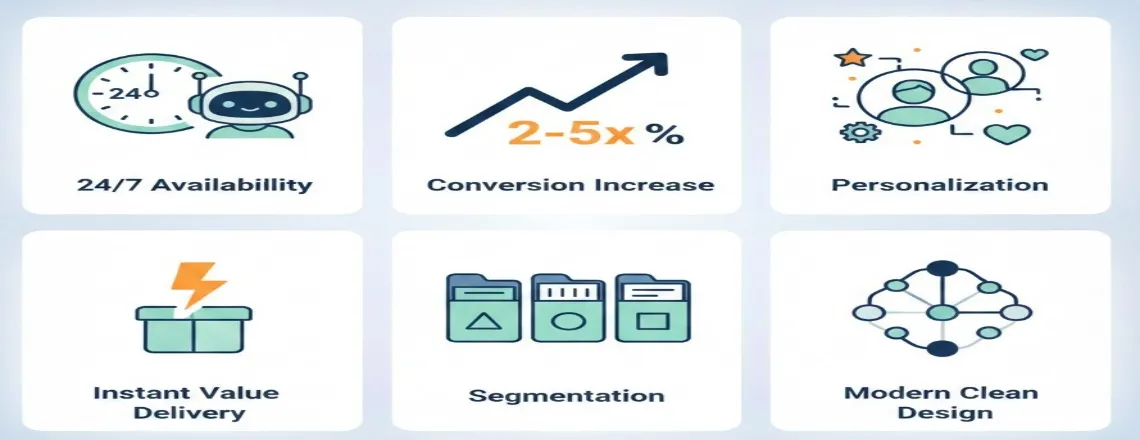
- Higher engagement rates: Chatbots to grow your email list achieve conversion rates 2-5 times higher than static forms by capturing attention through movement, personalization, and interactive dialogue
- 24/7 automated lead capture: Your list grows continuously, even while you sleep, with consistent quality in every interaction. Chatbots can save you significant time to build your audience.
- Personalized user experience: Use chatbots to provide customized approaches based on visitor responses, offering relevant lead magnets and automatic segmentation
- Immediate value delivery: Unlike forms that promise to “send you something later,” chatbots deliver resources, answers, and recommendations instantly when users share their email address
- Better lead qualification: Strategic questions naturally filter prospects, ensuring your robust email list contains genuinely interested email subscribers rather than freebie seekers
- Seamless integration: Connect your chatbot with your email service provider and existing email marketing platform effortlessly
The beauty of chatbot lead generation lies in how it addresses the core problems of traditional opt-in methods. Where static forms feel transactional and impersonal, chatbots to interact with customers create genuine engagement. Visitors don’t feel like they’re simply filling out another form; they feel like they’re having a helpful conversation that provides real value. This psychological shift dramatically improves not just conversion rates, but also the quality of subscribers you attract, leading to better long-term engagement and higher ROI from your email marketing efforts.
Types of Chatbots for Email List Building
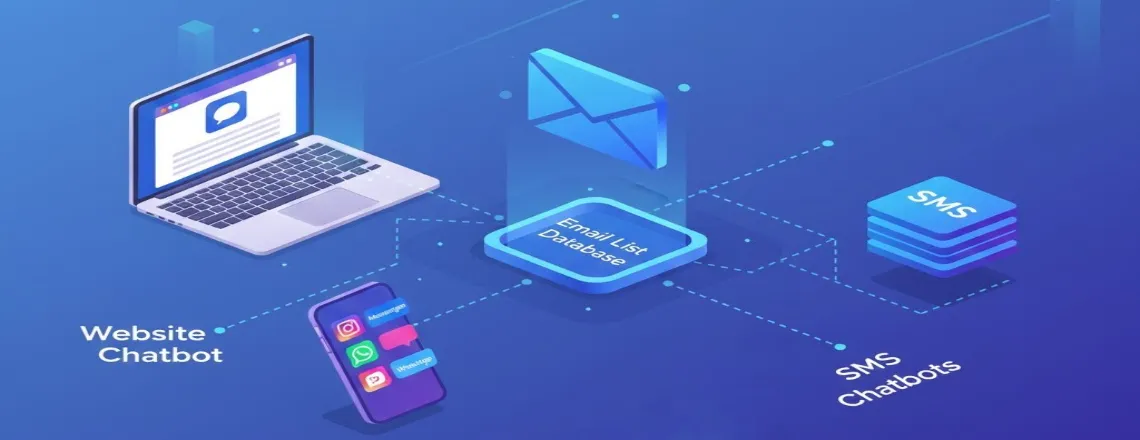
Different platforms serve different purposes in your conversational marketing strategy:
- Website chatbots: Most versatile option, appearing as pop-ups, slide-ins, or embedded widgets triggered by user behavior
- Facebook Messenger bots: Tap into billions of active users who already expect conversational interactions
- Instagram DM automation: Perfect for content creators and e-commerce brands to collect email addresses from engaged followers
- WhatsApp Business chatbots: Deliver high engagement rates, especially in international markets
- SMS chatbots: Reach users directly on mobile devices with text-based automation
- Landing page chatbots: Replace or complement traditional forms, often improving conversion rates significantly and helping you build an email list more effectively
Step-by-Step Guide to Building Your Email List with Chatbots
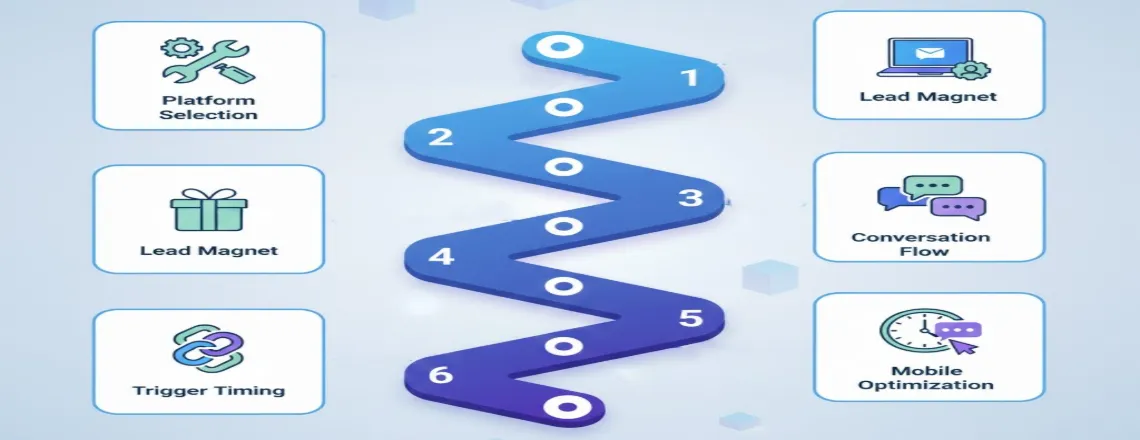
Step 1: Choose Your Chatbot Platform
Popular platforms include ManyChat, Chatfuel, MobileMonkey, Drift, and Intercom. When selecting your platform, consider ease of use, integration capabilities with your chosen email marketing service, pricing structure, multi-channel support, and analytics features.
For beginners, ManyChat and Chatfuel offer user-friendly interfaces with visual flow builders. More advanced users might prefer Drift or Intercom for sophisticated targeting and enterprise features. Most platforms offer free trials, so test several before you get a chatbot solution that fits your needs.
Step 2: Define Your Lead Magnet Strategy
Your lead magnet is the value you offer in exchange for their email address. Chatbots work particularly well with lead magnets like quick guides or checklists that can be delivered instantly, quiz results personalized based on chatbot responses, discount codes for e-commerce stores (you can offer a free ebook or other digital product), free consultations or strategy sessions, and exclusive video content or mini-courses.
The key is matching your lead magnet to your audience’s immediate needs. A chatbot can ask “What’s your biggest challenge?” then offer the perfect resource based on the answer, making the opt-in feel personalized rather than generic.
Step 3: Design Your Chatbot Conversation Flow
Effective chatbot email marketing starts with compelling conversation design. When you create your chatbot, begin with an engaging opening that addresses a specific pain point or offers clear value. For example: “Hey! Want to know the #1 mistake that’s killing your email open rates? I can show you in 60 seconds 😊”
Keep initial questions simple and use a chat interface with buttons for easy responses. Your chatbot is to ask 2-3 qualifying questions maximum before asking for an email address. Make the transition natural: “Perfect! I’ll send you a customized action plan. What email should I send it to?”
Always end with confirmation and set expectations: “Awesome! Check your inbox in the next 5 minutes. I’m sending you [specific deliverable]. You’ll also get my weekly tips on [topic].”
Step 4: Set Up Email Capture and Integration
Consider connecting your chatbot and email marketing platform through native integrations or tools like Zapier. Most major email platforms like Mailchimp, ConvertKit, ActiveCampaign, and HubSpot integrate with popular chatbot tools, allowing your chatbot to work seamlessly with your existing email strategy.
Comply with GDPR and CAN-SPAM by including clear consent language before users provide their email address, offering easy unsubscribe options, and storing consent records. Consider implementing double opt-in for a higher quality email list, though single opt-in typically yields better initial conversion rates.
Use tagging and segmentation to segment your email list based on chatbot responses. Someone who expressed interest in “advanced strategies” should receive different targeted email campaigns than someone looking for “beginner tips.”
Step 5: Create Strategic Chatbot Triggers
Timing is everything with automated lead capture. To maximize conversions, you need to understand what triggers are useful and implement them strategically:
- Exit-intent triggers: Activate when users move their cursor toward closing the tab, offering one last chance to capture email addresses within that session with an irresistible offer
- Time-based triggers: Appear after visitors spend 30-60 seconds on your site, indicating genuine interest
- Scroll-based triggers: Activate when users scroll to 50-70% of the page, showing they’re engaged with your content
- Behavioral triggers: Respond to specific actions like viewing multiple pages, visiting your pricing page, or clicking certain elements
Test different trigger timings to find what works best for your audience. Generally, waiting before triggering a chatbot yields better results than immediate pop-ups that interrupt the browsing experience.
Step 6: Optimize for Mobile Users
Over 60% of web traffic comes from mobile devices, making mobile optimization critical when building your list. Design with thumb-friendly buttons, keep messages concise for small screens, test loading times to ensure the chatbot doesn’t slow your site, ensure text is readable without zooming, and minimize typing by using multiple-choice responses.
A chatbot that works beautifully on desktop but frustrates mobile users will hurt rather than help your email list-building efforts. Test thoroughly on both iOS and Android devices before launching.
Advanced Chatbot Email List Building Strategies
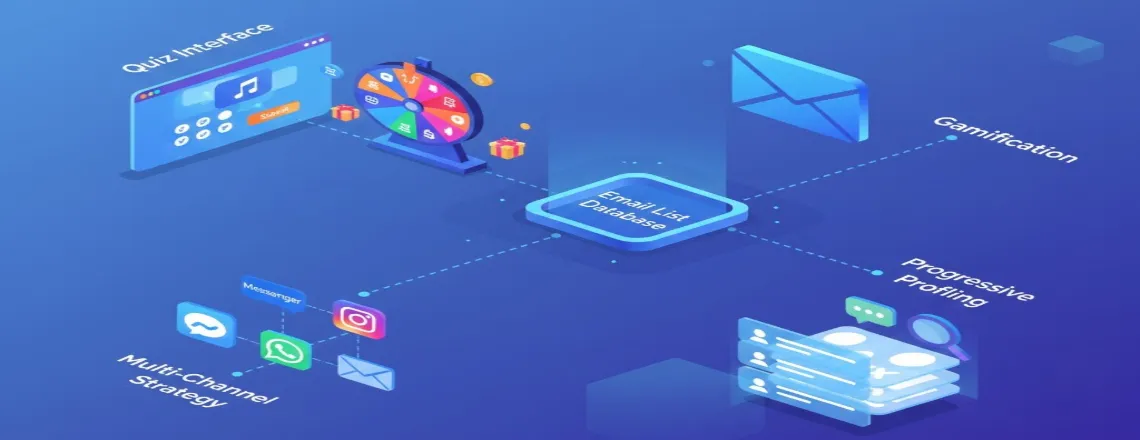
Once you’ve mastered the basics of how to use chatbots to grow your email list, implement these advanced tactics to maximize your results.
Quizzes and Surveys engage visitors while collecting valuable data. A personality quiz or needs assessment feels entertaining rather than salesy, yet naturally leads to asking for an email address for delivering results. This approach, gamifying your chatbot experience, works exceptionally well for fitness, finance, and personal development niches where customization matters and can help make a purchasing decision easier.
Progressive Profiling collects information gradually over multiple interactions. The first message your chatbot sends might only request an email and name, while subsequent interactions gather additional details to improve segmentation. This reduces friction in the initial conversion while building richer customer profiles over time.
Gamification adds fun to the opt-in process. Spin-the-wheel chatbots offering varying discounts or prizes create excitement and urgency around email subscriptions. Mystery rewards or limited-time offers encourage immediate action rather than delayed decisions, making it more enticing when users hand over their email addresses.
Re-engagement Campaigns use chatbots to recapture visitors who previously declined to subscribe. When someone returns to your site after initially closing the chatbot, present a different offer or angle. This second-chance approach can recover 10-15% of initially lost leads when optimizing chatbots for email list growth.
Multi-channel Strategies coordinate chatbots across platforms for maximum reach. Someone who engages with your Instagram bot but doesn’t subscribe might respond better to your website chatbot, which can reference their previous interaction for continuity and consistency. This helps you grow your email list using multiple touchpoints.
Best Practices for Chatbot Email Capture

Follow these guidelines to maximize results while maintaining positive user experiences:
Keep Conversations Brief and Focused
Every additional question in your chatbot flow reduces conversion rates significantly. When you build your chatbot, limit your conversation to 2-3 essential questions before users for their email to maintain momentum and prevent visitor fatigue.
Use Natural, Conversational Language
Match your brand voice and avoid corporate jargon or overly formal phrasing that makes your email feel robotic. Write as if you’re talking to a friend, using contractions, emojis when appropriate, and a personality that reflects your brand.
Be Transparent About Email Collection
Clearly state what email subscribers will receive, how often they’ll hear from you, and what value you’ll provide. Transparency builds trust and reduces the likelihood of spam complaints or immediate unsubscribes, which opt-in key to the benefits of building your email list sustainably.
Provide Immediate Value
Deliver promised resources, answers, or recommendations instantly rather than making users wait days. Immediate gratification increases perceived value and sets a positive tone for the subscriber relationship from the start. Your chatbot can offer downloadable resources or create an email template that’s sent immediately.
Personalize Based on User Behavior
Use names, reference specific interests mentioned in the conversation, and tailor recommendations accordingly. AI-powered personalization makes subscribers feel understood and increases their engagement with both the chatbot and subsequent email marketing campaigns.
Set Clear Expectations
Explain email frequency and content types upfront to reduce future unsubscribe rates. When subscribers know exactly what to expect, they’re more likely to remain engaged and look forward to your messages in their email platform.
Test Regularly Through A/B Testing
Experiment with different messaging, trigger timing, conversation flows, and call-to-action phrasing. Continuous testing reveals what resonates best with your specific audience and incrementally improves conversion rates over time, helping you take your email list to the next level.
Monitor Analytics Weekly
Review engagement rates, conversion metrics, and drop-off points to identify improvement opportunities. Weekly monitoring lets you spot trends early and make data-driven optimizations that continuously improve the performance of your email list growth strategy.
Common Mistakes to Avoid
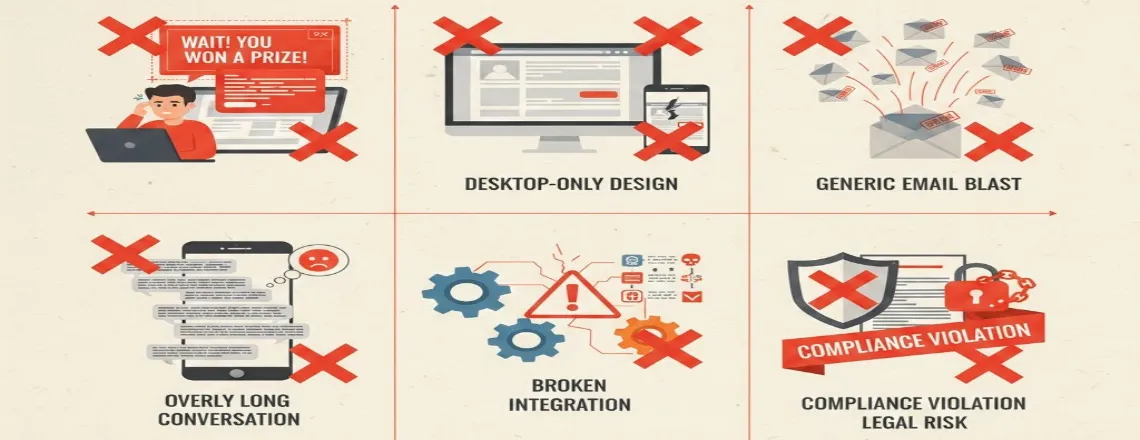
Even well-intentioned chatbot strategies can backfire when building email list campaigns. Here are the critical pitfalls to avoid:
- Being too aggressive: Immediate pop-ups that interrupt users before they’ve engaged with your content create frustration
- Creating lengthy flows: Interrogation-style conversations with 10+ questions make visitors abandon mid-conversation when the exchange for their email seems too demanding.
- Ignoring mobile optimization: Desktop-only approaches exclude the majority of users and damage conversion rate.s
- Failing to test thoroughly: Broken flows, integration errors, or unclear messaging frustrate users and damage your brand. Your chatbot should be able to function seamlessly.
- Poor segmentation: Sending generic content to everyone wastes the valuable data captured by your chatbot
- Overlooking compliance: Legal violations when you collect email addresses damage reputation and can result in significant fines.
Measuring Success: Key Metrics to Track
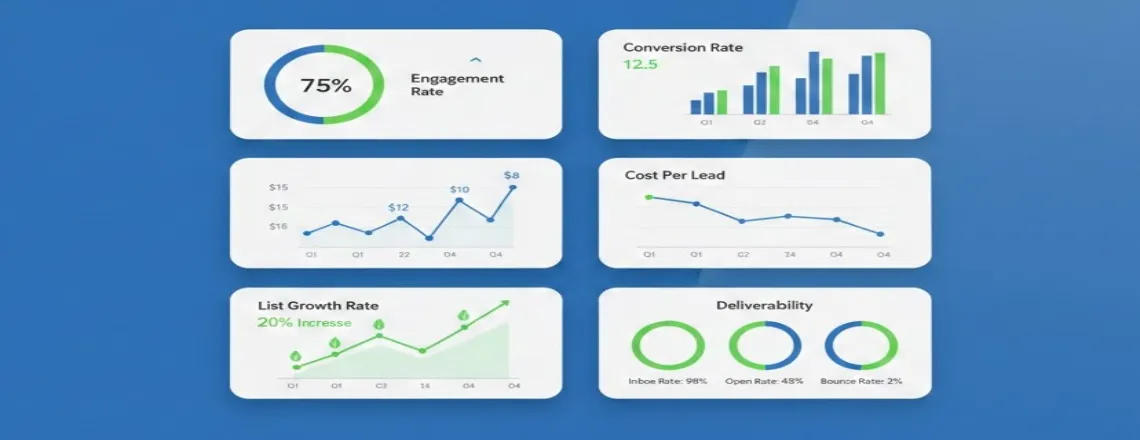
Monitor these metrics to optimize your chatbot lead generation and marketing efforts.
- Chatbot engagement rate shows what percentage of visitors interact with your bot. Low engagement suggests poor timing, unclear value proposition, or intrusive triggers that need adjustment.
- Email capture conversion rate measures the percentage of chatbot interactions that result in email submissions when users share their email. Industry averages range from 10-25% for well-optimized chatbots, though this varies by industry and offer quality.
- Cost per lead helps you compare chatbot acquisition costs with those of other channels in your email marketing strategy, including platform fees, design costs, and time investment.
- List growth rate tracks how quickly your email lists expand with chatbot implementation versus previous methods, showing how effectively chatbots are a powerful tool for growth.
- Email deliverability and engagement metrics reveal subscriber quality. A high capture rate means nothing if subscribers never open your emails or quickly unsubscribe. You want a quality email list, not just a large one.
Tools and Resources
For chatbot platforms, consider ManyChat for multi-channel automation and ease of use, Chatfuel for Facebook-focused strategies, Drift for B2B and high-ticket sales conversations, Intercom for comprehensive customer communication, or MobileMonkey for unified messaging across multiple platforms.
Most integrate seamlessly with major email service providers, including Mailchimp, ConvertKit, ActiveCampaign, HubSpot, and Klaviyo. Use Google Analytics and platform-specific analytics dashboards to track performance and identify optimization opportunities when using a chatbot for your email list without sacrificing user experience.
Future Trends in Chatbot Email Marketing
The landscape of chatbot lead generation continues evolving rapidly, with exciting innovations reshaping how businesses capture and engage subscribers. Chatbots have become increasingly sophisticated, powered by AI advancements. Here are the key trends transforming the industry:
Advanced AI and Natural Language Processing
Modern AI-powered chatbots now understand context and intent beyond simple keyword matching, creating genuinely human-like conversations. This technology enables bots to interpret nuanced questions, detect sentiment, and respond with appropriate empathy and relevance, a powerful tool for growing relationships with potential subscribers.
Voice-Activated Chatbots
Integration with voice assistants like Alexa, Google Assistant, and Siri creates entirely new touchpoints for email capture. Users can now subscribe to newsletters or request information through natural voice commands, expanding accessibility and convenience when they exchange for email addresses.
Predictive Personalization
Machine learning algorithms analyze user behavior patterns to optimize conversation flows automatically. These AI systems continuously test different approaches, learning which messages, timing, and offers generate the highest conversion rates for different audience segments captured in your email list using chatbots.
Cross-Platform Integration
Seamless experiences now follow users as they move between devices and platforms. A conversation started on mobile can continue on desktop, with the chatbot remembering context and previous interactions to create a unified, frictionless journey. Chatbots can help build relationships across touchpoints.
Video Chatbots
Combining video content with interactive elements creates highly engaging experiences that capture attention better than text alone. These multimedia chatbots can be used for product demonstrations, brand storytelling, and building emotional connections while collecting email addresses within the interaction.
As these technologies mature, chatbot email marketing will become increasingly sophisticated, offering hyper-personalized experiences that feel less like automation and more like having a knowledgeable assistant dedicated to each visitor’s unique needs, making a successful email campaign more achievable than ever.
Conclusion
Learning how to build an email list with a chatbot represents a significant upgrade from traditional opt-in forms. By creating conversational, personalized experiences that deliver immediate value, chatbots for email list building consistently outperform static forms in both conversion rates and subscriber quality.
Start by choosing a user-friendly platform, creating a compelling lead magnet, and designing a simple conversation flow. Test your chatbot thoroughly, optimize based on data, and gradually implement advanced strategies as you become comfortable with the technology. Remember that chatbots can help you grow your list more effectively when properly implemented.
The key to success is remembering that chatbots should enhance the user experience, not interrupt it. When done right, your chatbot becomes a helpful assistant that visitors appreciate rather than an annoying pop-up they immediately close. Focus on providing genuine value, respect your visitors’ time, and watch your email list grow faster than ever before.
Frequently Asked Questions (FAQs)
Yes, chatbots typically achieve 2–5 times higher conversion rates than static forms because they create engaging, personalized interactions that feel more natural to users when asking for their email address.
Well-optimized chatbots typically convert between 10–25% of engaged users, though rates vary by industry, offer quality, and implementation strategy.
No, modern chatbot platforms like ManyChat and Chatfuel offer visual builders that require no coding knowledge. You can create sophisticated flows by simply clicking and dragging elements.
Pricing varies widely. Many platforms offer free tiers for small lists, with paid plans ranging from $10 to $500+ per month depending on features, subscriber counts, and platform choice.
Yes, many chatbot platforms support multi-channel deployment, allowing you to maintain consistent lead capture across your website, Facebook, Instagram, and other channels from a single dashboard.
Yes, but you must comply with regulations like GDPR and CAN-SPAM by obtaining clear consent, providing unsubscribe options, and maintaining records of how subscribers joined your list.
Use strategic triggers based on time, scroll depth, or exit intent rather than immediate pop-ups. Always provide clear value and make the chatbot easy to minimize or close.
Most successful implementations wait 30–60 seconds after page load or until visitors scroll 50–70% down the page, indicating genuine engagement.
Most major chatbot platforms integrate with popular email services like Mailchimp, ConvertKit, and ActiveCampaign, either directly or through tools like Zapier.
Immediately deliver any promised resources, send a welcome email within 24 hours, and start your nurture sequence while using segmentation data collected by the chatbot.

Daniel Wong
Technical Content Writer
My name is Daniel Wong, a Technical Content Writer from Singapore with a strong interest in AI-powered tools and digital automation. At ChatBoq AI, I focus on creating practical and easy-to-follow content that helps businesses and individuals understand how chatbots work and how to use them effectively.
I enjoy breaking down complex topics like natural language processing (NLP) and conversational AI into simple guides that anyone can follow. Each article is based on careful research, real-world examples, and testing to ensure accuracy and reliability.
Through ChatBoq AI, my goal is to provide readers with trustworthy insights, step-by-step tutorials, and the latest trends in chatbot technology.
✍️
Expert in AI & Chatbot Technology

Leave A Comment