

How to Build an AI Chatbot’s Persona in 2025: The Complete Guide to Creating Compelling AI Personalities

The AI chatbot environment has changed drastically in 2025, with businesses. People increasingly identify that a well-defined AI chatbot persona is no longer a choice but a vital part of the success of the business. Even if you are creating a personal AI chatbot for customer service, the personality you design ensures user engagement, trust, and long-term success.
📑 Table of Contents
- How to Build an AI Chatbot’s Persona in 2025: The Complete Guide to Creating Compelling AI Personalities
- Key Highlights
- Why AI Chatbot Persona Matters?
- Key Benefits Of Developing An AI Persona Chatbot
- Platform-Specific Application For AI Chatbot Personality
- How To Create A Personality For Your Chatbots: Step-by-Step Guide
- Overcoming Common Challenges In Chatbot Persona Development
- Case Studies: Successful AI Chatbot Personalities In Action
- Future Trends In AI Chatbot Persona Development
- Choosing The Right Development Approach
- Measuring Success: ROI And Performance Metrics
- Conclusion
- Frequently Asked Questions (FAQs)
Modern generations expect AI chatbots’ personality customization, which feels authentic, helpful, and genuinely engaging. A personality AI chatbot that is related to the users can increase engagement rates by up to 67% and improve customer satisfaction score (CSAT) notably.
Key Highlights
| AI chatbot personas boost engagement and trust Core traits define consistent, authentic interactions Personality customization improves problem resolution effectiveness Emotional intelligence enhances adaptive user conversations Multi-modal, personalized personas shape future AI |
Why AI Chatbot Persona Matters?
The increase in AI adoption has led to a crowded market where personality-driven differentiation is essential. An AI chatbot with personality stands out in such a way that technical features alone cannot achieve. So building a perfect chatbot persona matters a lot in today’s environment.
Research shows that users form an emotional attachment to well-designed AI personalities within just three interactions. It has an impact in the business field as companies using personality-driven chatbots result in 43% higher customer interaction rates compared to generic implementations. More importantly, a personalized AI experience leads to increased user trust, with 78% of users feeling comfortable sharing information with chatbots.
Key Benefits Of Developing An AI Persona Chatbot

These benefits can be a huge success in creating a personalized AI chatbot for businesses:
Enhanced User Engagement And Connection
A perfect AI persona chatbot with a well-explained personality creates emotional connections that keep users returning to use it again. When users feel acknowledged and heard by the interaction between AI, the engagement naturally increases. This AI tool transforms a simple tool into a trusted digital companion.
Improved Brand Recognition And Consistency
The AI Chatbot you designed now becomes an identity of your brand’s voice. No matter if users engage via your website, app, or social media, keeping a consistent persona strengthens brand recognition.
Better Problem Resolution
Personality-driven chatbots handle complex situations more smoothly. When users face some issues, a personality-driven AI chatbot can remove the tension and guide them to the solution. This human-like interaction can resolve the issues that might otherwise require human intervention.
Platform-Specific Application For AI Chatbot Personality
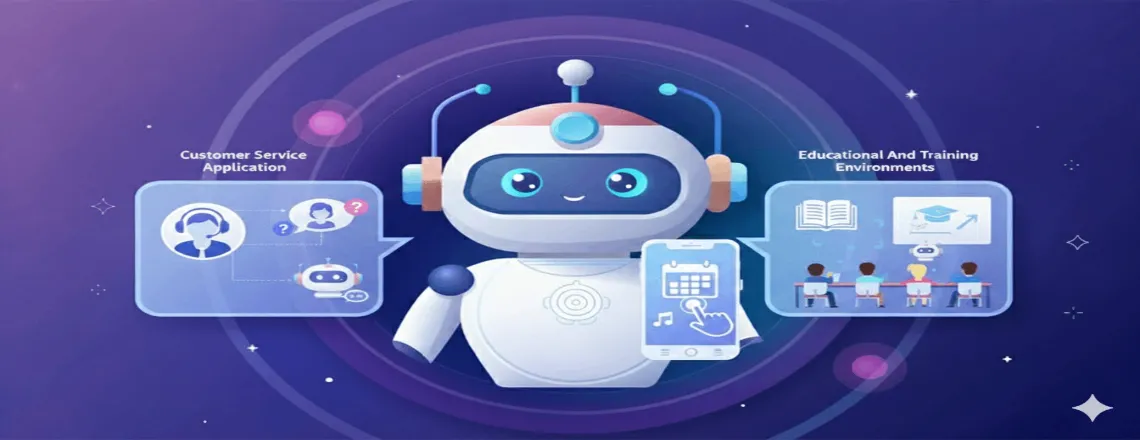
Customer Service Application
In the area of customer support, an AI chatbot for personal use acquires a careful personality inception. The personality-driven AI chatbots should balance professionalism with comfort, ensuring users feel heard while maintaining efficiency. Successful customer service chatbots often adopt slightly formal yet approachable personalities that keep the confidence.
Personal Assistant Integration
Personal assistant chatbots benefit from more casual, friendly personalities. These AI chatbot personal assistant implementations offer to incorporate humor, encouraging language, and flexible communication styles that replicate natural conversation patterns.
Educational And Training Environments
Educational chatbots require patient, encouraging personalities that adapt to different learning styles. The most impactful implementation uses personalities that recognize small successes, also provide gentle corrections, and maintain student motivation as well.
How To Create A Personality For Your Chatbots: Step-by-Step Guide
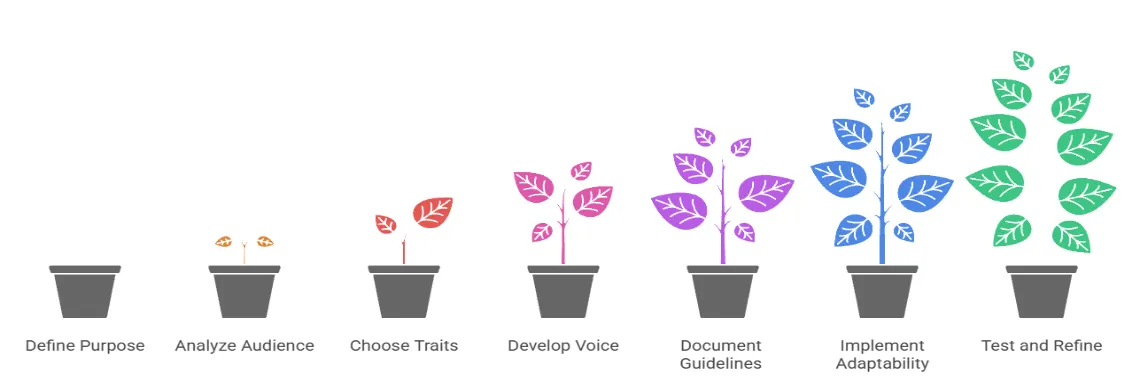
Creating a perfect AI chatbot personality requires careful planning and proper execution. Here is a complete guide on how to build a personality-driven chatbot:
Step 1: Define Your Chatbot’s Purpose And Goals
Before creating a personality trait for the chatbot, you should clearly explain what your AI personal chatbot needs to achieve:
- Primary Function: Customer Support, Personal Assistant, Entertainment, or Education
- User Goals: What do users want to achieve through these interactions?
- Business Objective: How does the chatbot assist broader organization goals?
- Success Metrics: Which metrics best describe the effectiveness of personality?
Documenting these foundation elements will guide every personal decision moving forward.
Step 2: Analyze Your Target Audience
The chatbot you are building must be related to the people’s interests and the people who will interact with it most :
Demographic Analysis
- Age ranges, cultural backgrounds, and communication preferences
- Professional context and expertise levels
- Device usage patterns and interaction expectations
Communication Style Preferences
- Formal vs Casual Language Preferences
- Humor appreciation and cultural sensitivity
- Response length and detail expectations
- Preferred conversation speed
Step 3: Choosing Core Personality Traits
You should choose 3-5 defining characteristics that will create a structure for all interactions:
For Business Applications
- The personality traits should include professional, reliable, solution-focused, empathetic, and efficient.
For Personal Use
- Should have characteristics such as friendly, adaptive, patient, and knowledgeable.
For Entertainment
- Also include characteristics like witty, creative, engaging, spontaneous, and culturally aware.
Try avoiding conflicting traits, such as formal yet casual, which creates personality confusion.
Step 4: Developing Your Chatbot’s Voice And Tone
Change personality traits into specific communication patterns, such as :
Voice Characteristics
- Vocabulary complexity and technical language usage
- Sentence structure preferences (short/direct vs. descriptive/elaborate)
- Punctuation style and emoji usage guidelines
- Regional language variations or colloquialisms
Tone Variations by Scenario
- Greeting new users: Welcoming and orientation-focused
- Handling complaints: Patient and solution-oriented
- Celebrating successes: Enthusiastic and supportive
- Managing errors: Apologetic but confident in alternatives
Step 5: Create Personality Guidelines Documentation
Establish comprehensive standards that ensure consistency:
Response Style Guide
- Sample phrases for common scenarios
- Forbidden words or expressions that break character
- Escalation language for complex situations
- Personality-appropriate ways to admit limitations
Conversation Flow Patterns
- How the personality handles topic transitions
- Methods for maintaining engagement during long interactions
- Strategies for recovering from misunderstandings while staying in character
Step 6: Implement Contextual Adaptability
Advanced personality AI chatbot implementations adapt responses based on conversation context:
Emotional Intelligence Integration
- Recognizing user frustration and responding with increased patience
- Detecting excitement and matching appropriate enthusiasm levels
- Identifying confusion and providing clearer, more detailed explanations
Memory and Continuity
- Reference previous interactions appropriately
- Build on established rapport and shared context
- Maintain personality consistency across conversation sessions
Step 7: Test and Refine Through User Interactions
Real-world testing reveals personality strengths and weaknesses:
Beta Testing Approach
- Deploy with limited user groups initially
- Gather feedback on personality perception and effectiveness
- Monitor conversation flow patterns and engagement metrics
- Document scenarios where personality feels inconsistent or inappropriate
Iterative Improvement Process
- Weekly personality performance reviews
- Monthly trait effectiveness assessments
- Quarterly major personality updates based on accumulated feedback
- Annual personality strategy alignment with business evolution
Overcoming Common Challenges In Chatbot Persona Development
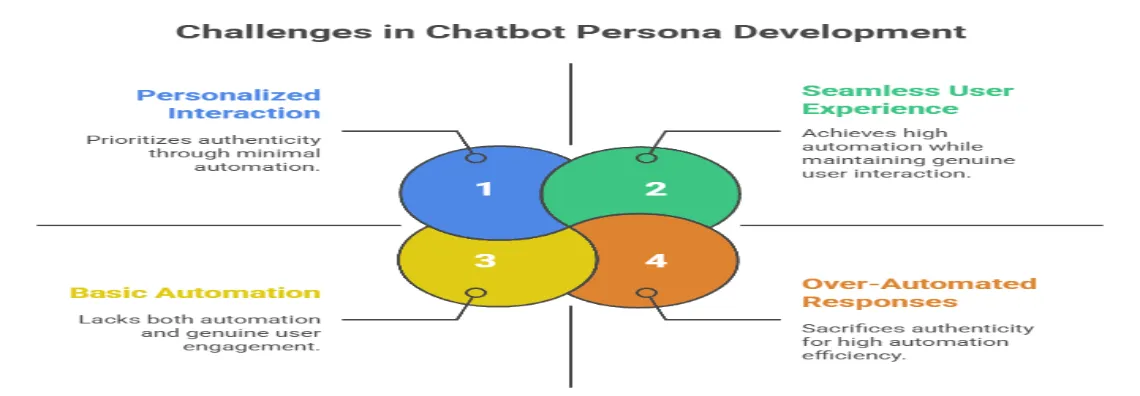
Avoiding Personality Irregularity
One of the most common issues in AI chatbot personality customization is inconsistent behavior. Users quickly identify when a chatbot’s response doesn’t relate to its established personality, breaking the whole immersion and reducing trust.
Always build complete personality guidelines that cover edge cases, unusual user input, and error situations. Evaluate and analyze everything across different conversation flows to identify and eliminate personality gaps.
Balancing Automation With Authenticity
Modern users can identify overly scripted responses. The obstacle that we face is maintaining an authentic personality while scaling automated interactions. You should introduce variety in response, replicate natural language processing flow, and reduce repetitive phrasing that reveals the artificial nature of the system.
Managing User Expectations
Proper communication about your chatbot’s ability prevents disappointment and maintains positive relationships. Build personality traits that set appropriate expectations about what users can achieve through the interactions.
Case Studies: Successful AI Chatbot Personalities In Action
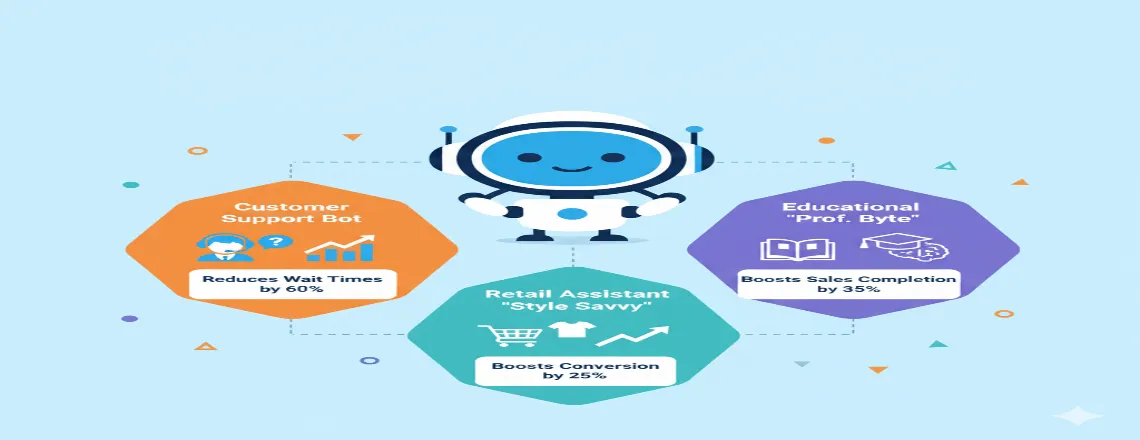
Microsoft’s Lumen Technologies: Professional Efficiency Persona
Lumen Technologies implemented Microsoft 365 Copilot with a professional, effective AI personality designed to assist enterprise sales teams. The chatbot was programmed with traits focused on productivity, accuracy, and business intelligence.
Personality Characteristics
- Professional, concise communication style
- Solution-focused response with an overview of the data
- Formal yet approachable tone for an enterprise environment
- Focus on time-saving and efficient messaging
Measurable Results: Teams and email summaries generated by Copilot save approximately 4 hours per seller each week, translating to nearly $50 million in annual productivity value. Marketing teams now produce complete launch kits in 40 minutes compared to a week. The success came from aligning the AI personality with corporate culture, which focuses on professionalism while maintaining helpfulness in complex business circumstances.
Eye-oo (Italy): Friendly Shopping Companion Persona
Italian eyeglasses retail Eye-oo implemented Tidio’s Lyre AI with an enthusiastic, knowledgeable shopping companion personality.
Personality Characteristics
- Casual, Friendly language with fashion expertise
- Encouraging and solution-oriented response
- Quick, helpful communication style
- Personalized product recommendations approach
Measurable Result: The personality-driven chatbots generated an additional €177,000 in revenue, resulting in a 25% increase in overall sales. First-response time reduced by 86%, while AI automatically captured 1,305 leads and resolved 82% of 2,233 support inquiries. The personality matched the shopping experience perfectly while combining product expertise with sincere enthusiasm for helping customers to find the right product.
Future Trends In AI Chatbot Persona Development
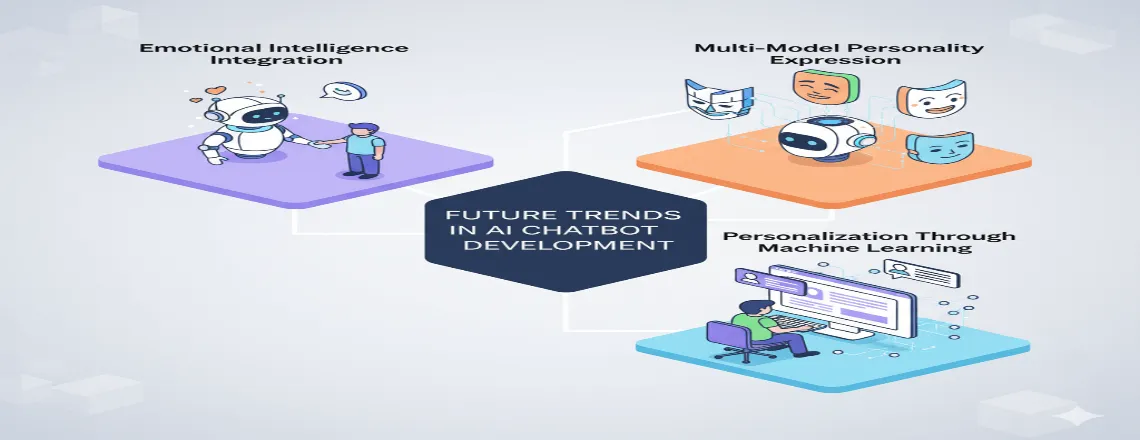
Emotional Intelligence Integration
The future generation of personality AI chatbot implementations will include complex emotional intelligence abilities. These systems will identify users’ emotional states through text and adjust personality response accordingly.
Advanced emotion recognition allows chatbots to provide proper support during intensive situations, honor user achievements, and adjust interaction styles based on detected mood patterns.
Multi-Model Personality Expression
The future AI personal chatbot system will express personality through voice, visual elements, and interaction patterns beyond text. This multi-modal approach creates a richer, more mesmerizing personality experience that feels more natural.
Personalization Through Machine Language
The Artificial Intelligence System will learn user choices and adjust personality presentation. The general personality framework will transform into personalized interaction styles focused on specific user relationships and communication preferences.
Choosing The Right Development Approach
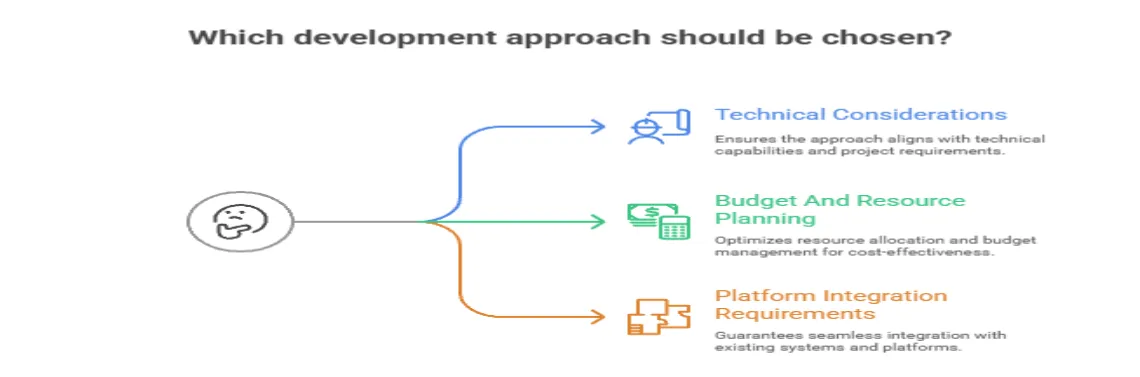
Technical Considerations
When creating an AI chatbot personality, always consider the underlying technology stack that will assist in personality consistency. Natural Language Processing (NLP) ability, neural networks, transform models, and large language models(LLMs), which impact personality implementations’ success. Popular frameworks include chatboq, Botpress, etc, for no-code solutions. Also consider integrating with CRM systems, knowledge bases, and analytics platforms when evaluating technical requirements against personality goals.
Budget And Resource Planning
Personality-driven chatbots require maintenance and refinement. Budget for initial personality development, testing phases, user feedback integrations, and continuous improvement cycles. Quality personality implementation demands dedicated resources but delivers measurable return through user engagement.
Platform Integration Requirements
Always consider where your AI chatbot for personal use will function and how personality traits translate across various platforms. A personality that works well in text-based web chats might need adjustment for voice interactions or mobile applications.
Measuring Success: ROI And Performance Metrics

User Engagement Metrics
Keep a trace of conversational length, return visitor, and user satisfaction score to measure personality effectiveness. Successful AI chatbot personality customization usually shows improved metrics across all engagement categories.
Monitor how personality traits cause an effect on user behavior patterns. Always be curious about do users ask more questions, provide more detailed information while interacting with personality-driven chatbots.
Business Impact Assessment
Evaluate the business value of personality investment through metrics like customer purchase cost, support ticket reduction, and sales conversion improvement. Document how personality improvement contributes to broader business objectives.
Continuous Improvements Indicators
Construct a feedback mechanism that helps to refine personality traits over time. User comments, behavior analytics, and A/B testing results provide a valuable overview of personality optimization. Regular personality audits ensure your AI persona chatbot continues meeting user needs and goals.
Conclusion
Creating an effective AI chatbot persona requires careful planning and execution. Start by clearly describing your target audience and use case requirements. Document personality traits that relate to both user expectations and business objectives.
Create detailed personality guidelines that team members can follow regularly. Test personality implementation across various circumstances and gather user feedback. Always update or optimize your system. Always evaluate and update your AI system on the basis of real-world usage patterns and user feedback.
The future of AI interactions focuses on personalities that feel real, helpful, and genuinely engaging. Following these guidelines and best practices will help you create an AI chatbot with a personality that users enjoy. User engagement leads to better outcomes for both the user and the company.
Try Chatboq Now
Frequently Asked Questions (FAQs)
An AI chatbot persona is the personality, tone, and communication style programmed into a chatbot to make interactions feel human-like, consistent, and engaging.
Because competition is high, users expect authentic, personalized experiences. A strong persona increases trust, engagement, and customer satisfaction.
It creates emotional connections, making users feel heard and understood, which boosts return interactions and loyalty.
Yes. Businesses with personality-driven chatbots see higher interaction rates, faster problem resolution, and improved sales conversions.
Consistency, empathy, clarity, adaptability, and alignment with brand voice.
Start by analyzing your target audience, business goals, and communication style, then pick 3–5 core traits that fit best.
Yes. A good persona adapts tone—professional for complaints, friendly for greetings, supportive for achievements.
Absolutely. Overly rigid responses break authenticity. Natural language variety and emotional intelligence are key to trust.
Run beta tests with real users, gather feedback, and refine traits through continuous updates.
They’ll evolve with emotional intelligence, voice/visual personality traits, and personalized user-specific interaction styles.

Daniel Wong
Technical Content Writer
My name is Daniel Wong, a Technical Content Writer from Singapore with a strong interest in AI-powered tools and digital automation. At ChatBoq AI, I focus on creating practical and easy-to-follow content that helps businesses and individuals understand how chatbots work and how to use them effectively.
I enjoy breaking down complex topics like natural language processing (NLP) and conversational AI into simple guides that anyone can follow. Each article is based on careful research, real-world examples, and testing to ensure accuracy and reliability.
Through ChatBoq AI, my goal is to provide readers with trustworthy insights, step-by-step tutorials, and the latest trends in chatbot technology.
✍️
Expert in AI & Chatbot Technology

Leave A Comment