
The 6 Best E-commerce Chatbots for Your Online Store

Chatbots are software that is designed to interact with customers in a human way. E-commerce chatbots are those that are used in e-commerce stores to communicate with users and provide valuable information to users in real time using AI and other features.
📑 Table of Contents
- The 6 Best E-commerce Chatbots for Your Online Store
- Key Highlights
- What is an E-commerce Chatbot?
- What is the role of Chatbots in modern online retail?
- What are the key benefits of e-commerce chatbots for online stores?
- How to Choose the Best E-commerce Chatbot?
- Comparison of the 6 best E-commerce chatbots:
- The 6 Best E-commerce Chatbots for your online store:
- 6. Drift
- How do these chatbots drive E-commerce success?
- Best practices for using E-commerce chatbots
- Conclusion
- Frequently Asked Questions (FAQs)
More than 2 billion people shop online, so the needs of e-commerce chatbots are seen in businesses. E-commerce stores have the opportunity to grow their business and sell their products online. But there is also a challenge, which is customer support. A vast number of inquiries are fed to e-commerce businesses, so chatbots can be used to support and solve a large number of customer inquiries. Poor customer experience and cart abandonment are other issues that can be solved by e-commerce chatbots.
6 best ecommerce chatbots like Chatboq, Tidio, ManyChat, Chatfuel, Hubspot, Drift, etc, provide the best customer service and make a strong relationship with customers.
Key Highlights
| E-commerce chatbots increase sales and customer support Personalization, automation, and cost savings are the top benefits Select chatbots based on NLP, integration, analytics, and ease Top 6 chatbots: Chatboq, Tidio, manyChat, chatfuel, HubSpot, Drift. E-commerce chatbots save time and money. Chatbots increase customer experience and support in real time. |
What is an E-commerce Chatbot?
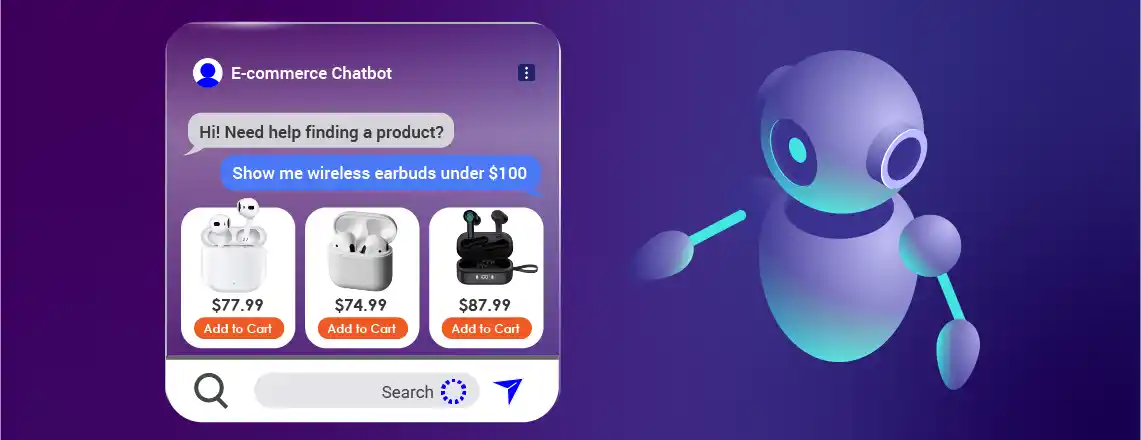
E-commerce chatbots are software tools integrated into your website or online store for messaging customers in real time and converting new visitors to leads. Modern e-commerce chatbots are integrated with CRM tools and other communication channels for making more interactions and managing customer data and information. Artificial intelligence, natural language processing, and machine learning are used to make the chatbot more powerful and offer personalized interactions, and guide the buying journey.
E-commerce chatbots are specially designed for:
- Answering customer questions.
- Assisting with ordering.
- Automating sales
- Providing post-purchase support
- Hand over customers to agents
What are the types of chatbots?
There are three types of chatbots, which are:
- Rule-based chatbots: Rule-based chatbots follow a decision tree and pre-formatted structure, and match keywords. It is best for FAQs and standard tasks.
- AI-based Chatbots: AI-based Chatbots use NLP and machine learning for understanding the intent, context, and improving over time.
- Hybrid Chatbots: Combining the rule-based chatbots and AI-based chatbots to make the conversation more reliable and faster.
E-commerce stores use hybrid chatbots or AI-based chatbots, which strike a balance between automation and personalization.
What is the role of Chatbots in modern online retail?

E-commerce chatbots are not just tools for interacting with customers, but also tools for making sales and marketing. E-commerce chatbots play a key role in:
- Customer service automation
- Product discovery and recommendations
- Lead generation and qualification
- Driving conversions and repeat purchases
E-commerce chatbots are like a 24/7 digital sales assistant for your online store.
What are the key benefits of e-commerce chatbots for online stores?
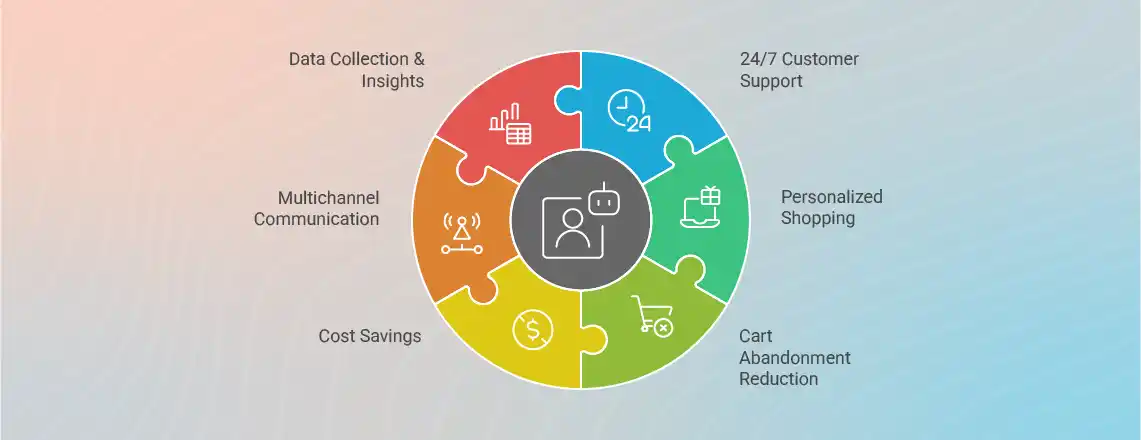
An E-commerce store needs a chatbot due to the following benefits:
1. 24/7 Instant Customer Support

Customers shop at all hours. Chatbots ensure no query goes unanswered, improving customer satisfaction and brand trust.
2. Personalized Shopping Experiences

Chatbots can suggest products or services based on browsing history, preferences, and past purchases. This personalization increases conversion rates.
3. Cart Abandonment Reduction

E-commerce chatbots can send timely reminders, offer discounts, or answer last-minute questions, helping to recover abandoned carts and increase revenue.
4. Cost Savings Through Automation

By handling repetitive queries, FAQs, Product information, etc, chatbots reduce dependency on large customer service teams, saving time and money.
5. Multichannel Communication
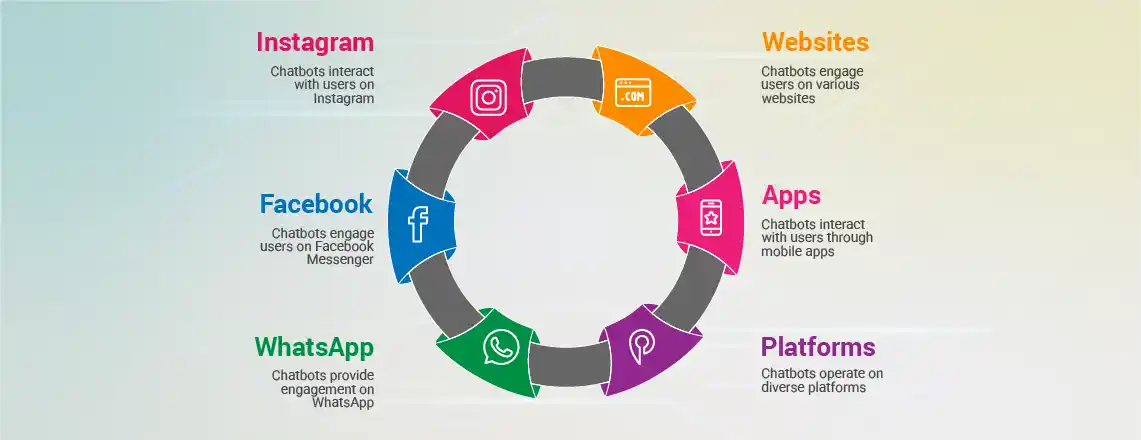
Chatbots operate across various websites, apps, and platforms, including WhatsApp, Facebook Messenger, and Instagram, ensuring consistent engagement.
6. Collection of Customer Data & Insights

Every interaction provides data that businesses can utilize for analytics, customer segmentation, and better decision-making.
How to Choose the Best E-commerce Chatbot?

Choosing the right chatbots depends on business goals and structure. Before selecting a chatbot for your online store, consider these essential features:
- Natural Language Processing (NLP): NLP provides the ability to understand customer intent and context and provide relevant answers.
- Integration with E-commerce Platforms: Chatbot must be integrated with platforms such as Shopify, WooCommerce, Magento, BigCommerce, etc.
- Analytics and Reporting: The chatbot must measure key metrics, including performance tracking, customer insights, and conversion analysis.
- Customization & Branding: Flexibility to match chatbot appearance and tone with your brand identity.
- Multilingual & Omnichannel Support: Engage customers across different languages and communication platforms such as WhatsApp, Messenger, Email, Instagram, etc.
- Ease of Setup & Use: Every online store does not have technical experts who code, so No-code or low-code interfaces save time for small and medium businesses.
- Cost-Effectiveness: Pricing should align with your business size and growth stage.
Comparison of the 6 best E-commerce chatbots:
| Chatbot | Key Features | Avg. Rating* | Integrations | Best For |
| Chatboq | Omnichannel chat, AI replies, in-chat payments, CRM triggers | 4.7/5 | Shopify, WooCommerce, HubSpot, Salesforce, WordPress | All business sizes needing AI + automation |
| Tidio | AI chatbot (Lyro), live chat, and real-time visitor tracking | 4.6/5 | Shopify, WooCommerce, Wix, WordPress | SMBs wanting simple live + AI support |
| ManyChat | Social media automation, Shopify integration, SMS/WhatsApp | 4.5/5 | Shopify, Instagram, Messenger, WhatsApp | Brands focused on social commerce |
| Chatfuel | Messenger/Instagram automation, abandoned cart recovery, lead gen | 4.4/5 | Facebook, Instagram, Shopify (via third-party) | Social media-driven startups |
| HubSpot Chatbot | CRM integration, workflows, lead qualification | 4.6/5 | HubSpot CRM, WordPress, Salesforce | Businesses using the HubSpot ecosystem |
| Drift | NLP chat, meeting scheduling, lead routing, sales pipeline | 4.5/5 | Salesforce, Marketo, HubSpot, Slack | B2B ecommerce & conversational marketing |
The 6 Best E-commerce Chatbots for your online store:
1. Chatboq
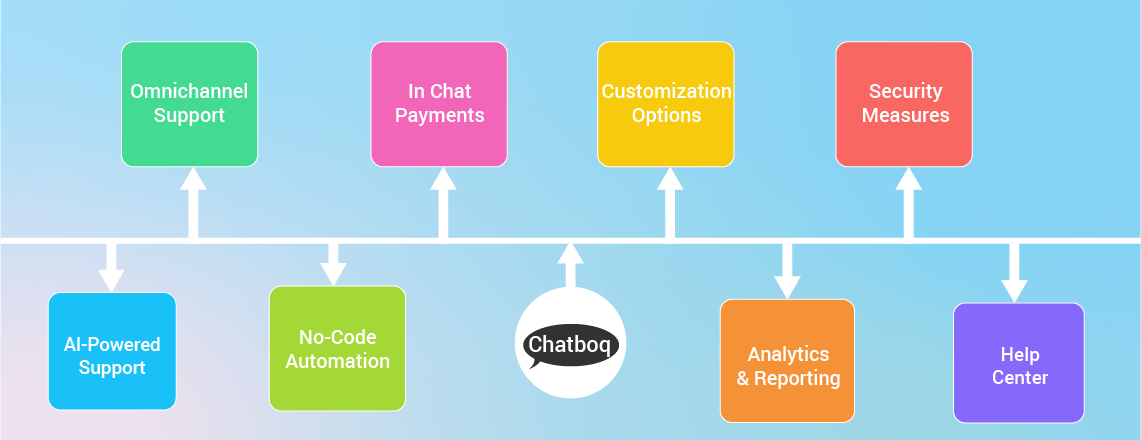
Chatboq is an all-in-one live chat and conversational AI platform designed to help businesses connect with customers in real time. It connects AI automation with human support, offering features like proactive messaging, multilingual AI, CRM integration, and in-chat payments, making it especially powerful for e-commerce businesses.
Key Features of Chatboq:
- Omnichannel Chat: Chatboq supports website widget, email, WhatsApp, Messenger, Instagram, Telegram, SMS, and phone.
- AI-Powered Support: Chatboq offers an AI reply assistant, sentiment detection, multilingual AI, conversation summaries, and knowledge training.
- Customization & Branding: Chatboq allows a white-label option, widget styling, proactive chats, and product tours.
- No-Code Automation: Chatboq provides a drag-and-drop chatbot builder, workflow automation, keyword triggers, and CRM-based triggers.
- In-Chat Payments: Chatboq accepts payments securely via Stripe, UPI, and more without leaving the chat.
- Analytics & Reporting: Chatboq enables prebuilt dashboards, custom reports, and API analytics to track performance.
- Help Center & Knowledge Base: Chatboq offers multilingual articles, categories, and SEO-friendly domains for self-service support.
- Security: Chatboq ensures TLS encryption, 2FA, compliance agreements, and data replication.
Pros of Chatboq
- AI-driven, natural conversations with multilingual support.
- Deep integrations with Shopify, WordPress, HubSpot, Salesforce, etc.
Cons of Chatboq
- Needs experts for a wide feature set.
- Costs can be high as features are added.
Use case of Chatboq
- Chatboq is used in customer support for answering FAQs like shipping, returns, product details, etc.
- Chatboq enhances sales and recovers cart abandonment.
- Chatboq suggests products to customers.
- Chatboq offers in-chat payments.
2. Tidio
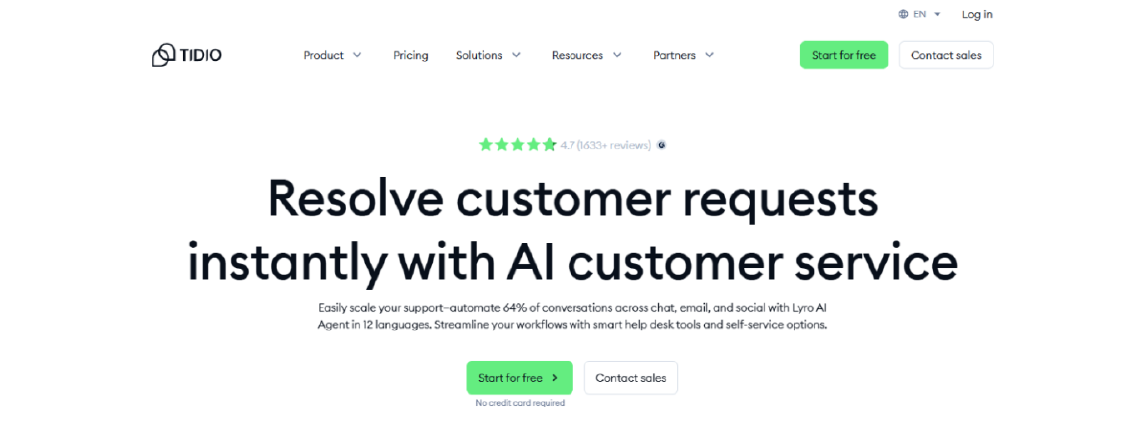
Tidio combines the AI-based chatbot with live chat to support small and medium businesses. It uses Claude, in-house tech, etc, to offer human-like interaction.
Features of Tidio
- AI chatbot powered by Lyro
- Prebuilt templates for customer support and sales
- Multichannel support such as Messenger, WhatsApp, Instagram, email, and website chat
- Real-time visitor tracking
Pros of Tidio
- Easy installation and a template for configuring.
- Connect automation with human agents.
- Pricing is better with free testing.
Cons of Tidio
- Automation needs pro plans.
- Limited design flexibility.
Use case of Tidio
- Best for small and medium businesses, and can be used for an online store.
- Faster customer support
- Recommend products and boost sales.
- Best for Shopify and WooCommerce.
3. ManyChat

ManyChat is best for brands that are dependent on social media. It specializes in social media automation and is best for conversational marketing.
Features of ManyChat
- Automation for social media platforms
- Integration with Shopify.
- AI-based content optimization
- Drag and drop interface
- Multilingual ability
Pros of ManyChat
- Easy automation for marketing
- Offers a personalized experience
- Easy to set up and configure
Cons of ManyChat
- Limited integrations
- Segmentation of customers is lacking
- The top features of e-commerce chatbots are missing.
Use case of ManyChat
- Best for social media automation.
- Instant replies and support
- Strong engagement of users.
4. Chatfuel
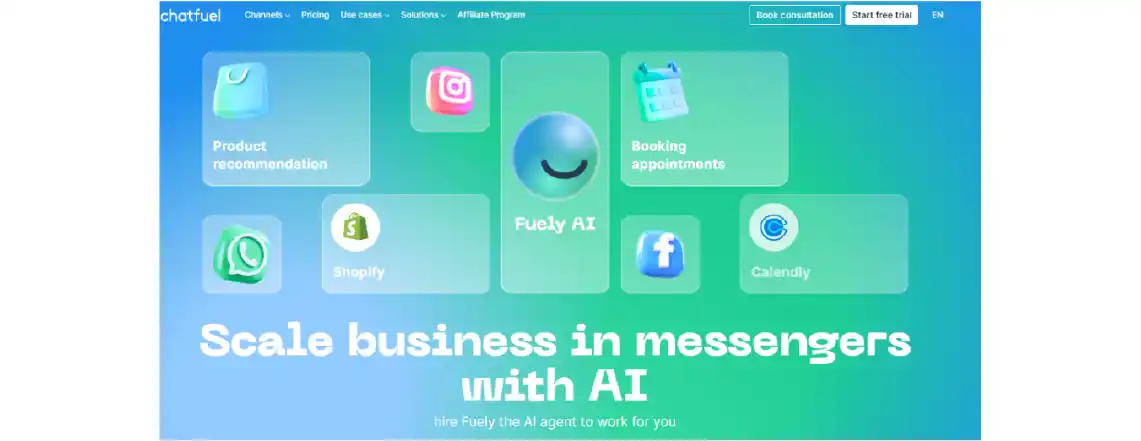
Chatfuel is designed for e-commerce businesses using Facebook Messenger and Instagram. Its no-code platform helps automate customer interactions, from FAQs to abandoned cart recovery.
Features of Chatfuel
- Deep integration with Facebook Messenger and Instagram
- Prebuilt chatbot templates
- Automated replies to comments and DMs
- Lead generation tools
Pros of Chatfuel
- Easy setup without coding
- Best for startups due to price
- Recover abandoned cart
Cons of Chatfuel
- Dependent on third parties for features.
- Limited language
Use case of Chatfuel
- Faster response to customer queries
- Capture leads
- Best for social media marketing
5. HubSpot
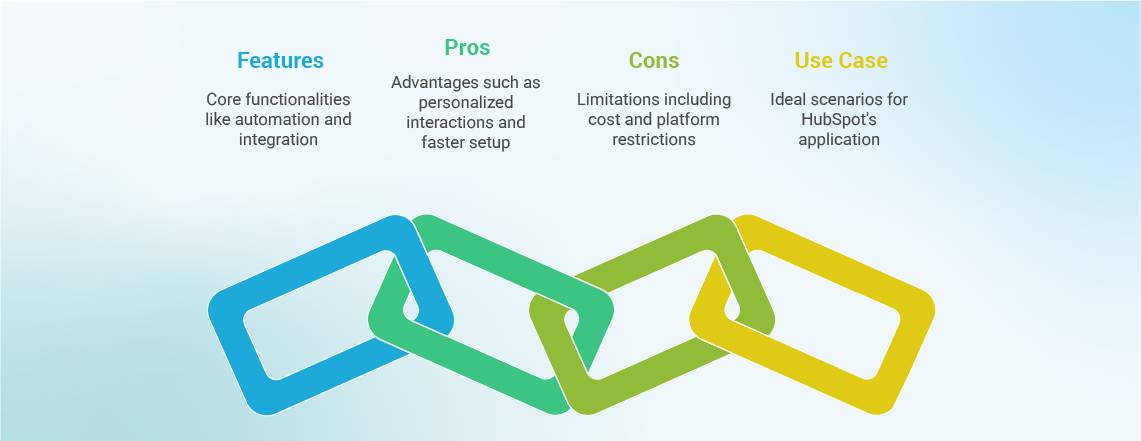
HubSpot is best for the HubSpot ecosystem, which utilizes the HubSpot marketing and sales tools. It is smoothly integrated with the CRM ecosystem for personalized support and automation.
Features of HubSpot
- Built directly into HubSpot’s CRM
- Automates lead qualification, meeting bookings, and customer support
- Multi-channel support and workflows
Pros of HubSpot
- Personalized customer interactions based on CRM data
- Complex issues are handed over to human agents.
- Faster setup
Cons of HubSpot
- Advanced features require paid plans
- Limited to websites and Facebook
Use case of HubSpot
- Best for businesses already using HubSpot CRM
- Ensuring all chatbot data integrates seamlessly with sales and marketing workflows.
6. Drift
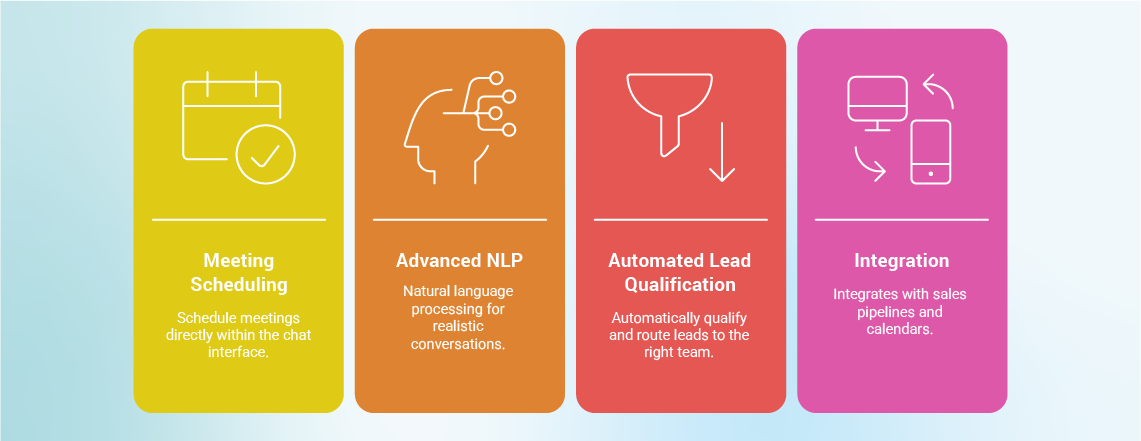
Drift’s chatbot excels in conversational marketing, helping B2B ecommerce businesses engage and qualify leads with real-time chat and AI-driven messaging.
Features of Drift
- Meeting scheduling
- Advanced NLP for natural conversations
- Automated lead qualification and routing
- Integration with sales pipelines and calendars
Pros of Drift
- Real-time engagement
- Automation is used for scheduling meetings
- Customization option available
Cons of Drift
- Requires monitoring
- High cost as per other chatbots
Use case of Drift
- Ideal for B2B ecommerce businesses
- Focus on lead generation and conversational sales.
How do these chatbots drive E-commerce success?
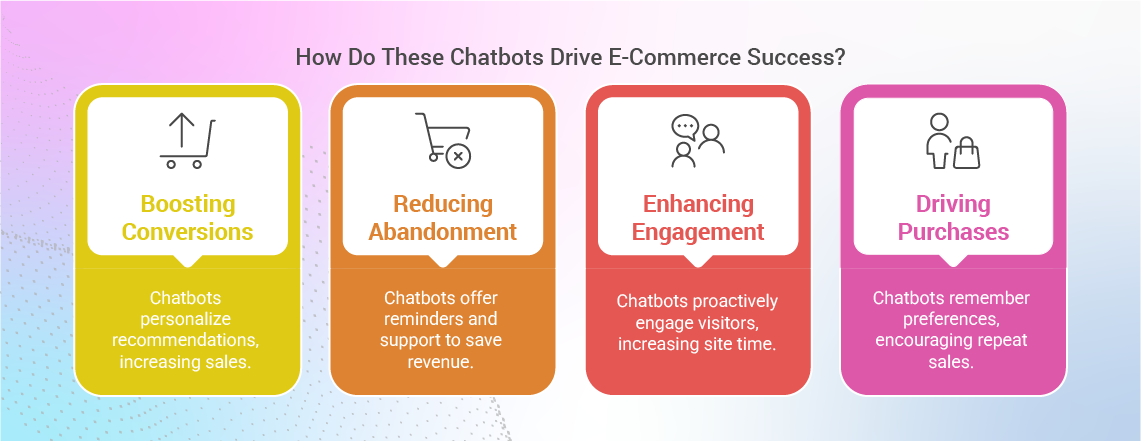
E-commerce chatbots like Chatboq, Drift, Hubspot, etc, drive success for online stores in many ways, which are explained below:
1. Boosting Conversions

E-commerce chatbots personalize product recommendations, increase upselling and cross-selling opportunities.
2. Reducing Cart Abandonment

Chatbots offer timely reminders, discount codes, and instant support to reduce lost revenue. It reduces cart abandonment with various proactive messages.
3. Enhancing Engagement

AI chatbots like Chatboq engage with visitors proactively, keeping them on the site for longer periods.
4. Driving Repeat Purchases

By remembering customer preferences, bots build loyalty and encourage future sales.
Best practices for using E-commerce chatbots

Simply installing chatbots is not enough for an online store; they must also monitor the interaction and various indicators related to the agents’ performance. Following the best practice is necessary for implementing E-commerce chatbots. Some of the best practices are listed below:
1. Define Clear Business Goals
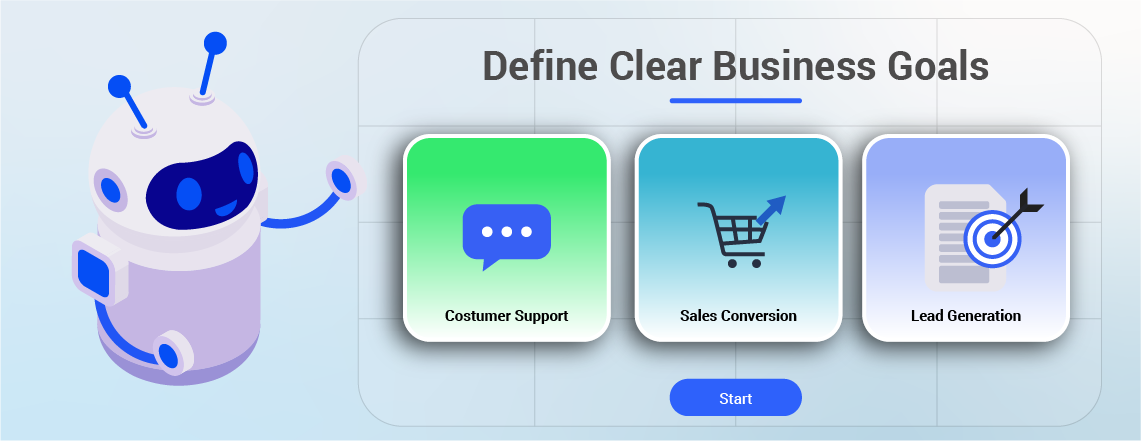
Decide whether your E-commerce chatbot will focus on customer support, sales, or lead generation.
2. Start Small, Then Expand

Always begin with small steps and then expand. Start with common FAQs and automate them, gradually adding advanced features.
3. Balance Automation with Human Support

Always allow an option for customers to talk to a human when needed. Balancing between automation and human support is necessary for an online store to offer a personal touch.
4. Personalize Interactions

Utilize customer data, such as past purchases and browsing behavior, to create responses.
Monitor and Optimize Regularly

Track performance, test new features, and continually improve your E-commerce chatbots, such as Chatboq, Tidio, and Chatfuel, over time.
Conclusion
E-commerce chatbots are changing from simple FAQ responders to AI-based assistants that drive sales, increase brand experience, and support customers. E-commerce chatbots such as Chatboq are best for all kinds of businesses and also offer enterprise-level features for the whole setup. Tidio is only best for small and medium businesses and supports the customer at the ground level. Drift and HubSpot chatbots are best for enterprise-level solutions. The businesses or online stores that use E-commerce chatbots don’t just save time and money, but also provide personalized messages and smooth online shopping.
Investing in one of these 6 best Ecommerce chatbots like Chatboq, Tidio, ManyChat, Chatfuel, HubSpot, Drift, etc, brings higher conversion, happy customers, and long-term growth.
Frequently Asked Questions (FAQs)
Chatboq is considered the best AI chatbot for e-commerce because it integrates easily with various SaaS and CRM tools, helping manage customer data and deliver better interactions.
Freshchat, Chatboq, Zohodesk, Tidio, and similar platforms are top online chatbots. They track issues, support shared inboxes, use contextual AI, and offer customizable agent training.
Chatboq is ideal for small, medium, and enterprise-level businesses, especially e-commerce stores. Tidio works well for online stores, while ManyChat is best for social media platforms.
Gorgias, Jotform, Maisia AI, Relish AI, Chatboq, Chatra, and HeyDay are top chatbots for Shopify, offering easy integration with Shopify stores.
To create an e-commerce chatbot:
- Choose an AI platform with templates.
- Set clear goals.
- Train it with FAQs and site content.
- Integrate it with your store and deploy across channels.
- Continuously optimize using customer data and performance insights.
Chatbots assist customers by guiding them through the store, suggesting products, facilitating purchases, and enhancing overall shopping experience.
Select a chatbot based on features, integration capabilities, development tools, technology stack, data availability, ease of use, and multichannel support.
Tidio, Chatboq, and Drift are top retail chatbots, all rated above 4.4 and offering free plans or trials.
Leading e-commerce companies like Amazon, eBay, Sephora, and H&M use chatbots for order tracking, customer support, and handling inquiries.

Daniel Wong
Technical Content Writer
My name is Daniel Wong, a Technical Content Writer from Singapore with a strong interest in AI-powered tools and digital automation. At ChatBoq AI, I focus on creating practical and easy-to-follow content that helps businesses and individuals understand how chatbots work and how to use them effectively.
I enjoy breaking down complex topics like natural language processing (NLP) and conversational AI into simple guides that anyone can follow. Each article is based on careful research, real-world examples, and testing to ensure accuracy and reliability.
Through ChatBoq AI, my goal is to provide readers with trustworthy insights, step-by-step tutorials, and the latest trends in chatbot technology.
✍️
Expert in AI & Chatbot Technology

Leave A Comment