
Will AI Replace Customer Service?
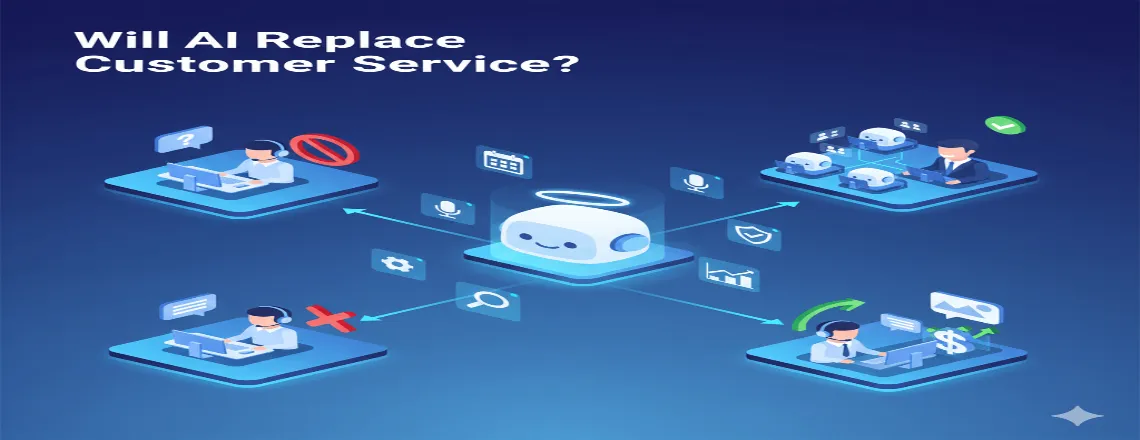
Customer service leaders keep losing sleep over one thing: artificial intelligence might handle 80% of customer inquiries by 2026. People everywhere want to know if AI systems will eliminate customer service jobs or if the industry will adapt. Truth is, the situation’s more complicated than what you read in headlines.
📑 Table of Contents
- Will AI Replace Customer Service?
- Why AI Customer Service Matters?
- AI Chatbots and Virtual Assistants
- What AI Cannot Replace – The Human Element
- Real-World Applications of AI in Customer Service
- AI vs Human Customer Service: A Comparison
- Best Practices for Implementing AI Customer Service
- The Future of AI and Customer Service Jobs
- Conclusion – AI as a Partner, Not a Replacement
- Frequently Asked Questions (FAQs)
AI customer service technology has gotten ridiculously good at certain things. Yet Gartner research uncovered something surprising: numerous organizations rushed to replace human agents with AI completely, only to backtrack quietly. This article breaks down what’s actually happening with AI in customer service, its genuine capabilities and limitations, and gives you practical guidance for an AI-powered chatbot for customer service implementations.
Why AI Customer Service Matters?
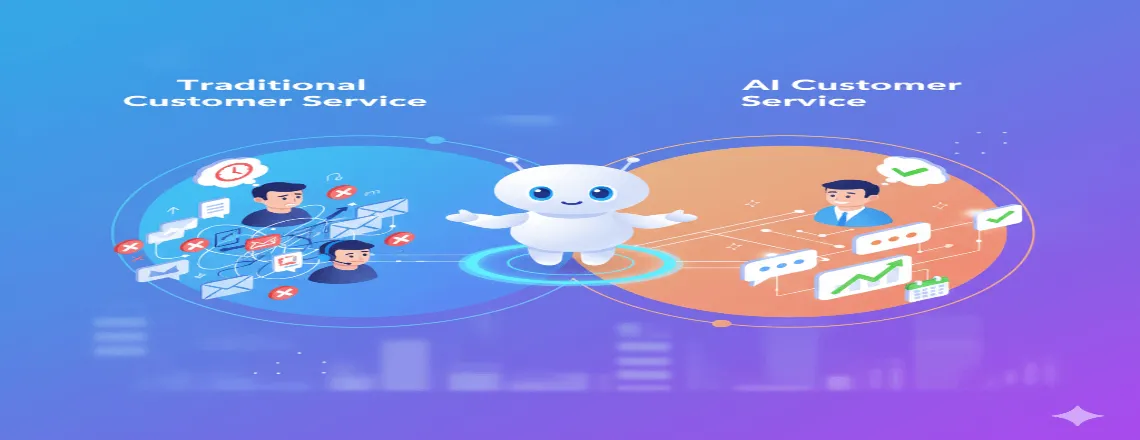
Customer expectations? Through the roof lately. People want instant responses, support that never sleeps, and personalized experiences, no matter which channel they’re using. AI and customer service technology tackle thousands of inquiries at once, examine customer data while conversations happen, and shoot back immediate responses.
Companies rolling out AI chatbot customer service solutions report 30-50% cost cuts alongside faster response times. AI in customer service helps businesses expand support operations without hiring proportionally more people. When volume explodes during events like Black Friday, AI systems manage these surges that typically demand temporary staff. Customer service AI delivers real improvements in retention, satisfaction scores, and efficiency.
AI Chatbots and Virtual Assistants

Today’s AI chatbots use natural language processing to grasp customer intent, context, and sentiment. These systems take care of password resets, order tracking, account checks, and product information which are all without bothering human agents. Virtual assistants like Bank of America’s Erica or Capital One’s Eno field questions, dish out personalized recommendations, and wrap up transactions.
User experience improved so much that customers frequently can’t tell if they’re chatting with AI or a real person. These systems work brilliantly with structured, predictable exchanges. But when conversations veer off into unexpected territory or need actual judgment calls? AI chatbots still stumble pretty obviously.
Automated Ticket Routing and Response Systems

AI for customer service goes way beyond those customer-facing chatbots. Intelligent routing systems look at incoming tickets and send them to exactly the right agent based on issue type, customer history, agent expertise, and current workload. Email and social media monitoring tools tap into AI to spot urgent issues and flag situations that need immediate attention.
Automated response systems write up initial replies to frequent inquiries that humans then review. This hybrid setup mixes AI efficiency with human oversight. Sentiment analysis tools keep tabs on conversations, picking up on frustration or satisfaction. When customers start showing signs they’re getting frustrated, the system bumps them to human agents automatically before things go south.
24/7 Availability and Instant Response Times
The biggest advantage of AI customer service? It literally never sleeps. Unlike human agents who need breaks and time off, AI systems keep running nonstop without getting tired. For global businesses operating across time zones, this means people don’t sit around waiting until business hours for basic support.
Response time metrics? They get way better. Human agents might need minutes or even hours to respond, but AI-powered chatbots fire back immediately’re talking seconds. For simple stuff like checking order status or resetting passwords, that kind of speed makes customer experiences noticeably better.
Cost Reduction and Efficiency Gains
IBM research indicates businesses can cut customer service costs by 30% or more once they implement AI. Savings pile up from multiple places, which requires fewer people for basic inquiries, no overtime costs, and less money spent on training. A single AI-powered chatbot for customer service handles workloads that would otherwise need dozens of human agents.
AI knocks out repetitive tasks instantly, which frees up human agents to tackle complex issues that genuinely need expertise. AI customer service spits out consistent responses every single time, getting rid of that quality variability you see with human-staffed operations. Plus, every AI interaction creates valuable data that reveals patterns for product development, marketing strategies, and website design.
Complex Problem-Solving and Empathy
AI really struggles when it comes to genuinely complex problem-solving. When issues involve multiple variables, unique circumstances, or situations that weren’t in the training data, AI systems max out fast. Picture a damaged order that someone needs urgently for tomorrow’s event, they’re in a remote location with limited delivery options, and there’s a complicated payment situation that demands judgment calls and creative thinking.
AI chatbot customer service nails “what’s my order status,” but completely bombs when someone desperately needs help for their daughter’s wedding tomorrow. The biggest limitation of AI in customer service? Emotional intelligence, hands down. Customers need empathy and reassurance that only a real human connection can provide.
Handling Escalated Situations
Every business runs into weird situations such as system errors, policy exceptions, and complicated refunds that need interpretation. These edge cases absolutely require human judgment. When customers escalate because AI couldn’t fix their problem, they’re typically already frustrated and need human agents to rebuild their confidence.
Some situations bring up ethical considerations, legal implications, or reputational risks that demand human oversight. AI doesn’t have the judgment needed for navigating gray areas where following strict rules creates terrible outcomes. This explains exactly why Gartner discovered many organizations walking back their full automation plans as they learned this lesson through hard experience.
What AI Cannot Replace – The Human Element

Complex Problem-Solving and Empathy
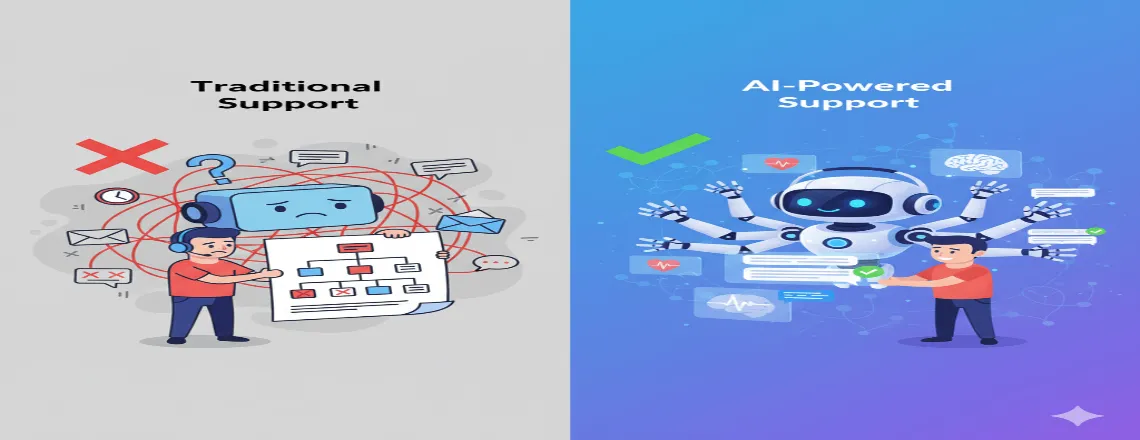
Despite impressive advances, AI struggles with truly complex problem-solving. When customer issues involve multiple variables, unique circumstances, or situations not covered in training data, AI systems hit their limits. Consider a customer whose order was damaged in shipping, but they need the item urgently for an event, live in a remote area with limited delivery options, and have a complicated payment situation – this scenario requires understanding context, making judgment calls, bending rules appropriately, and creative thinking, which are capabilities that remain distinctly human.
AI chatbot customer service works wonderfully for “what’s my order status,” but fails when addressing complex, urgent situations requiring problem-solving abilities AI simply doesn’t possess. Perhaps the most significant limitation of AI in customer service is emotional intelligence, as customers don’t just want problems solved – they want to feel heard, understood, and valued. When a customer is frustrated, upset, or anxious, they need empathy and reassurance that only a human connection provides, because AI can detect sentiment through text analysis, but it cannot genuinely empathize or respond with authentic emotional intelligence.
Handling Escalated Situations

Every business encounters unusual situations: system errors, policy exceptions, complex refunds, or situations where rules need interpretation. These edge cases require human judgment. When customers escalate because AI hasn’t resolved their issue, they’re often frustrated and need a human agent to restore confidence, as the agent must understand both the technical issue and the emotional context, then navigate company policies to find a satisfactory resolution.
Some situations involve ethical considerations, legal implications, or reputational risks requiring human oversight. AI lacks the judgment necessary to navigate these gray areas where strict rule-following produces poor outcomes. This explains why Gartner found many organizations reversing their plans to fully automate customer service.
Real-World Applications of AI in Customer Service

Retail and E-commerce Examples
Online retailers jumped into AI customer service with both feet. H&M’s chatbot helps customers hunt down clothing based on their preferences and style questions, basically working as a virtual shopping assistant. Sephora’s Virtual Artist combines AI and augmented reality so customers can try on makeup virtually before. The customer service component fields product questions and helps with shade matching.
Amazon wove AI into its operations everywhere, from automated returns to predicting shipping issues. Their AI systems catch potential delivery problems and notify customers proactively with solutions before they even think about contacting support. These implementations show customer service AI juggling both transactional tasks and advisory functions.
Banking and Financial Services
Financial institutions rolled out some seriously sophisticated AI-powered chatbots for customer service solutions. Bank of America’s Erica has processed over one billion client requests, that’s billion with a fielding questions about account balances, transactions, payments, and financial advice. Capital One’s Eno watches accounts for fraudulent activity, sends alerts, and helps lock compromised cards right away.
For everyday banking tasks like fund transfers and bill payments, AI takes care of most inquiries without getting humans involved. This frees human agents to concentrate on complicated stuff like loan applications and investment advice. AI for customer service proves it can work effectively even in heavily regulated, security-critical environments.
Healthcare and Telehealth Support
Healthcare organizations use AI chatbots for appointment scheduling, prescription refills, and basic symptom checking. Babylon Health’s AI triage system asks patients about symptoms, then determines whether they need emergency care, a doctor appointment, or self-care information, significantly reducing the burden on healthcare call centers.
During the COVID-19 pandemic, healthcare AI customer service became absolutely essential. Symptom checkers helped overwhelmed systems triage patients efficiently. Healthcare AI must balance efficiency with safety carefully by including escalation protocols, ensuring no patient with serious symptoms goes without appropriate human medical evaluation.
Insurance Industry Applications
Insurance companies brought AI for customer service on board to handle policy inquiries, claims updates, and coverage explanations. Allianz Taiwan Life Insurance deployed an AI assistant named Allie that handles customer inquiries about insurance policies, premium payments, and benefits through natural conversation.
Progressive Insurance uses conversational AI to guide customers through claims filing, collecting necessary information through interactive chat sessions. The AI and customer service system asks clarifying questions and provides estimated processing timeframes. For complex claims requiring human judgment, which involve disputed liability or unusual circumstances, the system seamlessly transfers customers to specialized human agents with complete context.
AI vs Human Customer Service: A Comparison

| Aspect | AI Customer Service | Human Customer Service |
| Availability | 24/7 without breaks or fatigue | Limited to business hours and shifts |
| Response Time | Instant responses (seconds) | Minutes to hours, depending on volume |
| Cost | Lower cost per interaction, scales without additional expense | Higher cost per interaction requires proportional staffing |
| Consistency | Delivers identical quality every time | Variable quality based on agent skill and mood |
| Volume Handling | Manages hundreds of simultaneous conversations | Handles one conversation at a time |
| Emotional Intelligence | Can detect sentiment, but cannot genuinely empathize | Provides authentic empathy and emotional support |
| Complex Problem-Solving | Struggles with unique, multi-variable situations | Excels at creative problem-solving and judgment calls |
| Learning Capability | Learns from data patterns and training | Learns from experience and adapts to nuance |
| Relationship Building | Cannot build genuine personal connections | Builds trust and long-term customer relationships |
| Edge Cases | Fails with situations outside training data | Handles unusual situations requiring interpretation |
| Communication Style | Consistent tone, lacks personality variation | Adapts communication style to customer needs |
| Best Use Cases | FAQs, order status, password resets, routine tasks | Complex issues, escalations, sensitive situations, VIP accounts |
Best Practices for Implementing AI Customer Service
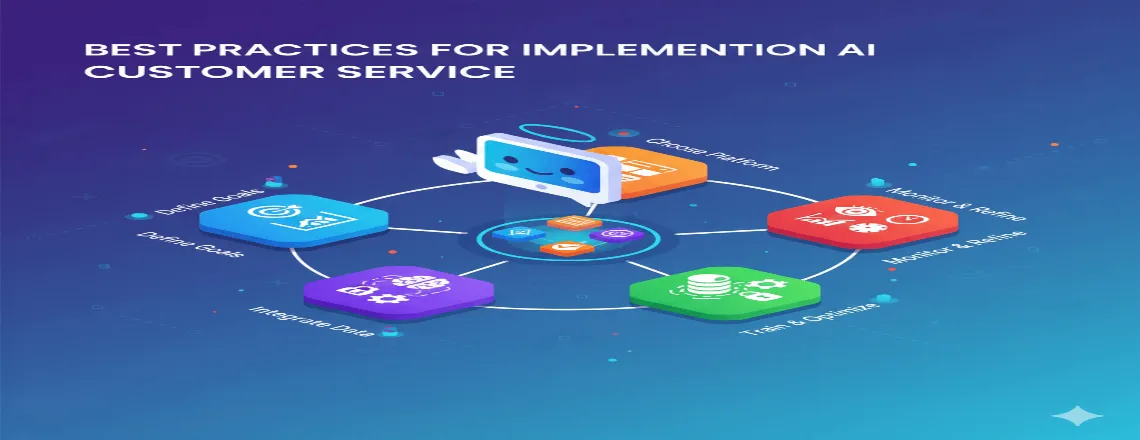
Use an AI-powered chatbot for customer service for high-volume, repetitive inquiries: password resets, order tracking, account balance checks, FAQ responses, basic troubleshooting, and appointment scheduling. These interactions follow predictable patterns where conversational AI delivers instant, accurate responses. AI chatbot customer service excels at initial triage, gathering information before routing to human agents when necessary.
Save human agents for complex problem-solving requiring judgment, emotionally sensitive situations needing empathy, high-value customer interactions requiring relationship building, and escalations where AI in customer service has already failed. The goal isn’t choosing between AI and customer service or humans exclusively, as it’s determining that optimal handoff point where AI resolves simple issues while transferring complex cases to human expertise.
The Future of AI and Customer Service Jobs
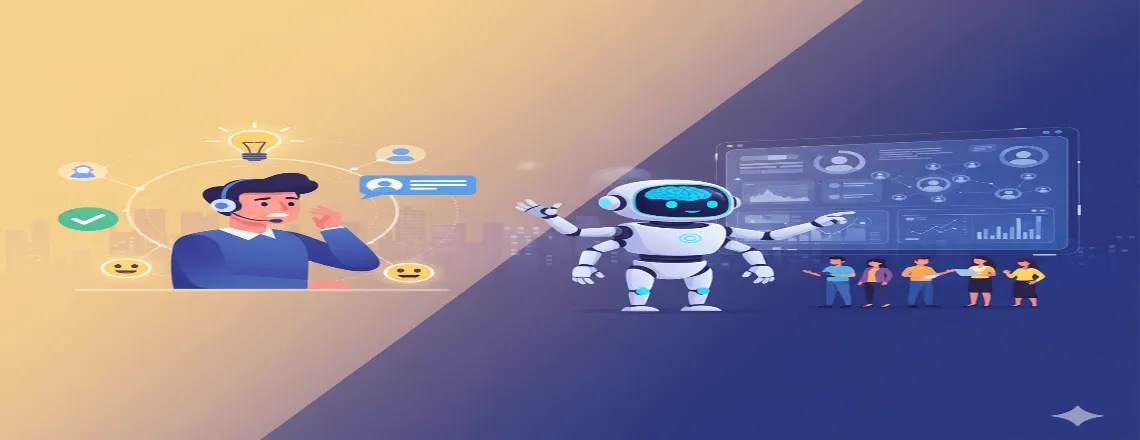
Headlines screaming “AI will eliminate 80% of customer service jobs” miss the bigger picture. While AI customer service will reduce demand for entry-level, repetitive roles, it’s simultaneously creating demand for completely different positions. ATMs didn’t eliminate bank tellers; they changed responsibilities. Similarly, AI won’t eliminate customer service professionals but will fundamentally redefine their roles.
Customer service jobs are increasingly focusing on complex problem-solving, emotional support, relationship management, and handling situations requiring human judgment. AI in customer service is creating entirely new job categories where AI trainers identify improvement opportunities and update knowledge bases, while conversation designers craft flow and response patterns for AI chatbots. Customer service professionals should develop skills complementing AI rather than competing against it.
Conclusion – AI as a Partner, Not a Replacement
The question “will AI replace customer service?” misses the real truth: AI will transform customer service rather than replace it outright. The most effective approach combines AI efficiency with human empathy, judgment, and relationship-building capabilities. Companies achieving the best results implement AI for customer service alongside human agents rather than attempting full automation.
For customer service professionals, this transformation demands skill development, but it’s an opportunity disguised as change. The future belongs to those who can work effectively with AI tools, handle complex situations requiring human judgment, and provide the emotional intelligence that AI cannot replicate. For businesses, success requires thoughtful implementation, recognizing both AI’s capabilities and limitations, creating experiences where technology and human expertise work together to deliver genuinely exceptional customer service.
Frequently Asked Questions (FAQs)
No. AI will transform roles rather than eliminate them, similar to how ATMs changed bank tellers’ responsibilities without eliminating the profession.
AI excels at repetitive tasks like password resets, order tracking, FAQs, appointment scheduling, and basic troubleshooting with instant 24/7 responses.
AI struggles with complex problem-solving, emotional intelligence, empathy, handling edge cases, and situations requiring human judgment or creative thinking.
Companies typically achieve 30–50% cost reductions through decreased staffing needs, no overtime costs, and improved operational efficiency.
For routine inquiries, modern AI chatbots are often indistinguishable from humans, though they reveal limitations when conversations become complex or emotional.
Customers need human agents for complex issues, emotionally sensitive situations, escalations, policy exceptions, and high-value interactions requiring relationship building.
Retail, e-commerce, banking, financial services, healthcare, and insurance have successfully implemented AI for routine inquiries while maintaining human support for complex needs.
AI provides instant responses in seconds compared to minutes or hours for human agents, significantly improving customer satisfaction for basic inquiries.
Emerging roles include AI trainers, conversation designers, chatbot managers, and specialists who optimize AI-human handoff processes.
Use a hybrid model where AI handles high-volume routine tasks while human agents focus on complex problem-solving, empathy-driven interactions, and relationship management.

Daniel Wong
Technical Content Writer
My name is Daniel Wong, a Technical Content Writer from Singapore with a strong interest in AI-powered tools and digital automation. At ChatBoq AI, I focus on creating practical and easy-to-follow content that helps businesses and individuals understand how chatbots work and how to use them effectively.
I enjoy breaking down complex topics like natural language processing (NLP) and conversational AI into simple guides that anyone can follow. Each article is based on careful research, real-world examples, and testing to ensure accuracy and reliability.
Through ChatBoq AI, my goal is to provide readers with trustworthy insights, step-by-step tutorials, and the latest trends in chatbot technology.
✍️
Expert in AI & Chatbot Technology

Leave A Comment