

The Best AI Support and Customer Service Companies in 2025

What are the best AI customer service companies in 2025? We’ve tested and compared 11 leading platforms that are changing how businesses handle customer support from small startups to global enterprises.
📑 Table of Contents
- The Best AI Support and Customer Service Companies in 2025
- Key Highlights
- Why AI Customer Service Companies Matter?
- Key Benefits of AI Customer Service Platforms
- Top AI Customer Service Companies in 2025
- AI Customer Service Platform Comparison Table
- Companies Using AI for Customer Service: Real-World Applications
- Implementation Best Practices
- Common Challenges
- Future Trends in AI Customer Service
- Quick Guide: Choosing Your AI Customer Service Platform
- Conclusion
- Frequently Asked Questions (FAQs)
Customers want instant answers now. They want help at 2 AM. They want someone (or something) that remembers their last conversation. Traditional support teams just can’t keep up without burning through budgets and staff.
That’s where customer service AI companies come in. These platforms use artificial intelligence and natural language processing to handle thousands of conversations simultaneously, answering questions in seconds, working around the clock, and getting smarter with every interaction.
This guide breaks down 11 top platforms, compares their features and pricing, shows real results from businesses using them, and helps you pick the right one for your needs.
Key Highlights
| AI customer service delivers instant, 24/7 support. Platforms reduce costs while boosting efficiency. Chatboq leads with intuitive, multi-channel deployment. AI enhances human agents, doesn’t replace them. Future trends include predictive and emotional AI. |
Why AI Customer Service Companies Matter?
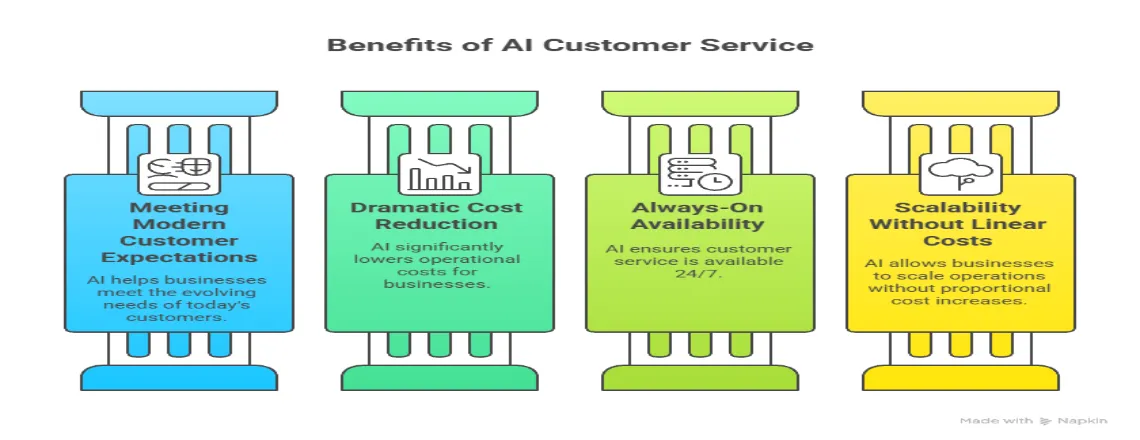
Moving to AI-powered support isn’t some passing fad, as it’s become a must-have. Here’s what’s driving this shift:
Meeting Modern Customer Expectations
Customers now expect immediate responses regardless of which channel they use. AI-powered systems respond within seconds, while human-only teams typically make customers wait several minutes or longer during peak times.
Dramatic Cost Reduction
Companies using AI for customer service see their costs drop 30-50% compared to traditional models. AI tackles repetitive questions without needing salaries, benefits, or coffee breaks. This frees up businesses to point their human agents toward more valuable conversations.
Always-On Availability
Human teams work in shifts. AI customer support runs nonstop. This round-the-clock availability matters especially for global businesses serving customers scattered across time zones.
Scalability Without Linear Costs
When questions flood in during product launches or holiday rushes, AI systems scale up instantly. You don’t need months of hiring and training; capacity expands automatically.
Key Benefits of AI Customer Service Platforms
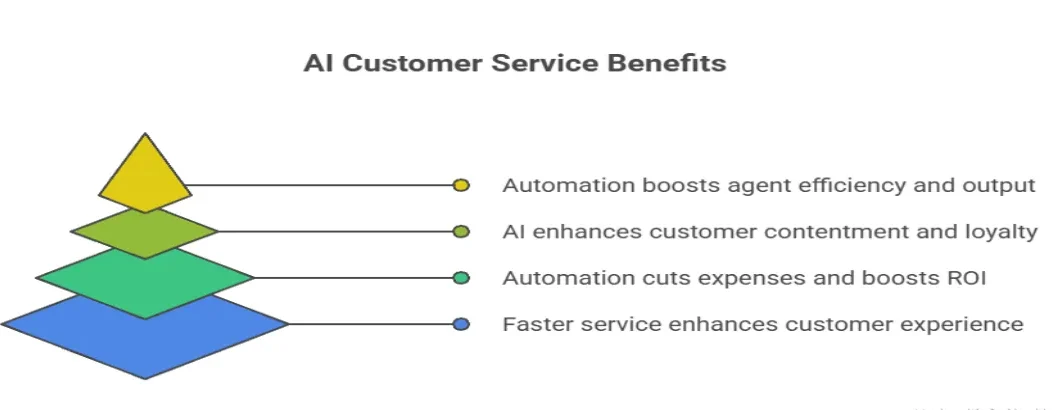
Reduced Response Times and Higher Efficiency
Speed makes or breaks modern customer service. AI customer service agent companies have built systems that grasp context, tap into knowledge bases instantly, and deliver accurate answers in under 10 seconds.
These platforms examine incoming questions, sort them by intent, then either answer immediately or send complex issues to the best-qualified human agent. This smart triage gets every customer help fast, whether from AI or a person. Real-time translation lets one AI system help customers in dozens of languages without paying separate teams for each market.
Lower Operational Costs
The numbers tell a compelling story. Human agents handle maybe 6-8 conversations at once, tops. AI systems juggle thousands of interactions simultaneously. That efficiency shows up directly on your bottom line.
You save more than just direct labor costs. Training expenses drop. Turnover costs shrink. Over time, during busy periods disappears. The total cost of ownership for AI solutions has plummeted as cloud infrastructure and AI models have become more accessible.
Improved Customer Satisfaction Scores
People worry that automation feels cold and robotic. Well-implemented AI actually pushes satisfaction metrics higher. Customers like getting simple questions resolved quickly. They appreciate being transferred to humans only when truly necessary.
Modern AI customer service platforms keep conversation context intact even during handoffs. Customers never repeat themselves. This creates smoother experiences than traditional support, where people often restart their explanation with each new agent.
Better Agent Productivity Through Automation
AI doesn’t boot human agents out the door as it makes them more capable. By handling routine stuff like password resets, order tracking, and FAQ questions, AI frees agents to tackle complex problem-solving and relationship building.
Plenty of platforms give agents AI-powered help during conversations, such as suggesting responses, pulling up relevant knowledge articles, and surfacing customer history. These tools cut handling time while bumping up resolution quality.
Top AI Customer Service Companies in 2025
The AI customer support solutions market has really matured. Here are the platforms delivering standout results:
1. Chatboq
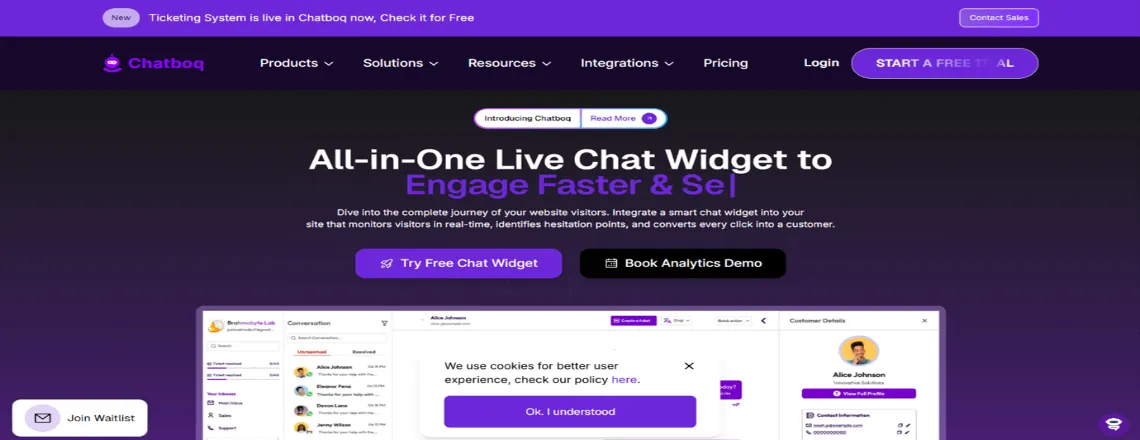
Chatboq has popped up as a thorough AI customer service solution built specifically for businesses wanting both sophistication and straightforward use. The platform stands out through intelligent automation capabilities paired with an intuitive setup that skips the need for technical chops.
Key Features:
- Advanced natural language processing with contextual understanding that carries across conversations
- No-code visual builder for creating custom conversation flows
- Multi-channel deployment covering website, WhatsApp, Facebook Messenger, Instagram, and Telegram
- Real-time human agent handoff, including complete conversation history
- Built-in CRM integration that syncs customer data automatically
- Customizable AI personality matching your brand voice and tone
- Analytics dashboard tracking conversation metrics, resolution rates, and customer satisfaction
- Automated lead qualification and routing for sales teams
- Multilingual support with automatic language detection
- API access for custom integrations with existing systems
Best For: Small to enterprise businesses across industries wanting powerful AI with straightforward implementation, which is particularly good for companies managing multiple communication channels
Pricing: According to Chatboq pricing:
- Free plan available with basic features
- Starter: $29/month
What Sets It Apart: ChatboQ strikes a balance between sophistication and accessibility. While packing enterprise-grade features like advanced NLP and multi-channel deployment, it stays approachable for teams without technical backgrounds. The platform shines in handling complex conversations while providing seamless human escalation when needed.
2. Zendesk AI

Zendesk has woven AI throughout its customer service suite. Their Answer Bot knocks out common questions instantly, while AI-powered routing sends complex issues to specialists based on skills, availability, and customer context.
Key Features:
- Intent detection and automated response suggestions
- Multilingual support across 40+ languages
- Integration with existing Zendesk workflows
- Advanced analytics showing AI performance and customer satisfaction
Best For: Mid-size to enterprise companies already using Zendesk or hunting for comprehensive omnichannel support
Pricing: Based on Zendesk’s 2025 pricing structure:
- Suite Team: $55/agent/month (annual billing)
- Suite Growth: $89/agent/month (annual billing)
- Suite Professional: $115/agent/month (annual billing)
- Advanced AI add-on: Additional $50/agent/month (requires Professional plan or higher)
3. Intercom Fin

Intercom’s Fin represents a fresh generation of AI customer service agents. Built on large language models, Fin dishes out human-quality answers by understanding your entire knowledge base and bending its tone to match your brand.
Key Features:
- Learns from your help documentation and past conversations
- Hands off to humans smoothly when needed
- Provides sources for its answers, building customer trust
- Continuous learning from agent corrections
Best For: SaaS companies and tech businesses wanting conversational AI that feels natural
Pricing: According to Intercom’s official pricing:
- $0.99 per resolution
- Minimum 50 resolutions/month ($49.50 minimum)
- Requires Intercom platform subscription (Essential: $39/seat/month, Advanced: $99/seat/month, Expert: $139/seat/month – annual billing)
- Fin AI Copilot: Additional $35/seat/month for unlimited usage
4. Freshworks Freddy AI

Freshworks’ Freddy AI powers multiple customer service functions from chatbots to predictive support. The platform really shines at spotting customers who might need help before they even ask.
Key Features:
- Predictive customer support based on behavior patterns
- Intelligent ticket assignment and prioritization
- Sentiment analysis for escalation triggers
- Self-service automation for common workflows
Best For: Growing businesses hunting for all-in-one customer engagement platforms
Pricing: According to Freshworks pricing (2025):
- Growth plan: $29/agent/month (includes AI features)
- Pro plan: $59/agent/month
- Enterprise plan: $99/agent/month
5. Tidio Lyro

Tidio’s Lyro offers an accessible entry point for small businesses dipping their toes into AI customer support. The platform mixes live chat, chatbots, and AI agents in an interface that’s easy to grasp.
Key Features:
- No coding required for setup
- Pre-built templates for common use cases
- Visual conversation builder
- Integration with e-commerce platforms like Shopify and WooCommerce
Best For: Small to medium e-commerce businesses and service providers
Pricing: According to Tidio, pricing:
- Free plan available with basic features
- Starter: $29/month
- Growth: $59/month
- Tidio+: $749/month
6. Ada

Ada focuses on automated customer service that feels personal. Their no-code platform lets non-technical teams build sophisticated conversation flows that adapt based on customer data.
Key Features:
- Personalization using CRM and customer data
- Automated actions like processing returns or updating accounts
- Proactive messaging based on customer journey stage
- Detailed analytics on containment rates and satisfaction
Best For: Enterprises putting brand consistency and personalization first
Pricing: Custom pricing based on conversation volume (contact vendor for quotes)
7. Ultimate.ai

Ultimate.ai zeroes in specifically on automation, with claims of automating up to 80% of routine support inquiries. Their platform uses advanced natural language understanding to handle nuanced conversations.
Key Features:
- Dialogue builder with intent recognition
- Multilingual support with automatic translation
- Integration with major helpdesk platforms
- AI quality assurance checking response accuracy
Best For: High-volume support teams in retail, travel, and fintech
Pricing: Custom enterprise pricing
8. Forethought

Forethought applies AI across the entire support workflow from predicting issues before they pop up to speeding up agent responses and analyzing outcomes.
Key Features:
- Predictive analytics identifies at-risk customers
- Agent assist tools providing real-time suggestions
- Automated triage and routing
- Post-interaction analysis and insights
Best For: Enterprise support teams managing complex products
Pricing: Custom enterprise pricing
9. DigitalGenius

DigitalGenius pairs AI with deep e-commerce integrations, automatically handling tasks like processing refunds, tracking shipments, and managing returns.
Key Features:
- Direct integration with e-commerce and logistics systems
- Automated resolution of common e-commerce issues
- Visual AI for product identification in support tickets
- Concierge-level service automation
Best For: E-commerce brands with high order volumes
Pricing: Custom pricing based on order volume
10. Yellow.ai

Yellow.ai brings enterprise-grade conversational AI with beefy multi-channel capabilities. Their platform tackles voice, chat, email, and messaging apps from one unified system.
Key Features:
- Voice bot capabilities with natural speech understanding
- 135+ language support
- Industry-specific templates
- Workflow automation and API integrations
Best For: Global enterprises needing multi-language, multi-channel support
Pricing: Custom enterprise pricing
11. Kore.ai

Kore.ai delivers a comprehensive platform for building both customer-facing and internal support agents. Their no-code tools enable rapid deployment across channels.
Key Features:
- SmartAssist for customer service automation
- BotKit for custom development
- Analytics dashboard with conversation insights
- Agent assist tools and knowledge management
Best For: Enterprises building both external customer service and internal helpdesk agents
Pricing: Custom pricing with flexible deployment options
AI Customer Service Platform Comparison Table
| Platform | Starting Price | No-Code Setup | Multi-Channel | Languages | CRM Integration | Best For |
| ChatboQ | Free – Custom Pricing | ✓ Yes | Website, WhatsApp, FB, Instagram, Telegram | Multi-language | Built-in + API | SMB to Enterprise |
| Zendesk AI | $55/agent/mo + $50 AI add-on | Partial | Email, Chat, Phone, Social | Multi-language | Native Zendesk | Mid-size to Enterprise |
| Intercom Fin | $0.99/resolution + platform fees | ✓ Yes | Chat, Email, Messaging | Multi-language | Native + integrations | SaaS, Tech companies |
| Freshworks Freddy | $29/agent/month | ✓ Yes | Email, Chat, Phone, Social | Multi-language | Native Freshworks | Growing businesses |
| Tidio Lyro | Free – $29/month | ✓ Yes | Chat, Email, Messenger | Limited languages | E-commerce platforms | Small e-commerce |
| Ada | Custom pricing | ✓ Yes | Web, Mobile, Social | Multi-language | CRM integrations | Enterprise |
| Ultimate.ai | Custom pricing | ✓ Yes | Chat, Email, Social | Multi-language | Major helpdesks | High-volume teams |
| Forethought | Custom pricing | Partial | Email, Chat, Phone | Multi-language | CRM + helpdesk | Enterprise tech |
| DigitalGenius | Custom pricing | Partial | Email, Chat, Social | Multi-language | E-commerce platforms | E-commerce brands |
| Yellow.ai | Custom pricing | ✓ Yes | Voice, Chat, Email, Messaging | 135+ languages | API integrations | Global enterprises |
| Kore.ai | Custom pricing | ✓ Yes | Voice, Chat, Email, Messaging | Multi-language | Extensive APIs | Large enterprises |
Key Considerations
- Small Businesses (under 50 employees): ChatboQ, Tidio, or Freshworks offer the best value with accessible pricing and easy setup
- Mid-Market (50-500 employees): ChatboQ, Zendesk, Intercom, or Freshworks provide scalability with manageable costs
- Enterprise (500+ employees): Ada, Ultimate.ai, Yellow.ai, or Kore.ai offer advanced features and custom solutions
- E-commerce Focus: ChatboQ, DigitalGenius, or Tidio with deep shopping platform integrations
- Multi-Channel Priority: ChatboQ, Yellow.ai, or Kore.ai for comprehensive channel coverage
- Budget-Conscious: ChatboQ or Tidio provides strong features at accessible price points
Companies Using AI for Customer Service: Real-World Applications
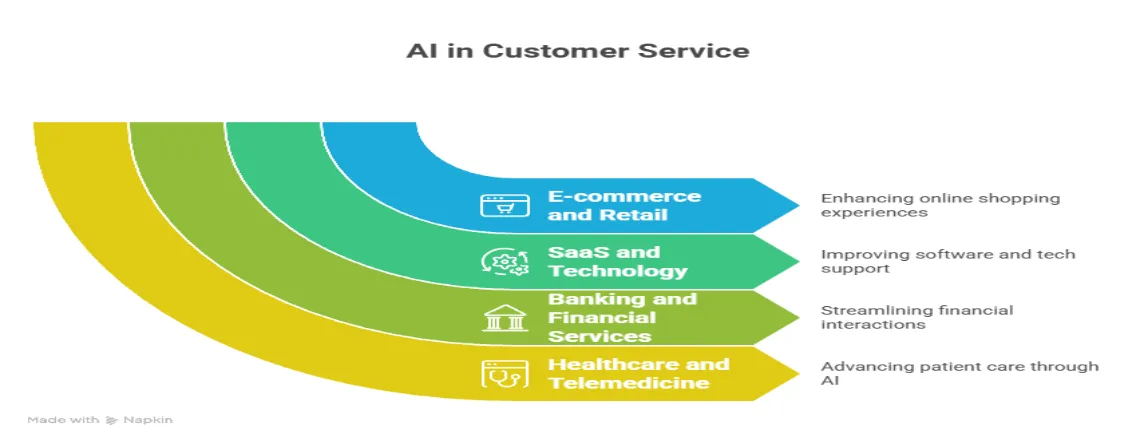
E-commerce and Retail
Online retailers wrestle with unique challenges: sky-high inquiry volumes, endless repetitive questions about orders and returns, and seasonal traffic spikes that would crush a normal team. Companies using AI for customer service in this sector report eye-opening results.
Big-name fashion retailers now handle 70-80% of inquiries through AI. We’re talking order tracking, size recommendations, return processing, and product questions. During peak shopping seasons, these systems eliminate the need to hire temporary support staff while keeping response times lightning-fast.
Here’s a real example: A mid-size online fashion retailer rolled out AI chat support and automated 73% of incoming inquiries within six months. They shrank their support team by 12 agents while slashing average response time from 8 minutes to under 30 seconds. Customer satisfaction scores jumped from 3.8 to 4.4 out of 5.
AI-powered visual search helps shoppers find products from photos. Recommendation engines suggest alternatives when items are out of stock, flipping potential disappointments into sales opportunities.
SaaS and Technology
Software companies lean on AI to provide technical troubleshooting, onboarding guidance, and feature explanations. The smartest implementations learn from your product documentation and update automatically as your software evolves.
Tech companies get huge benefits from AI’s ability to handle technical diagnostics. It walks users through troubleshooting steps and collects relevant information before escalating to engineering teams. This structured approach boosts first-contact resolution rates dramatically.
Banking and Financial Services
Financial institutions face brutal regulations while managing ultra-sensitive customer data.AI customer service companies’ regulatory support has caught up to meet these requirements. Platforms now pack compliance features, audit trails, and data protection baked right in.
Banks deploy AI for account inquiries, transaction disputes, card activation, and fraud alerts. The technology verifies customer identity through conversational authentication before spilling account details. This maintains security without frustrating customers with excessive verification hoops.
Real-world impact: A regional bank added an AI assistant to its mobile banking app. It answers questions about transactions, helps with money transfers, and explains fees. Call center volume dropped 38% as customers found answers within the app. Customer satisfaction with mobile banking rocketed from 72% to 88%.
Healthcare and Telemedicine
Healthcare providers tap AI to schedule appointments, send medication reminders, answer insurance questions, and offer symptom guidance. These applications cut administrative burden while improving patient access to information.
HIPAA compliance and other healthcare regulations are built into specialized platforms. Patient data stays locked down tight. AI triage helps direct patients to appropriate care levels from self-care resources to urgent appointments. This improves outcomes and reduces unnecessary ER visits that cost everyone money.
Implementation Best Practices
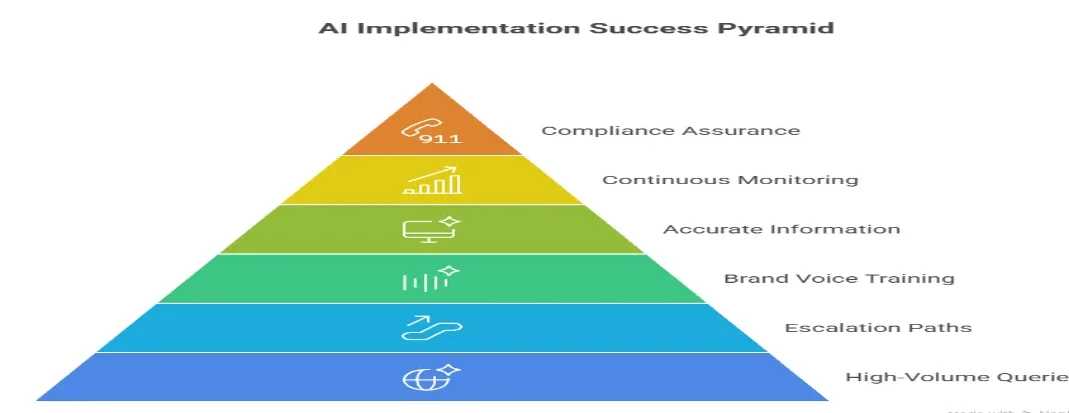
Rolling out AI customer service platforms successfully requires smart planning. Here are the practices that work and how to dodge common pitfalls:
Key Implementation Practices:
- Start with high-volume, low-complexity queries like password resets, order tracking, and FAQ questions for quick wins that build confidence
- Maintain clear escalation paths to human agents with confidence thresholds that transfer uncertain conversations immediately, rather than guessing
- Train AI on your brand voice by customizing tone, vocabulary, and personality to match your company, as nobody wants a robot that sounds like everyone else
- Feed accurate, current information from knowledge bases and help documentation to ensure quality responses that actually help people
- Monitor performance continuously, tracking resolution rates, satisfaction scores, and response accuracy, so you catch problems early
- Ensure compliance, especially for regulated industries, with proper data encryption and security certifications that keep regulators happy
Common Challenges
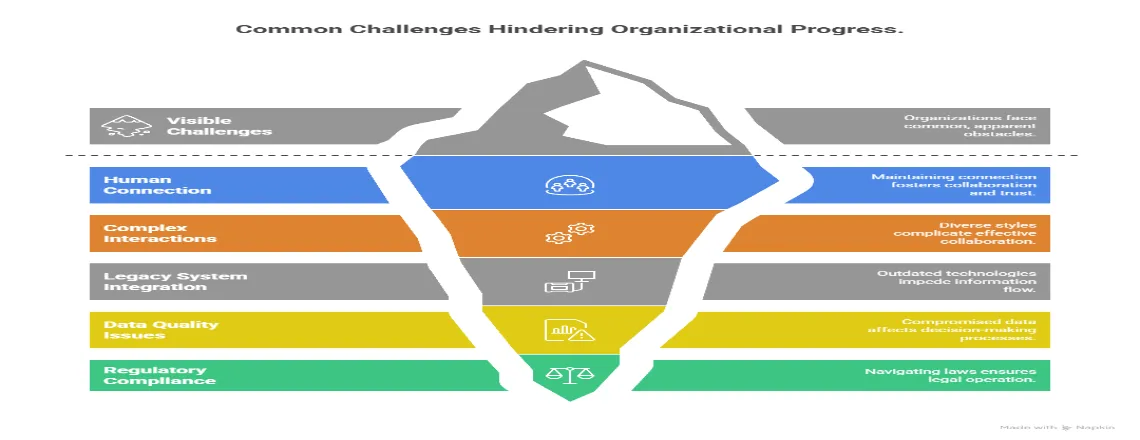
Maintaining Human Connection
Deploy sentiment analysis to detect frustration or confusion. Transfer immediately to human agents with full conversation context. Train AI to acknowledge limitations honestly rather than bluffing its way through.
Complex Interactions
Design conversation flows with clear escalation triggers based on time spent, repeated failures, or specific keywords that signal trouble. Remember, AI should boost your teams, not replace them entirely.
Legacy System Integration
Focus on platforms with pre-built connectors for your existing tools like Salesforce, Zendesk, or Microsoft Dynamics. For custom systems, check out robust API capabilities and implementation support that won’t leave you hanging.
Data Quality Issues
Before rolling out AI, audit and clean your knowledge base thoroughly. Remove contradictory information. Update outdated content. Fill documentation gaps that confuse both AI and humans.
Regulatory Compliance
Partner with AI customer service agent companies that know your industry inside and out. They understand relevant regulations. Document implementation processes and decision logic for when regulatory scrutiny comes knocking.
Future Trends in AI Customer Service
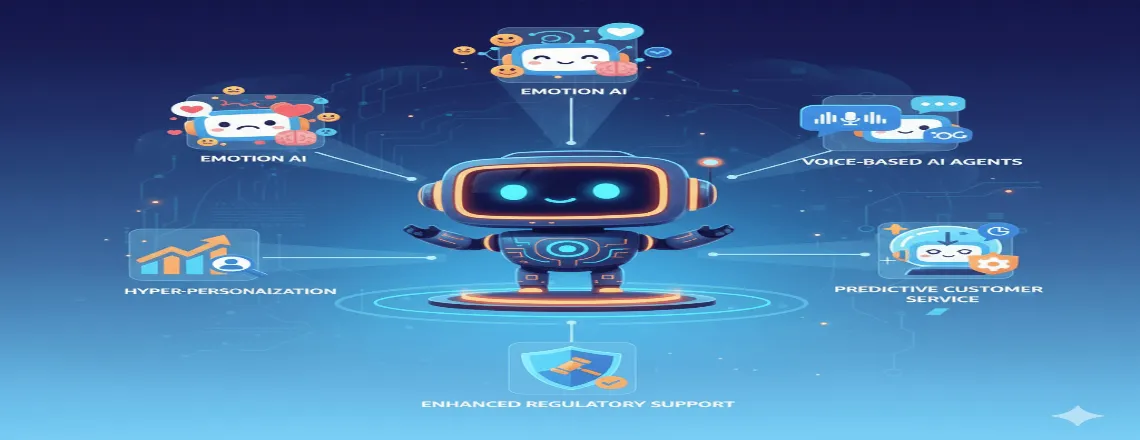
The evolution of customer service AI companies keeps accelerating. Several developments will reshape the industry over the next few years:
Emotion AI and Advanced Sentiment Analysis
Next-generation systems will detect specific emotions like frustration, confusion, excitement, urgency, not just vague negative sentiment. This emotional intelligence will enable more nuanced responses and smarter escalation decisions. Voice analysis will extend sentiment detection beyond text, analyzing tone, pace, and speech patterns during phone conversations in ways that feel almost spooky.
Voice-Based AI Agents
Chatbots dominate today’s landscape. Voice AI will explode soon, though. Improved natural speech processing makes phone-based AI agents increasingly viable for handling calls that once demanded humans. These systems will understand conversational context, handle interruptions naturally, and adapt to different accents and speaking styles without missing a beat.
Predictive Customer Service
AI will shift from reactive to proactive support. By analyzing usage patterns, system data, and customer behavior, platforms will spot potential issues before customers hit them. Picture getting a notification that your subscription renewal might fail due to an expired credit card before the charge attempt even happens. That’s where we’re headed.
Hyper-Personalization Through Machine Learning
Future AI will understand individual customer preferences deeply. It’ll learn communication style preferences, solution preferences, and context from entire customer histories stretching back years. Responses will adapt not just to the question asked but to who’s asking, their previous experiences, and their product usage patterns.
Enhanced Regulatory Support
Governments worldwide are developing AI regulations. AI customer service companies’ regulatory support will get increasingly sophisticated to keep pace. Platforms will build in compliance features, explainability tools, and audit capabilities to meet evolving legal requirements. Expect automated compliance checking, bias detection, and impact assessments to become standard features rather than expensive add-ons.
Quick Guide: Choosing Your AI Customer Service Platform
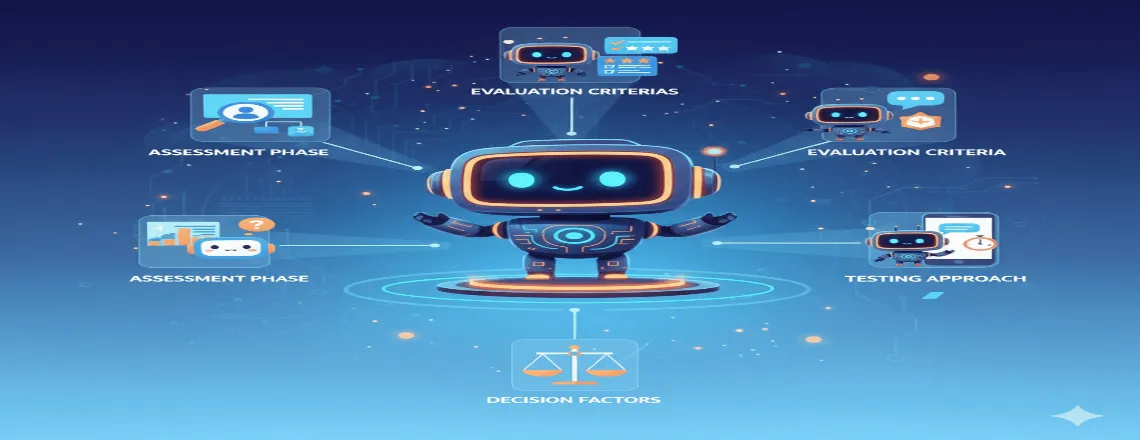
When evaluating AI customer support options, work through this checklist systematically:
Assessment Phase
- Calculate your current support volume across all channels, such as chat, email, phone, social media, everything
- Identify your top 20 most frequent customer inquiries by actually counting them
- Determine your primary goals: cost reduction, faster response, higher satisfaction, or increased capacity
- List your current technology stack requiring integration so you don’t get stuck with incompatible systems
Evaluation Criteria
- Multi-channel support for your specific communication channels, not channels you might use someday
- Pre-built integrations with your CRM, helpdesk, and e-commerce platforms that actually work
- Pricing model that scales affordably with your growth, as per-agent versus per-conversation, makes a huge difference
- Industry-specific compliance features if you’re in regulated sectors like healthcare or finance
- Implementation timeline and support services included, not sold separately at inflated prices
Testing Approach
- Request demos testing the actual customer experience, not just slick admin features that look impressive
- Run pilot programs with real customers on limited use cases before betting the farm
- Monitor satisfaction and resolution rates during pilots obsessively
- Compare AI performance against human agent benchmarks fairly
- Verify integration functionality with your existing systems actually works in practice
Decision Factors
- Can automate your highest-volume inquiries effectively without annoying customers
- Maintains or improves customer satisfaction scores rather than tanking them
- Fits within budget, including implementation and ongoing costs you might not see initially
- Offers scalability for future growth without gouging you
- Provides adequate support during and after implementation, not just a manual and good luck
Conclusion
AI customer service companies have transformed support from a cost center into a competitive advantage. These platforms deliver speed, accuracy, and 24/7 availability that traditional teams can’t match while reducing costs by 30-50%.The best customer service AI companies don’t replace human agents as they enhance them. AI customer support handles routine inquiries automatically, freeing your team for complex problems requiring empathy and judgment.
Companies using AI for customer service in 2025 aren’t asking “should we?” They’re asking, “How fast can we implement?” AI customer service platforms have moved from experimental to essential. The tools exist. The results are proven. The question is whether you’re ready to compete.
Frequently Asked Questions (FAQs)
An AI customer service company provides software or tools that use artificial intelligence to automate customer support tasks such as chat, ticketing, and query resolution.
AI chatbots improve service by offering 24/7 instant responses, reducing wait times, and handling repetitive inquiries so human agents can focus on complex issues.
The best AI customer service company in 2025 depends on your needs, but top options include Chatboq, Zendesk, Intercom, and Tidio for automation and scalability.
No. AI enhances efficiency but cannot fully replace human empathy and decision-making in complex or emotional customer interactions.
Key benefits include faster responses, reduced costs, improved accuracy, better personalization, and real-time analytics for smarter business decisions.
Pricing typically ranges from $20 to $300 per month per agent, depending on features like NLP, integrations, and customization.
Yes. Most modern AI chatbots seamlessly integrate with CRM tools like HubSpot, Salesforce, or Zoho to keep customer data synchronized.
Absolutely. Many AI support platforms, including Chatboq, offer affordable plans and easy setup for startups and small teams.
Trusted providers follow strict data protection policies, encryption standards, and compliance frameworks such as GDPR and HIPAA to ensure customer data safety.

Daniel Wong
Technical Content Writer
My name is Daniel Wong, a Technical Content Writer from Singapore with a strong interest in AI-powered tools and digital automation. At ChatBoq AI, I focus on creating practical and easy-to-follow content that helps businesses and individuals understand how chatbots work and how to use them effectively.
I enjoy breaking down complex topics like natural language processing (NLP) and conversational AI into simple guides that anyone can follow. Each article is based on careful research, real-world examples, and testing to ensure accuracy and reliability.
Through ChatBoq AI, my goal is to provide readers with trustworthy insights, step-by-step tutorials, and the latest trends in chatbot technology.
✍️
Expert in AI & Chatbot Technology

Leave A Comment