
The Future of Automated Customer Support with AI
In recent years, automated customer support has developed from a futuristic concept to a practical substitute for businesses looking to enhance their customer service procedures. By providing faster, more efficient, and personalised experiences, AI’s integration into customer service is transforming how companies interact with customers. As AI technology advances, customer service will become more intelligent, responsive, and customer-focused than before.
📑 Table of Contents
- The Future of Automated Customer Support with AI
- Key Highlights
- How Automated Customer Support is Shaping the Future of Service
- The Role of AI in Enhancing Customer Experience
- Key Technologies Driving the Future of AI in Customer Support
- How AI Is Revolutionizing Customer Loyalty and Retention
- Overcoming Challenges of AI in Customer Support
- The Future of AI in Customer Service: What to Expect
- Best Practices for Implementing AI in Customer Support
- Conclusion: Embrace the Future of AI in Customer Support
- Frequently Asked Questions (FAQs)
The role of AI in customer experience, how customer service automation is transforming industries, and the future of AI in customer service will all be covered in this article. We’ll also discuss the advantages, difficulties, and future developments to assist businesses in staying ahead in this dynamic sector.
Key Highlights
| AI automates tasks and operates 24/7, enhancing response times. AI reduces the need for large support teams, driving cost savings. AI personalizes interactions to improve the experience. AI uses NLP, machine learning, and analytics to enhance customer service. AI boosts loyalty with personalized recommendations and proactive solutions. AI struggles with complex queries and data privacy. Future trends: personalization, emotional intelligence, and AI-human collaboration. Successful AI requires clear goals, smooth integration, and updates. |
How Automated Customer Support is Shaping the Future of Service

The ability of automated customer assistance to manage a large number of customers simultaneously, reducing wait times and increasing service effectiveness, is the primary benefit. Artificial intelligence (AI) customer support technologies, including chatbots and intelligent virtual assistants, can respond in real time, be available 24/7, and even predict customer needs.
How Generative AI and LLMs Are Transforming Customer Support
Generative AI and large language models (LLMs) are reshaping customer support by enabling more accurate, natural, and dynamic conversations than traditional chatbots. Unlike rule-based bots, LLMs can understand context, adapt to customer emotions, and deliver human-like responses in real time.
How LLMs Reduce Hallucinations
Modern LLMs use:
- Retrieval-Augmented Generation (RAG) to pull correct information from knowledge bases
- Fine-tuning with company-specific data
- Guardrails and validation layers to ensure responses follow real facts
This significantly lowers misinformation and improves reliability. However, organizations should also be aware of the risks and disadvantages of AI chatbots when implementing these solutions.
Why Generative AI Creates Dynamic, Natural Responses
Generative AI can:
- Understand complex queries
- Personalize responses based on user intent
- Predict customer needs
- Maintain conversational flow
This results in support that feels more human, empathetic, and intelligent.
Examples of LLM-Powered Customer Support
- ChatGPT-powered bots used by eCommerce brands for automated FAQs, order tracking, and product assistance
- Intercom Fin, an AI support assistant that resolves up to 50% of queries instantly
- Zendesk AI, which helps agents with suggested replies and automated triage
Key Advantages of Automated Customer Support:
- Instant Responses: AI can provide immediate answers to customer queries, significantly reducing response times.
- 24/7 Availability: AI-powered systems can operate around the clock, unlike human operators, ensuring that clients receive help whenever they need it.
- Cost Savings: By automating routine tasks, businesses can reduce the need for large customer support teams, leading to cost savings.
Examples: Salesforce data shows that 95% of decision-makers at companies with AI report reduced costs and time savings. - Scalability: Without the need for more resources, AI can readily manage spikes in consumer enquiries, such as at peak times of the year or new product launches.
AI in customer experience is not just about efficiency, though. It’s also about creating personalized experiences for customers that feel human and intuitive.
The Role of AI in Enhancing Customer Experience

AI is used in customer service automation for more than just basic tasks. By enabling more individualised interactions, anticipatory services, and more intelligent recommendations, it is completely changing the consumer experience.
AI’s Impact on Customer Experience:
- Personalized Interactions: AI evaluates consumer data to provide customised recommendations, assisting companies in better addressing individual needs.
- Predictive Analytics: Before a consumer even contacts AI, it can anticipate their behaviour and proactively provide solutions.
- Natural Language Processing (NLP): AI-driven tools can understand and respond to customer queries with human-like understanding, improving the quality of service.
For instance, machine learning is used by AI customer support platforms like Zendesk and Salesforce to comprehend customer sentiment and context and adjust responses accordingly. This level of customisation helps businesses in building closer, more enduring bonds with customers.
From Chatbots to Voice AI: The Next Evolution of Customer Support
Customer support is shifting from text-based chatbots to Voice AI, giving users a faster, more natural, and more human-like support experience. Instead of typing, customers can now speak directly to AI voice agents, making support more accessible, especially for users on the go.
Voice-Based Support
Voice AI systems can:
- Handle real-time conversations
- Understand natural speech patterns
- Resolve queries instantly (shipping updates, order tracking, troubleshooting)
- Reduce call center load by automating common calls
This leads to quicker resolutions and improved customer satisfaction.
Multilingual Voice Agents
Modern Voice AI can speak and understand multiple languages, allowing global brands to support customers across regions.
Examples:
- English, Spanish, Hindi, Arabic
- Regional accents and dialects
This ensures culturally inclusive and accessible support.
Real Brand Tools Leading the Shift
Several powerful platforms are driving the transition to Voice AI:
- Google Dialogflow CX – advanced voice + text conversational flows
- Yellow.ai Voicebot – enterprise-grade voice automation
- Amazon Lex – natural language voice interactions
- Cognigy Voice Gateway – omnichannel voice automation
Key Technologies Driving the Future of AI in Customer Support

AI in customer experience and automated support are based on a number of technologies. Businesses seeking to implement AI in their customer service operations have to understand how these operate.
1. Natural Language Processing (NLP)
NLP allows machines to understand and interpret human language. It’s the foundation of AI-powered chatbots and virtual assistants, enabling them to have more meaningful conversations with customers.
2. Machine Learning (ML)
ML allows AI systems to learn from data and improve over time. As more interactions occur, AI systems become better at solving complex queries and understanding customer preferences.
3. Predictive Analytics
AI uses data and algorithms to predict customer behavior, helping businesses anticipate needs and provide proactive service.
4. Sentiment Analysis
AI can gauge customer emotions during interactions, allowing businesses to tailor responses and identify areas for improvement.
5. AI Copilots and Autonomous Service Agents
AI copilots and autonomous service agents represent the next major leap in customer support. Instead of simply answering questions, they actively assist human agents, automate complex workflows, and in many cases, resolve customer issues entirely on their own.
AI Assistants That Help Human Support Agents
AI copilots act as real-time helpers by:
- Suggesting accurate responses instantly
- Pulling data from CRM, order history, or knowledge bases
- Drafting emails, summaries, and case notes
- Reducing handle time and improving accuracy
This allows support teams to work faster, smarter, and with fewer errors.
Autonomous Agents That Resolve Cases End-to-End
Autonomous service agents can fully manage customer interactions without human involvement. They can:
- Verify accounts
- Process refunds or returns
- Track orders
- Troubleshoot issues
- Escalate only when needed
These agents reduce workload for human teams and improve customer satisfaction through instant resolution.
Real Tools Leading This Technology
Brands using AI copilots and autonomous agents include:
- Forethought: Autonomous support agents that resolve tickets instantly
- Ada: AI automation for enterprise customer service
- Ultimate.ai: AI copilots and fully automated workflows
- Zendesk AI + copilots: Assists agents with real-time suggestions
- Intercom Fin: Autonomous AI support for teams
By leveraging these technologies, businesses can create AI-powered customer service platforms that not only automate responses but also enhance the overall customer experience.
How AI Is Revolutionizing Customer Loyalty and Retention

By offering individualised, effective, and proactive customer service, AI in customer support is transforming loyalty and retention. It ensures greater pleasure and long-term loyalty by predicting turnover, promptly resolving problems, and customising experiences based on individual consumer preferences.
Here is a more concise explanation of how AI in customer service is transforming customer loyalty and retention:
Understanding Employee Needs:
AI identifies at-risk customers using churn prediction models.
Example: Netflix uses AI to recommend shows based on what you’ve watched before. If you stop watching, they might offer you a free trial of a new feature to keep you engaged.
- Personalizing Interactions
Delivers tailored experiences using personalized customer experience engines.
Example: Amazon uses AI to recommend products based on your past purchases, increasing the chance you’ll buy something you love and stay loyal. - Enhancing Support Efficiency
AI-powered chatbots provide instant responses, reducing wait times and boosting satisfaction.
Example: Many companies, like Zappos and Sephora, use AI-powered chatbots to help customers find products or track orders 24/7. - Smart Loyalty Programs
AI enables AI-driven loyalty programs that personalize rewards.
Example: Starbucks uses an AI-driven loyalty program, where customers earn points for purchases, and AI personalizes rewards, like discounts on their favorite drink. - Proactive Issue Resolution
AI detects dissatisfaction early and suggests timely solutions to improve customer experiences.
Example: Delta Airlines uses AI to send real-time notifications to customers if their flight is delayed or if there’s a better seat available, solving potential issues before customers complain. - Consistency Across Channels
AI ensures seamless, consistent support across multiple touchpoints, enhancing trust.
Example: H&M uses AI to provide a consistent shopping experience across their website, mobile app, and in-store, offering personalized recommendations no matter where you shop. - Acting on Customer Feedback
AI analyzes feedback to uncover insights and improve service, strengthening customer relationships.
Example: Uber uses AI to analyze rider and driver feedback, improving their app’s features and adjusting routes to make the experience better for everyone. - Building Emotional Connections
Emotion-sensing AI tailors responses with empathy, fostering deeper connections with customers.
Example: Coca-Cola uses AI to analyze customer sentiment on social media. If a customer has a negative experience, AI can suggest a resolution or offer a coupon, showing they care. - 24/7 Support
AI offers round-the-clock support, ensuring customers always get the help they need.
Examples: Spotify offers customer support via AI chatbots that are available 24/7, helping users with account issues, music recommendations, or billing inquiries. - Cost Efficiency and Resource Allocation
AI automates routine tasks, allowing human agents to focus on complex issues and improving service.
Example: Bank of America’s virtual assistant, Erica, helps users with simple tasks like checking balances or making transfers, freeing up human agents to handle more complex banking issues.
Measuring the ROI of AI-Powered Customer Support
As AI continues to elevate customer experience, businesses must track how these technologies impact loyalty, retention, and overall support performance. Measuring ROI helps brands understand the true financial, operational, and customer satisfaction benefits of AI-driven support.
Key KPIs to Measure AI Customer Support Performance
1. Average Handle Time (AHT) Reduction
AI assistants and automation significantly reduce agent workload by handling repetitive questions.
Benchmark: AI reduces AHT by 20–40% in most support teams.
2. CSAT (Customer Satisfaction Score) Improvement
AI ensures fast, accurate, 24/7 support—leading to happier customers.
Benchmark: Many companies see a 10–25% CSAT uplift after adopting AI.
3. Deflection Rate (Self-Service Resolution Rate)
Shows how many tickets AI resolves without human involvement.
Formula:
Deflection Rate = (AI-Resolved Tickets ÷ Total Tickets) × 100
Benchmark: 30–60% of queries are commonly deflected by AI agents.
4. First Contact Resolution (FCR)
If AI resolves an issue immediately, satisfaction increases.
Benchmark: AI improves FCR by 15–35% across industries.
How to Measure Customer Loyalty & Retention with AI
AI support doesn’t just improve service speed; it drives long-term customer loyalty. Brands should measure:
1. Customer Retention Rate (CRR)
Indicates how many customers continue to do business with the brand.
Formula: CRR = ((E − N) ÷ S) × 100
2. Customer Lifetime Value (CLTV)
AI enhances personalized support, increasing repeat purchases and long-term value.
Formula: CLTV = (Average Order Value × Purchase Frequency) × Customer Lifespan
3. Net Promoter Score (NPS)
AI reduces friction, improving customer willingness to recommend the brand.
4. Repeat Purchase Rate
Proactive AI messages (order updates, recommendations, reminders) directly influence repeat buying behavior.
Simple ROI Formula for AI-Powered Support
ROI = (Total Gains from AI – AI Costs) ÷ AI Costs × 100
Gains may include:
- Increased revenue from higher retention
- Lower staffing costs
- Faster resolutions
- Reduced support backlog
- Higher conversion rates from AI assistance
Industry Benchmarks for AI Support ROI
| Industry | Typical ROI from AI Support |
| eCommerce | 3–5× ROI |
| SaaS | 4–8× ROI |
| Fintech | 2–4× ROI |
| Travel & Hospitality | 3–6× ROI |
| Telecom | 5–7× ROI |
Why This Matters: AI’s Impact on Loyalty & Retention
AI transforms customer loyalty by:
- Offering near-instant support
- Reducing wait times
- Providing personalized, contextual responses
- Delivering consistent accuracy
- Offering 24/7 availability
- Proactively solving problems before they escalate
Overcoming Challenges of AI in Customer Support

Businesses must overcome certain challenges in order to fully utilise AI, even though the technology’s benefits in customer service automation are clear.
Challenges of AI in Customer Support:
- Complex Customer Queries: AI still struggles with complex, multi-layered queries that require human judgment or empathy.
- Data Privacy Concerns: As AI collects and processes vast amounts of customer data, businesses must ensure they are following proper data privacy regulations.
- Over-reliance on Automation: While automation is efficient, customers still value human interaction for more complex issues. Striking the right balance is crucial.
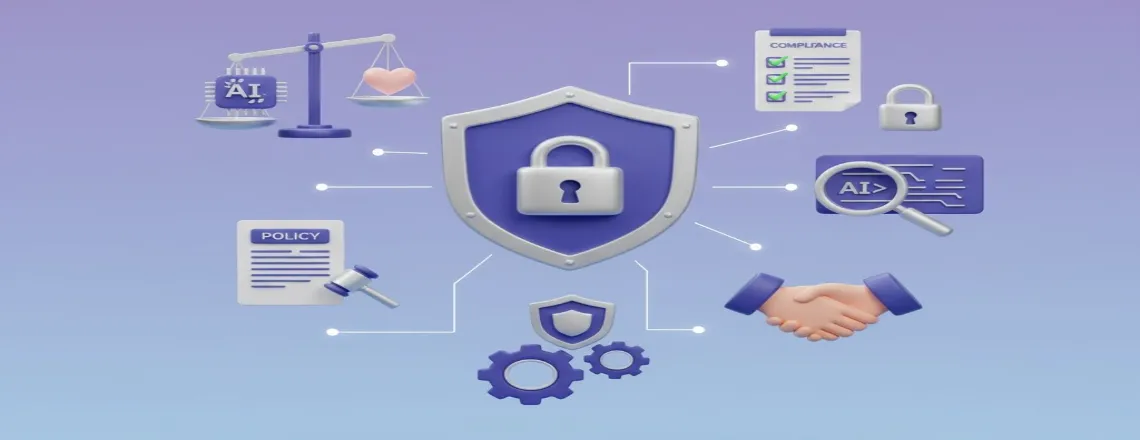
- AI Ethics: Ensuring AI behaves fairly and without bias is critical. Ethical AI must avoid discriminatory or harmful responses across all customer segments.
- Transparency: Customers should know when they are interacting with an AI system. Clear disclosure builds trust and sets realistic expectations for what the AI can and cannot do.
- Governance: Strong governance frameworks, including regular audits, quality checks, and human oversight, ensure the AI operates safely, consistently, and in alignment with brand policies.
The Future of AI in Customer Service: What to Expect

AI’s role in customer service will evolve as technology advances. The next phase of AI customer service will focus on improving AI’s emotional intelligence and further personalising customer interactions.
Key Trends in AI Customer Service:
- Hyper-Personalization: AI will go beyond simple personalization to provide highly customized experiences based on a customer’s unique preferences and behaviors.
- Emotional Intelligence: Future AI systems will be better at understanding customer emotions, helping businesses respond with more empathy.
- AI-Human Collaboration: AI will continue to work alongside human agents, handling routine tasks while humans address more complex issues.
Businesses that use AI in customer service will have a competitive advantage in providing outstanding, customer-focused experiences as these trends develop.
Best Practices for Implementing AI in Customer Support
It requires careful planning and execution to successfully include AI in your customer support strategy. Here are some best practices to consider:
- Start with a Clear Objective: Identify the specific pain points you want AI to address, such as reducing response times or improving personalization.
- Ensure Seamless Integration: Make sure your AI tools integrate smoothly with existing systems, such as your CRM or ticketing software.
- Train AI Regularly: Continuously update and train your AI models to ensure they’re effective and capable of handling new types of queries.
- Balance AI and Human Support: Use AI for routine inquiries, but ensure human agents are available for complex issues.
By following these practices, businesses can maximize the benefits of AI in customer experience.
Conclusion: Embrace the Future of AI in Customer Support
Customer service automation is at the centre of this revolution, and AI in customer service has a bright future. AI technologies will continue to improve customer satisfaction, efficiency, and personalisation as they develop. However, in order to provide a seamless customer experience, organisations must carefully approach this transformation by combining the power of automation with the empathy of human agents.
Ready to take your customer support to the next level? Start exploring AI-powered customer service solutions today and unlock new levels of efficiency and personalization.
Frequently Asked Questions (FAQs)
In customer service, artificial intelligence (AI) refers to the use of technologies such as chatbots, machine learning, and natural language processing (NLP) to automate customer interactions, enhance service effectiveness, and customize experiences.
Automated customer support uses AI-driven technologies to manage common customer questions, deliver instant responses, and resolve issues without human involvement.
AI improves customer experience by offering faster responses, personalized interactions, and proactive assistance based on predictive data.
No. AI supports human agents by handling repetitive queries, allowing them to focus on complex issues rather than replacing them.
Industries using AI for customer service include: E-commerce, Banking & Fintech, Healthcare, Telecom, Travel & Hospitality, SaaS, Real Estate, and more.
Modern AI models understand customer intent with 85–95% accuracy depending on training data and context.
AI often outperforms humans in:
• Identifying repetitive intent
• Understanding phrasing variations
• Handling large-scale conversations consistently
Accuracy increases when AI is trained on company-specific FAQs, historical chats, and product data.
AI often outperforms humans in:
• Identifying repetitive intent
• Understanding phrasing variations
• Handling large-scale conversations consistently
Accuracy increases when AI is trained on company-specific FAQs, historical chats, and product data.
Yes. Many advanced AI systems allow auto-escalation to voice support when:
• The customer requests a call
• The issue requires human intervention
• The chatbot detects frustration or confusion
Platforms like Dialogflow, Amazon Connect, Intercom, and Yellow.ai offer seamless handoff to human voice agents.
• The customer requests a call
• The issue requires human intervention
• The chatbot detects frustration or confusion
Platforms like Dialogflow, Amazon Connect, Intercom, and Yellow.ai offer seamless handoff to human voice agents.
You can measure ROI using operational and financial metrics.
Key KPIs:
• AHT Reduction (Average Handle Time)
• CSAT Improvement
• Deflection Rate
• First Contact Resolution (FCR)
• Retention Rate & CLTV
ROI Formula:
ROI = (Total Gains from AI − AI Costs) ÷ AI Costs × 100
Gains come from faster support, reduced workload, lower staffing needs, and increased customer satisfaction.
Key KPIs:
• AHT Reduction (Average Handle Time)
• CSAT Improvement
• Deflection Rate
• First Contact Resolution (FCR)
• Retention Rate & CLTV
ROI Formula:
ROI = (Total Gains from AI − AI Costs) ÷ AI Costs × 100
Gains come from faster support, reduced workload, lower staffing needs, and increased customer satisfaction.
To reduce bias and errors:
• Use RAG (Retrieval-Augmented Generation) for verified data
• Train AI with accurate company knowledge
• Add content filters and guardrails
• Conduct regular audits
• Limit AI to approved info sources
• Use RAG (Retrieval-Augmented Generation) for verified data
• Train AI with accurate company knowledge
• Add content filters and guardrails
• Conduct regular audits
• Limit AI to approved info sources
To train a high-performing AI chatbot, you need:
• FAQs and help center articles
• Product or service descriptions
• Past customer chats, emails, and tickets
• Knowledge base content
• Company policies (refund, billing, shipping)
• User behavior insights (top queries, complaints)
• FAQs and help center articles
• Product or service descriptions
• Past customer chats, emails, and tickets
• Knowledge base content
• Company policies (refund, billing, shipping)
• User behavior insights (top queries, complaints)

Daniel Wong
Technical Content Writer
My name is Daniel Wong, a Technical Content Writer from Singapore with a strong interest in AI-powered tools and digital automation. At ChatBoq AI, I focus on creating practical and easy-to-follow content that helps businesses and individuals understand how chatbots work and how to use them effectively.
I enjoy breaking down complex topics like natural language processing (NLP) and conversational AI into simple guides that anyone can follow. Each article is based on careful research, real-world examples, and testing to ensure accuracy and reliability.
Through ChatBoq AI, my goal is to provide readers with trustworthy insights, step-by-step tutorials, and the latest trends in chatbot technology.
✍️
Expert in AI & Chatbot Technology

Leave A Comment