AI Agent vs Chatbot: Understanding the Key Differences and Which One Your Business Needs
AI Agent vs Chatbot is a discussion that highlights two very different approaches to customer communication. A chatbot is a rule-based tool that follows predefined scripts to provide quick answers to common questions, making it a cost-effective option for handling repetitive tasks. An AI agent, by contrast, is powered by natural language processing and machine learning, which allows it to understand context, adapt to conversations, and deliver more personalized support.
📑 Table of Contents
- AI Agent vs Chatbot: Understanding the Key Differences and Which One Your Business Needs
- What is a chatbot?
- What is an AI agent?
- Making the Right Choice for Your Business: AI Agent vs Chatbot
- Key difference AI Agent vs Chatbot
- Which One Does Your Business Need?
- Future Trends in Conversational AI
- Conclusion
- Frequently Asked Questions (FAQs)
The choice between the two depends on business goals and customer expectations. Companies looking to automate simple queries efficiently may find a chatbot sufficient, while those aiming for more intelligent, personalized, and integrated interactions will benefit from an AI agent. Making the right decision ensures a balance between operational efficiency and customer satisfaction, which is critical for long-term growth in 2025.
For businesses, this distinction is critical. A chatbot is often the best choice when the goal is to provide quick, low-cost responses to FAQs. An AI agent is better suited when customer interactions require reasoning, personalisation, and integration with business systems. Choosing the right solution depends on your company’s needs, budget, and growth plans, ensuring you strike the right balance between efficiency and customer satisfaction.
What is a chatbot?
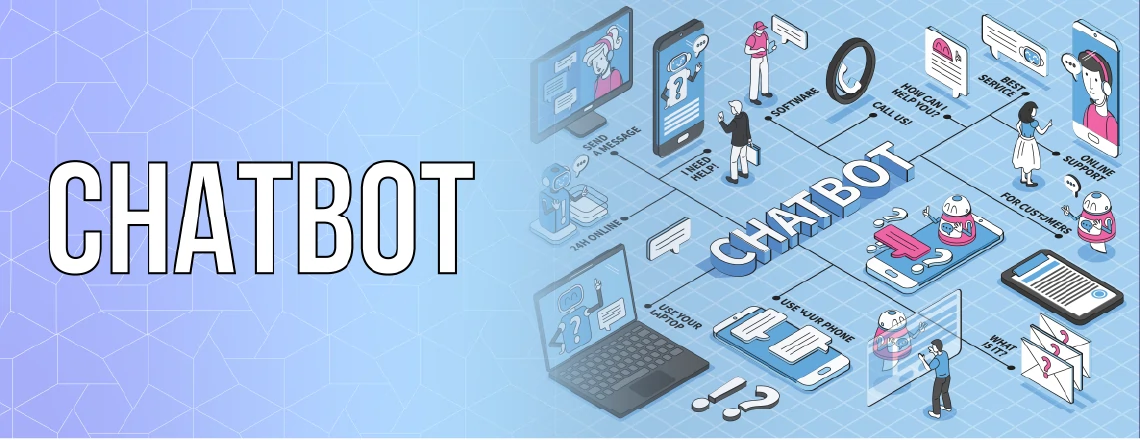
A chatbot is an AI program that tries to imitate a human conversation, usually by text or voice. A chatbot is designed to engage in simple and few interactions. For example, when a user asks a question, the chatbot can provide guidance or an answer quickly and briefly, all without requiring user intervention. Chatbots operate on set parameters, dialogue, or logical flow, which is why they excel at performing the same, predictable tasks repeatedly.
Types of chatbots
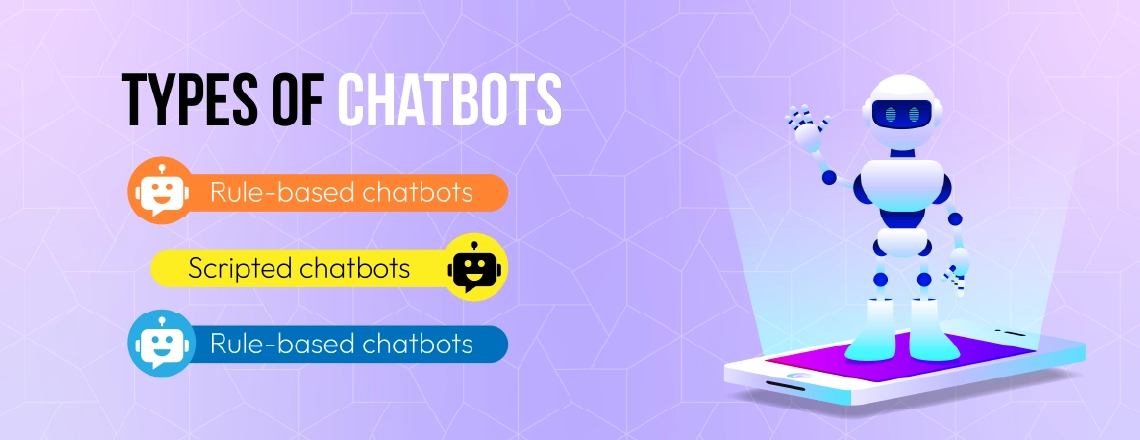
- Rule-based chatbots – React to user questions through a set of fixed if/then rules.
- Scripted chatbots – Operate by following the conversation flows that have been pre-designed and have limited adaptability.
- Menu-driven chatbots – Users are presented with options or buttons to select from, thus they are taken through a guided path.
Common Use Cases
- Assisting customer service with straightforward tasks, such as order tracking and providing information about store hours.
- Collecting user information through forms or chat prompts to capture leads.
Read More: How to Build Your First AI Chatbot: A Step-by-Step Guide for Beginners?
What is an AI agent?
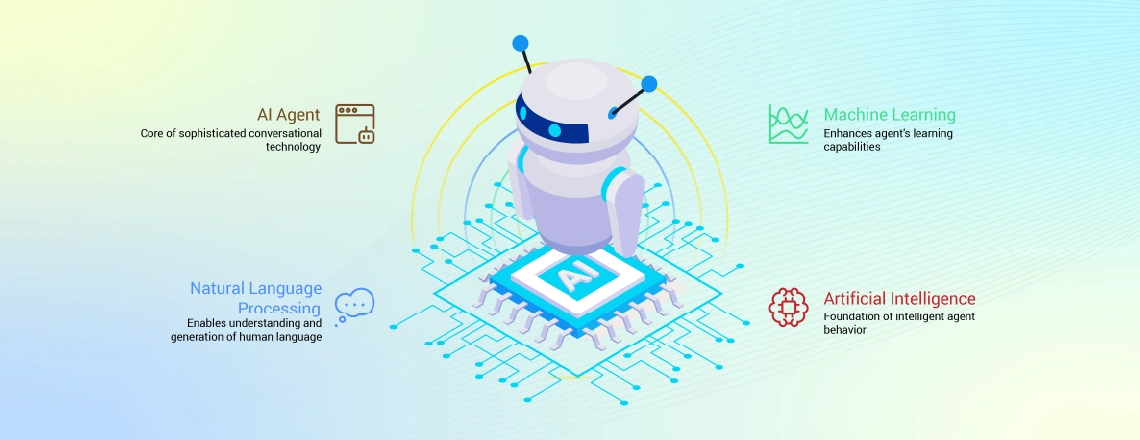
An AI agent represents a more sophisticated type of conversational technology. It harnesses the power of artificial intelligence, natural language processing (NLP), and machine learning to create interactions that are dynamic, context-aware, and tailored to individual users.
Features of an AI Agent
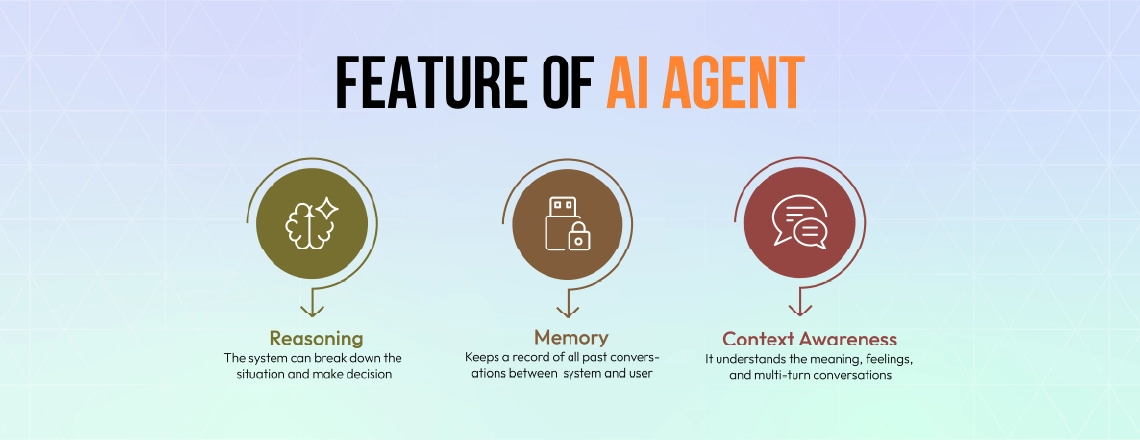
- Reasoning: The system can break down the situation, find a solution, and make decisions without the need for a pre-set instruction to be followed.
- Memory: Keeps a record of all past conversations between the system and the user, storing user-related information to tailor subsequent replies.
- Context-awareness: It understands the meaning, feelings, and multi-turn conversations, so users don’t have to repeat themselves for better understanding.
Examples of AI Agents
- Intelligent support agents that not only solve the user’s technical problems, but also predict possible issues that may occur and recommend preventive actions.
- Recommends hotels
- Offers transportation options.
- Sets reminders for check-in and boarding.
Strengths and Capabilities
AI agents can be scaled up to massive volumes. They are also very flexible and can handle challenging situations that chatbots cannot. The integration with enterprise systems, providing proactive support, personalisation of customer experiences, and even automation of back-end operations are all within their capabilities. Such a combination makes them perfect for businesses that are not only willing to respond but also eager to utilise scheduling, improve decision-making, and, in this way, drive long-term efficiency.
Limitations of an AI Agent
- More expensive and heavy use of resources to implement.
- Needs regular monitoring to stay effective.
- Requires integration with the existing system
Making the Right Choice for Your Business: AI Agent vs Chatbot
When deciding between a chatbot and an AI agent, the right choice depends on your business objectives, budget, and long-term strategy.
- Choose a Chatbot if: Your primary goal is to provide quick answers to common queries, reduce the workload of customer support teams, or handle predictable, repetitive tasks at a low cost. Small businesses and startups often benefit from chatbots as an entry-level automation tool.
- Choose an AI Agent if: You need a more advanced system that can manage nuanced conversations, integrate across platforms, and continuously improve with every interaction. AI agents are better suited for enterprises or growing businesses that require scalable, intelligent automation for sales, marketing, support, and operations.
Ultimately, both technologies can coexist. A business may start with a chatbot for efficiency and gradually upgrade to AI agents as their customer base, complexity, and demand for personalisation grow. The key is to match the technology to your specific use cases, ensuring you balance cost-effectiveness with customer satisfaction.
Key difference AI Agent vs Chatbot
| Aspect | Chatbots | AI Agents |
| Intelligence Level | Scripted logic or rule-based | Adaptive learning with machine learning capabilities |
| Complexity of Tasks | Handles simple tasks (e.g., FAQs) | Performs complex, multi-step problem-solving |
| Context-Awareness | Limited or no memory; one-off interactions | Remembers user history; context-aware interactions |
| Integration | Often standalone or basic platform integration | Deep integration with enterprise systems and data sources |
| User Experience | Basic, reactive responses | Personalized, proactive, and dynamic interactions |
Which One Does Your Business Need?
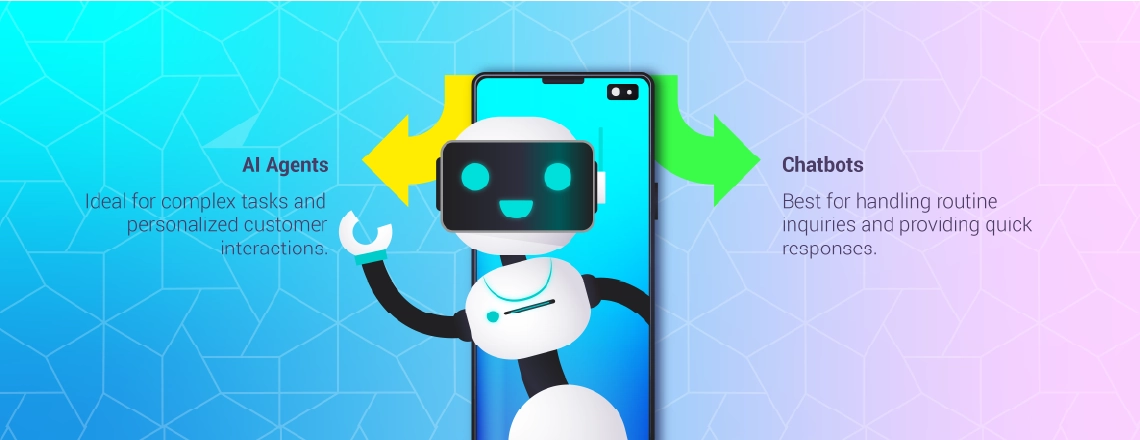
AI agents and chatbots are both valuable tools, but the best choice depends on your business model, customer expectations, and growth strategy. Below are the key factors to consider when deciding which one fits your needs.
Business Size and Budget
- AI Agents: More suited for growing businesses and enterprises that can invest in advanced automation. They offer customisation, integration with multiple systems, and scalability to support complex operations.
- Chatbots: Perfect for small businesses and startups. They are affordable, quick to set up, and efficient for handling repetitive queries without requiring heavy infrastructure.
Customer Expectations
- AI Agents: Better for audiences who expect personalized, frictionless support and proactive engagement. They can understand context, predict needs, and adapt over time.
- Chatbots: Best when customers expect fast responses to common questions like FAQs, order status, or booking requests.

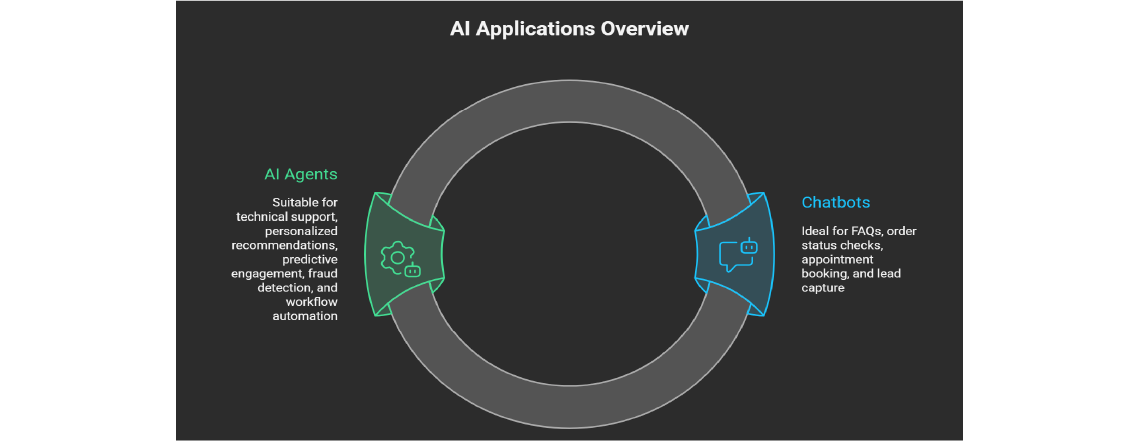
Applications: Support, Sales, Operations, Automation
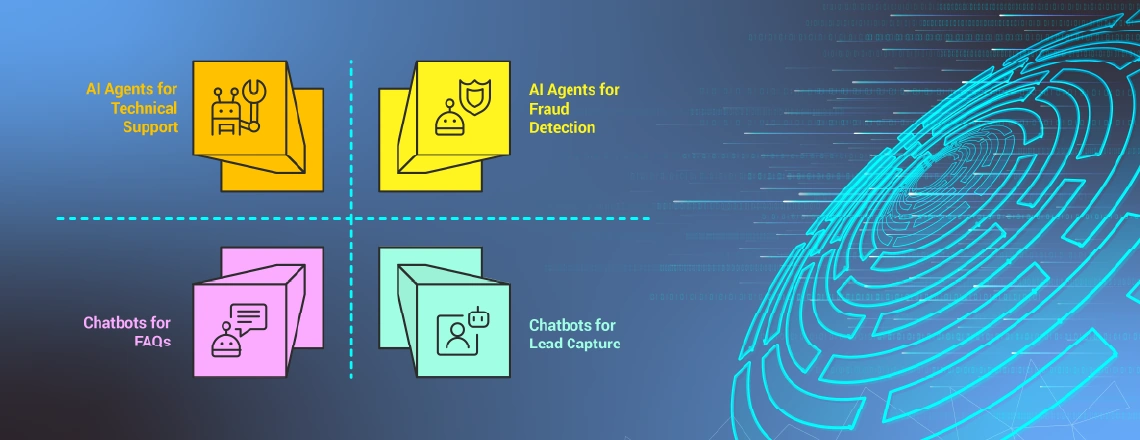
- Chatbots: Are Best Suited for FAQs, order status checks, appointment booking, and lead capture.
- AI Agents: Suitable for technical support, personalized product recommendations, predictive customer engagement, fraud detection, and workflow automation.
Use Case: Support, Sales, Operations, Automation
- Chatbots: Ideal for businesses requiring efficient management of FAQs, order tracking, booking systems, or quick lead qualification.
- AI Agents: Designed for advanced tasks such as troubleshooting, upselling through tailored suggestions, proactive customer outreach, fraud prevention, and automating complex business processes.
Chatbots are a strong entry-level solution, but may reach their limits as operations grow. AI agents, however, are built to scale learning from interactions and integrating with evolving systems.
Scenarios Where a Chatbot is Enough
- A local restaurant automating reservations and answering FAQs.
- An online retailer helping customers with order tracking and return policies.
- A healthcare clinic provides hours, directions, and appointment booking.
Scenarios Where an AI Agent is Essential
- A global travel agency offering personalized trip planning and cross-selling services.
- A SaaS company delivering technical support across multiple products.
- A financial institution that detects fraud, advises customers, and manages complex, multi-step workflows.
Future Trends in Conversational AI
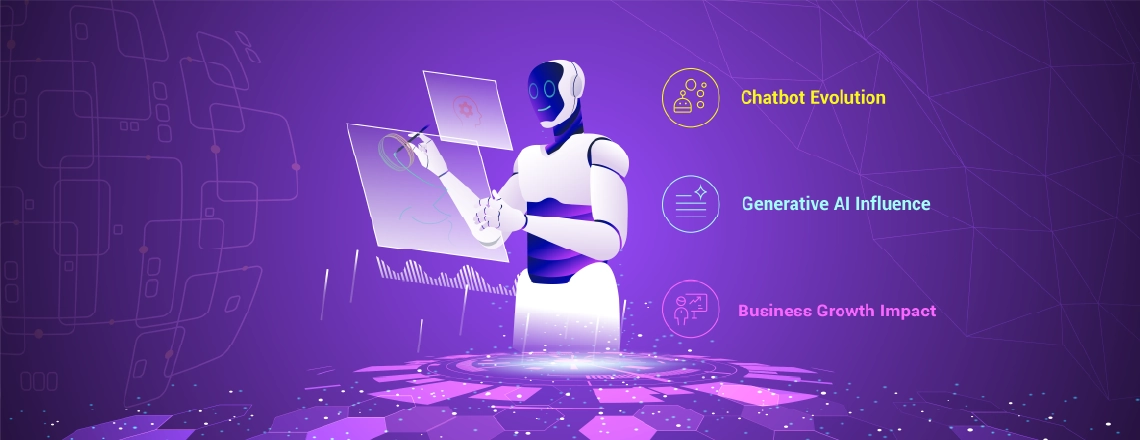
The pace of development in the field of Conversational AI is phenomenal. In this module, we discuss the future of Conversational AI technology, focusing on three key points:
- The evolution of chatbots to AI agent technology.
- The influence of generative AI on making agents faster.
- Forecasting business growth and its impact on the industry.
1. The Evolution of Chatbots to AI Agents
Traditional chatbots offered to consumers in the past relied on and operated on a fundamental and rigid rule system. Change is coming, and quickly. With the rapid development of this industry, AI agents were created to fulfill the needs of consumers. 100% of your text is likely AI-generated.
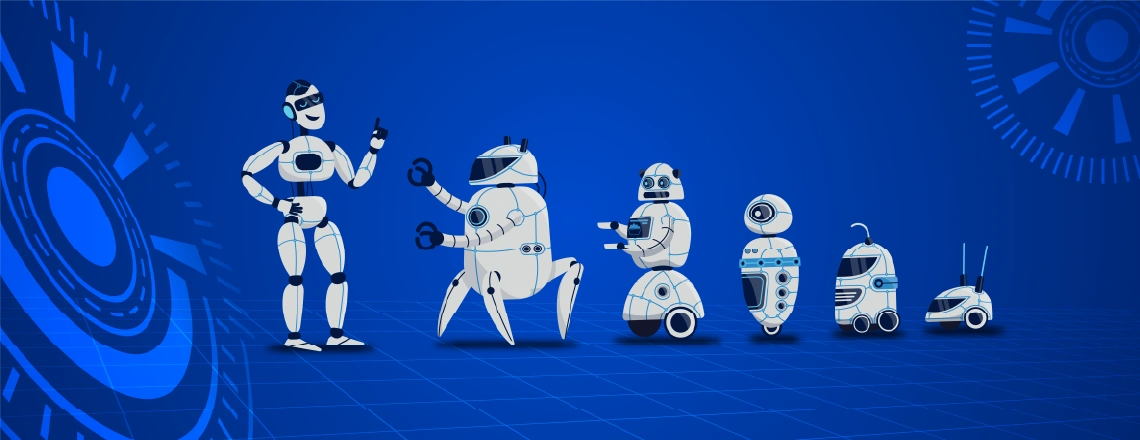
Chatbots can be a great starting point for businesses, but they might struggle as your operations grow in complexity.
On the other hand, AI Agents are built to adapt and scale with your business, learning from every interaction and seamlessly integrating with your changing systems.
When a Chatbot is Sufficient
- A local restaurant aims to streamline reservations and address common questions.
- An online retailer managing inquiries about order tracking and return policies.
- A healthcare clinic shares its hours, directions, and appointment scheduling.
When an AI Agent is Necessary
- A global travel agency that provides tailored trip planning and cross-selling opportunities.
- A SaaS company that needs to troubleshoot technical issues across various products.
- A financial institution focused on detecting fraud, advising clients, and managing complex workflows.
Key shifts in this evolution include
- We’re shifting from reactive to proactive support, which means we’re anticipating customer needs even before they have to ask.
- It’s all about moving from just focusing on keywords to truly understanding intent.
- We’re evolving from session-based chats to having memory, allowing us to remember past conversations and tailor future interactions to each individual.
- And instead of sticking to a single channel, we’re embracing an omnichannel approach, ensuring a smooth experience across web, mobile, social, and voice platforms.
2. The Role of Generative AI
Generative AI is another driving tool for this transformation. Some of its early examples, such as GPT, Gemini, and Claude, have redefined what’s possible in conversational systems. So instead of relying on canned responses, AI can now generate relevant human-like replies.
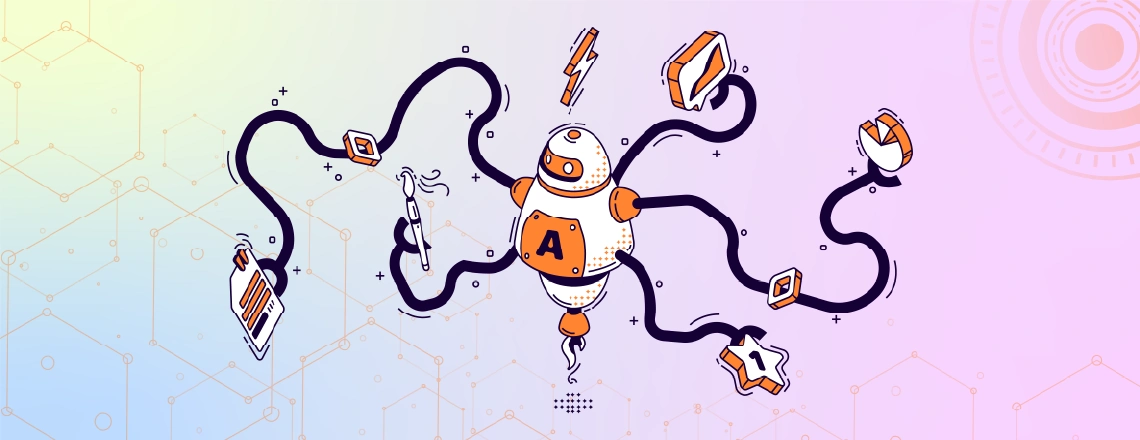
The role of generative AI is to make and feel less robotic and more engaging. The agents can provide detailed explanations, adjust their tone, and offer empathy. So instead of replying “Invalid request”, a generative AI might say:” Didn’t quite get that. Could you please rephrase it?
Problem-solving and creativity through generative AI enable agents to create and read, draft personalized emails, generate product recommendations, and troubleshoot issues by walking through step-by-step solutions.
Conclusion
The comparison between chatbots and AI agents reveals a straightforward truth: both have their merits, but their effectiveness really hinges on how businesses choose to implement them. Chatbots are budget-friendly, easy to set up, and perfect for managing FAQs, reservations, and repetitive questions. They deliver speed and efficiency, making them an excellent option for startups and small businesses looking for quick wins without a hefty investment.
On the other hand, AI agents take things to the next level. With their ability to reason, remember, and understand context, they can tailor interactions, foresee customer needs, and even streamline complex workflows. For companies that prioritize customer experience, scalability, and proactive engagement, AI agents provide a more strategic, long-term solution, even if they come with a higher price tag and added complexity.
As we look ahead, conversational AI is set to keep evolving, driven by generative AI and multimodal capabilities. This evolution means more natural, human-like conversations, smarter problem-solving, and interactions that span voice, text, and even images or video. Businesses will increasingly see these systems not just as cost-cutting tools but as catalysts for growth, loyalty, and innovation.
At the same time, ethical deployment will be crucial. Customers are looking for transparency, privacy, and fairness from AI-driven systems. Companies that manage to balance automation with empathy and responsibility will build trust and gain a lasting competitive advantage.
Ultimately, it’s not about choosing one over the other. Chatbots are a fantastic starting point, while AI agents are designed for long-term growth and transformation. The most astute businesses will align their choices with customer needs, available resources, and strategic goals, ensuring that conversational AI becomes not just a tech investment but a fundamental part of their future success.
Frequently Asked Questions (FAQs)
AI agents are intelligent, adaptive systems that can learn from interactions, understand context, and act proactively across tasks. Chatbots, on the other hand, are rule-based or script-driven tools that mainly handle simple, repetitive conversations. While chatbots provide quick responses, AI agents deliver deeper personalisation, automation, and scalability for complex business needs.
ChatGPT functions primarily as an AI-powered chatbot that generates natural language responses. However, when integrated with features such as memory, external tools, APIs, and decision-making capabilities, it transitions into an AI agent. In that role, it not only responds but also takes actions, adapts to context, and supports advanced workflows.
The main types of chatbots are rule-based chatbots, which follow pre-programmed scripts; AI-powered chatbots, which use natural language processing to understand intent and adapt; and hybrid chatbots, which combine both approaches. Hybrid models are increasingly popular because they balance predictable automation with intelligent, context-aware interactions for more complex user needs.
John McCarthy is widely recognised as the father of artificial intelligence. He coined the term “Artificial Intelligence” in 1956 and played a key role in pioneering AI research. McCarthy’s contributions, such as the development of the Lisp programming language, laid the foundation for modern AI systems and intelligent computing technologies.
The four types of AI are Reactive Machines, Limited Memory, Theory of Mind, and Self-Aware AI. Reactive Machines handle only specific tasks without memory. Limited Memory systems, like self-driving cars, learn from past data. Theory of Mind AI is still in development, while Self-Aware AI remains theoretical but represents the future of machine intelligence.
Yes, chatbots can speak when integrated with voice technology. Using speech recognition and text-to-speech systems, chatbots can understand spoken language and provide verbal responses. This makes them useful in hands-free settings, customer service hotlines, and smart devices, enhancing user experiences by enabling natural voice-based interactions in addition to text-based communication.
Examples of AI agents include Siri, Alexa, and Google Assistant, which go beyond answering questions. These agents understand context, integrate with apps, and perform actions like setting reminders, controlling devices, or providing personalised recommendations. In businesses, AI agents can also automate workflows, offer predictive support, and deliver tailored customer experiences.
AI chatbot pricing varies depending on complexity and features. Basic chatbots can be free or cost a few dollars per month. Advanced AI-powered chatbots with integrations, analytics, and personalisation typically range from $50 to $1,000+ monthly. Enterprise solutions with large-scale automation, multilingual support, and compliance features may cost significantly more.

Daniel Wong
Technical Content Writer
My name is Daniel Wong, a Technical Content Writer from Singapore with a strong interest in AI-powered tools and digital automation. At ChatBoq AI, I focus on creating practical and easy-to-follow content that helps businesses and individuals understand how chatbots work and how to use them effectively.
I enjoy breaking down complex topics like natural language processing (NLP) and conversational AI into simple guides that anyone can follow. Each article is based on careful research, real-world examples, and testing to ensure accuracy and reliability.
Through ChatBoq AI, my goal is to provide readers with trustworthy insights, step-by-step tutorials, and the latest trends in chatbot technology.
✍️
Expert in AI & Chatbot Technology

Leave A Comment